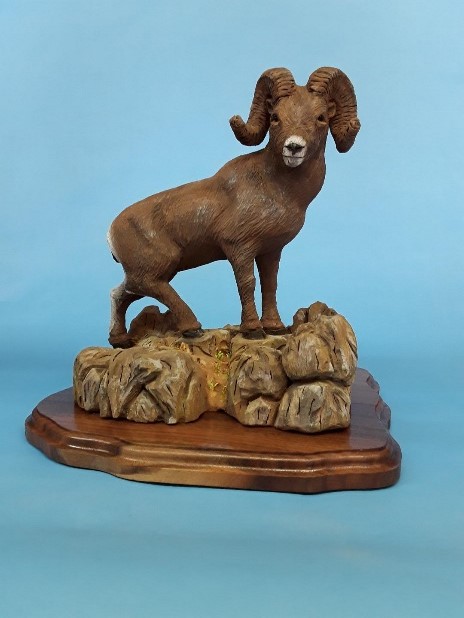
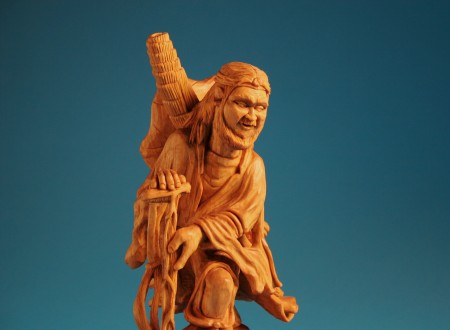
Andy Hiroshima attended the Doane Carvings Workshop in June. This is his finished carving.
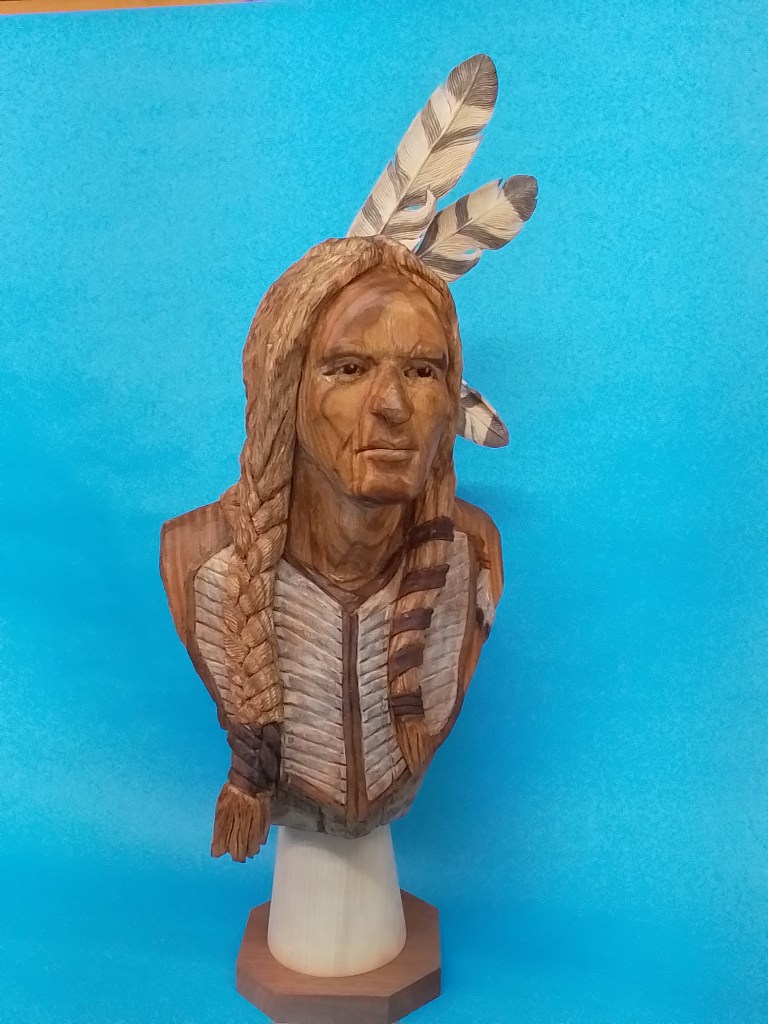
Andy Hiroshima attended the Doane Carvings Workshop in June. This is his finished carving.
Capital Woodcarvers Association is the place for wood carvers of all levels from beginner to expert to gather and share information about this great art form.
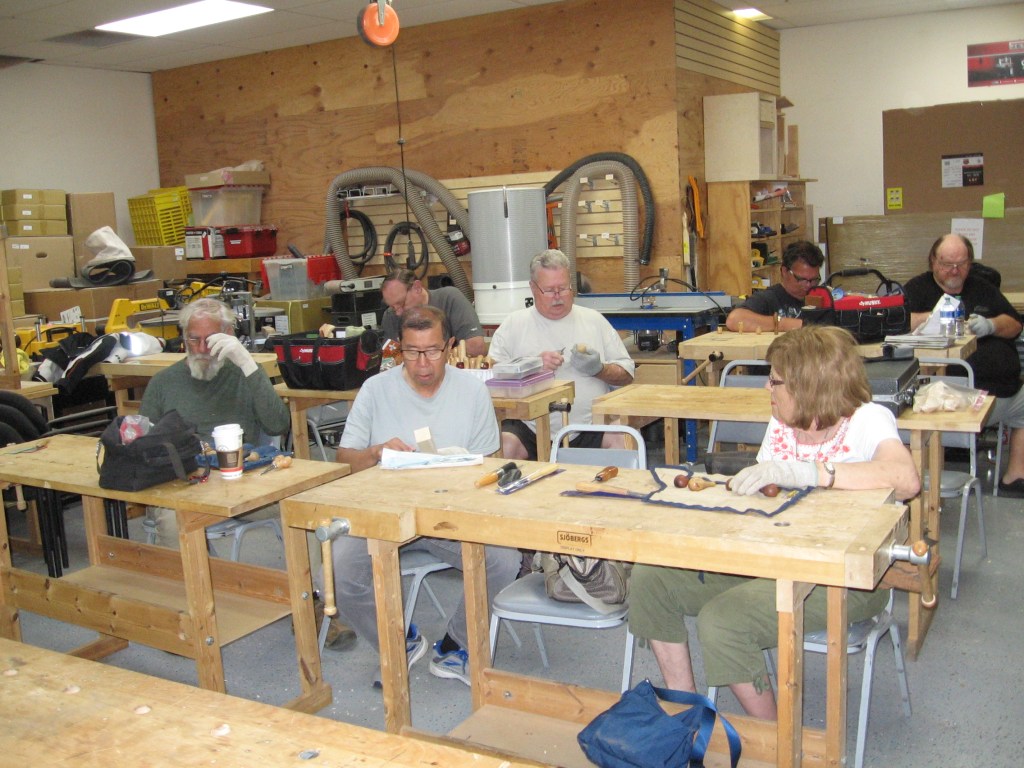
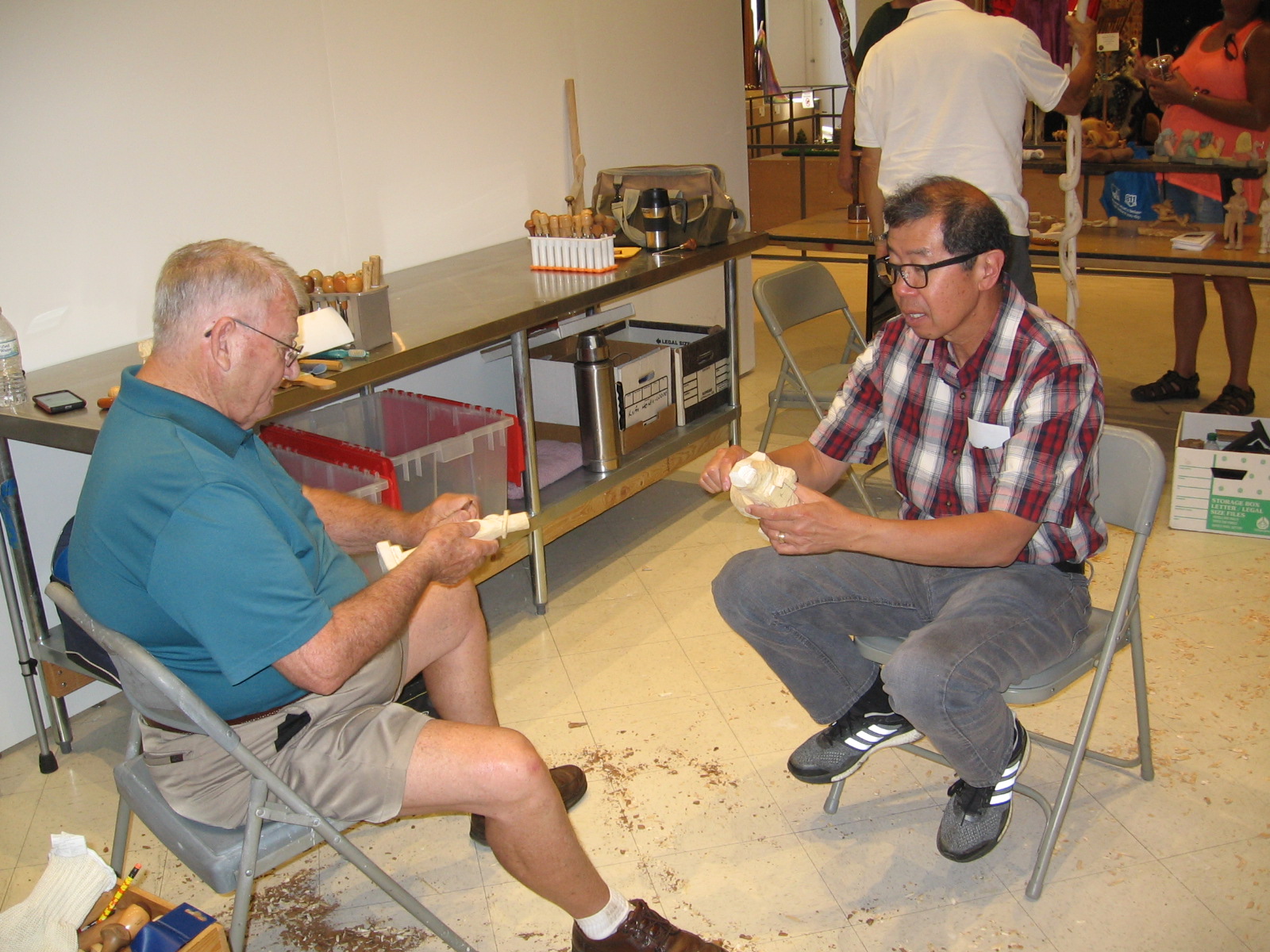
We meet on the second and fourth Wednesday of each month from 10:00 a.m. until noon at the Woodcraft store, 9523 Folsom Blvd. Sacramento. Meetings are a time for carving and mentoring that is provided by our more experienced carvers.
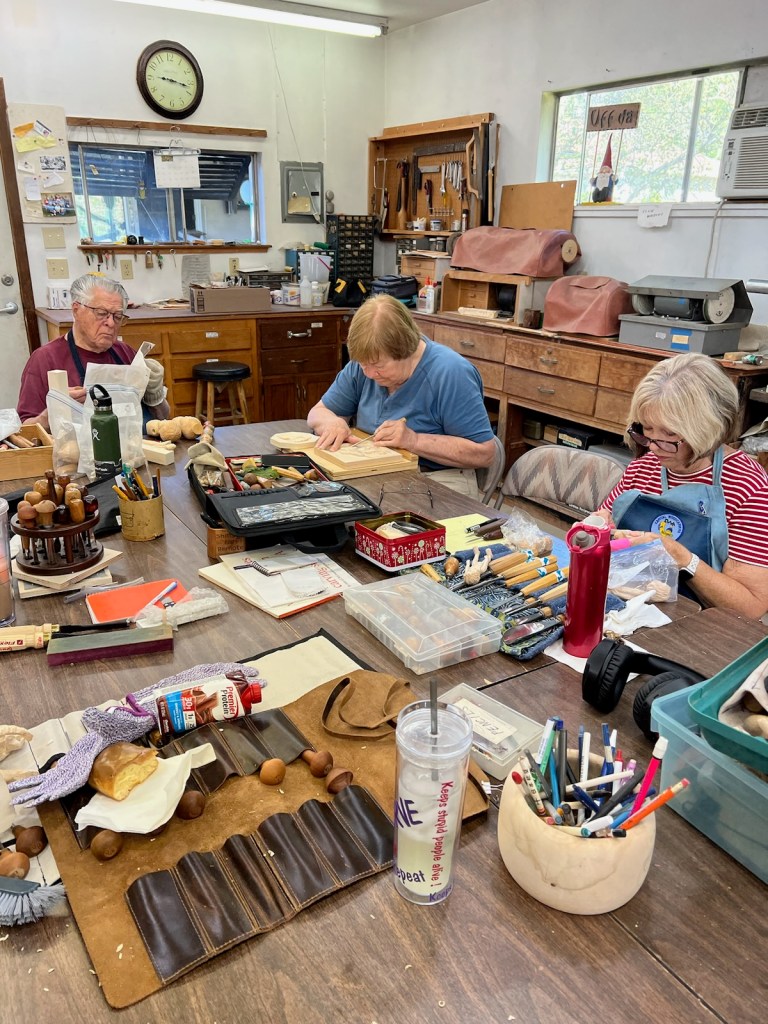
We also have group carving sessions on Mondays from 2 to 5 and Saturdays from 10 am to noon at Shirley Coffelt’s private shop on 4651 Moddison Avenue, Sacramento. Members meet to carve, get advice from other members. Sessions are spent carving, sharing carving information and developing our carving skills.
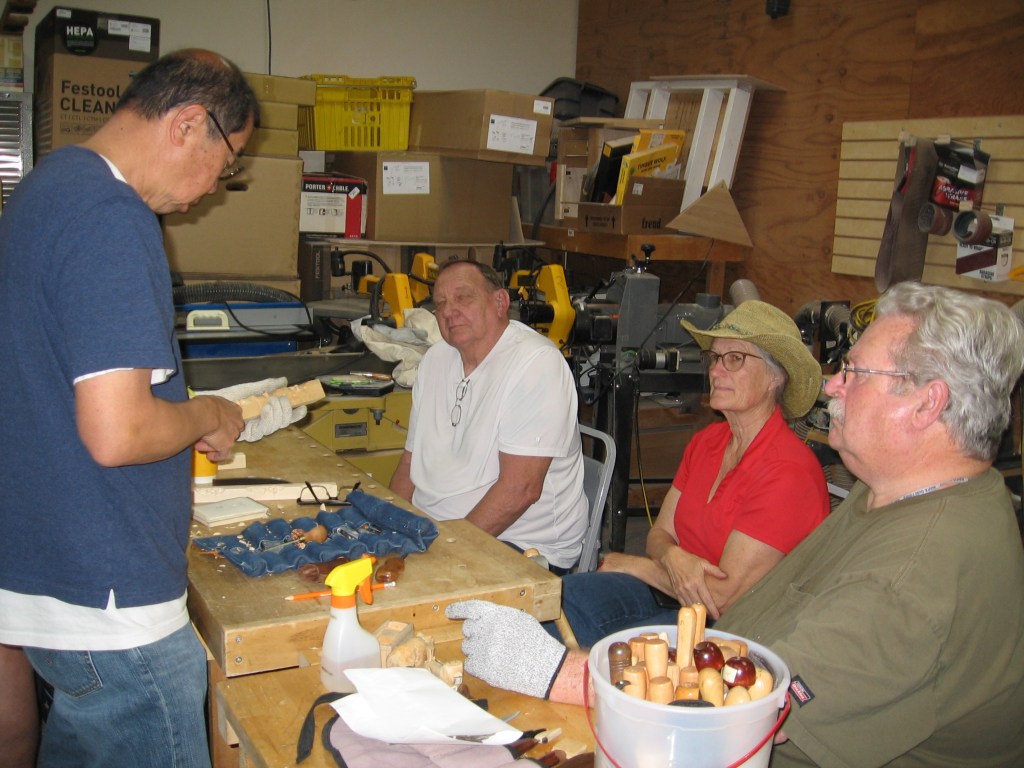
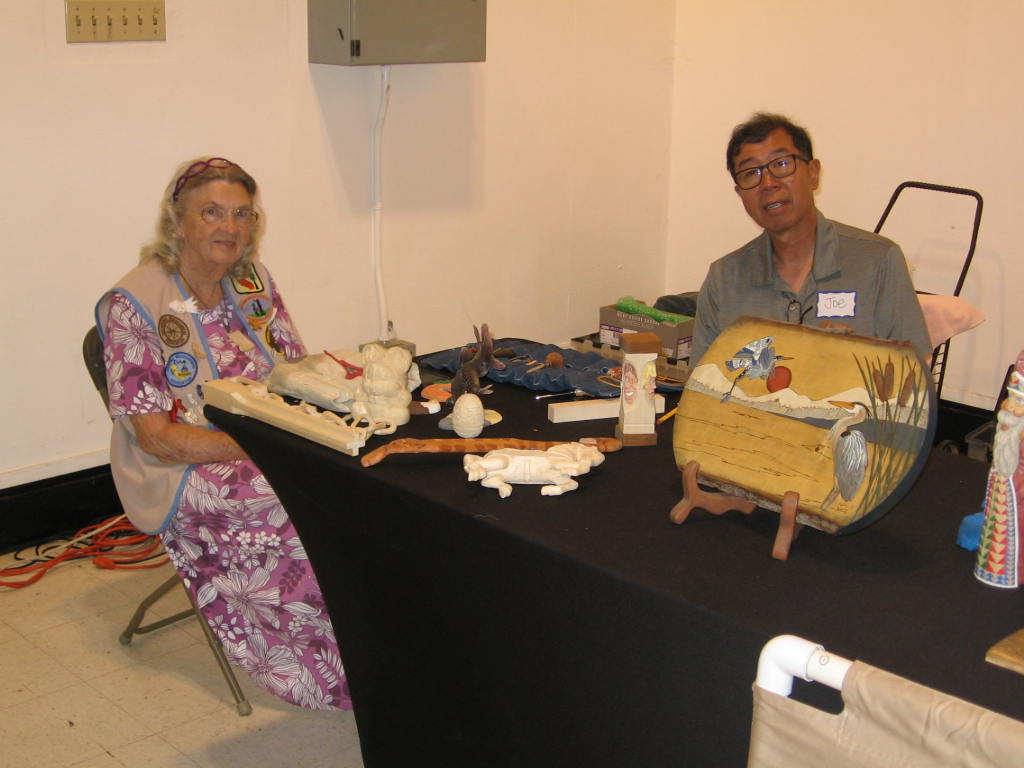
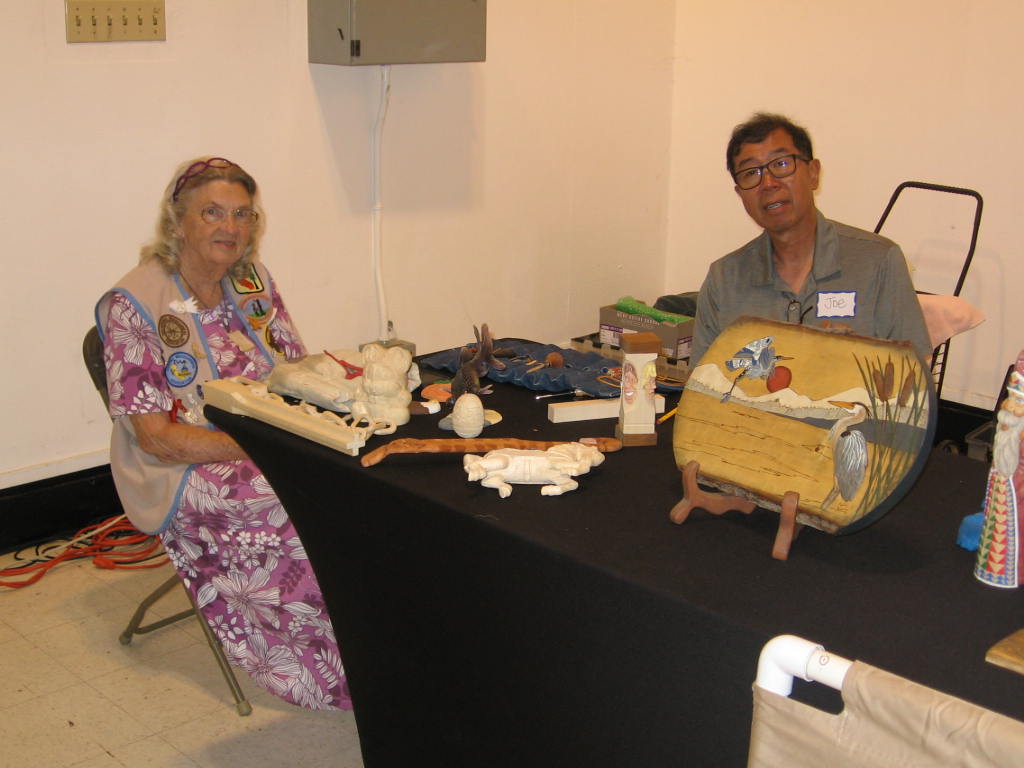
CWA member Joe You demonstrates how to carve a face for a caricature.
Come join us!!
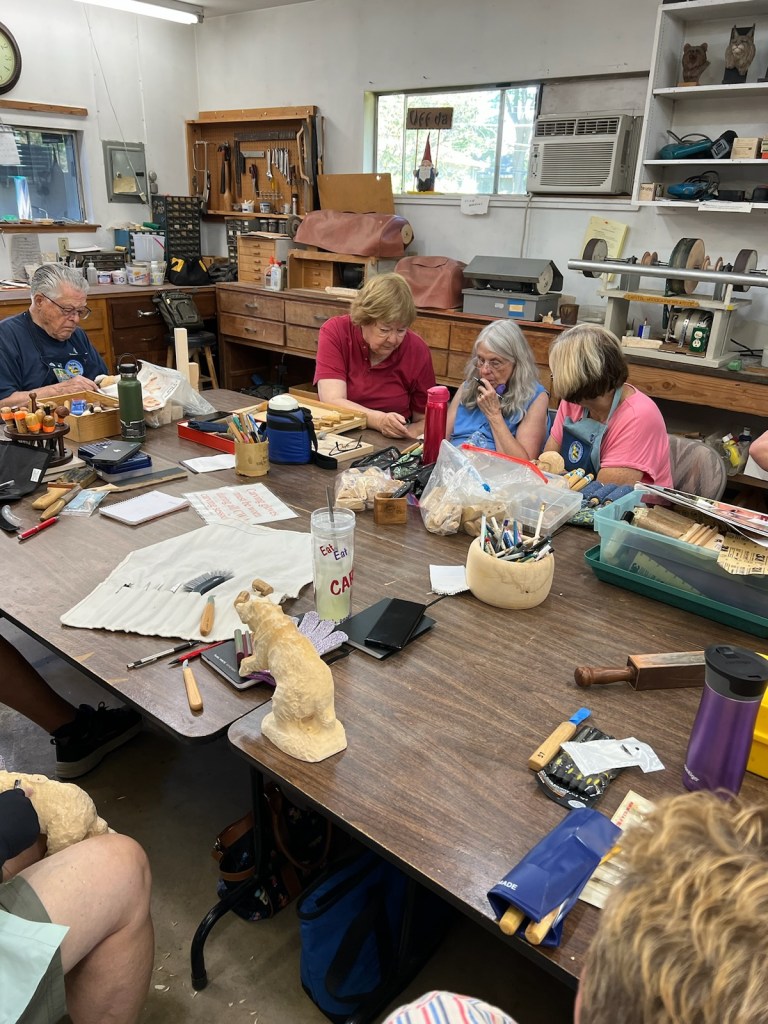
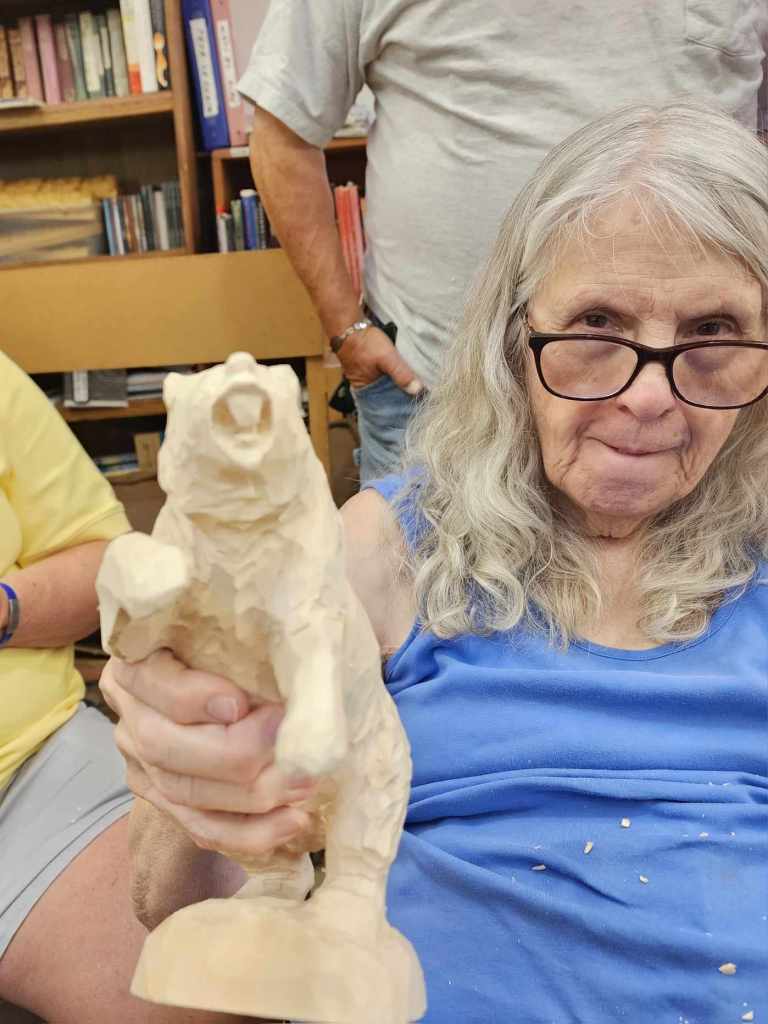
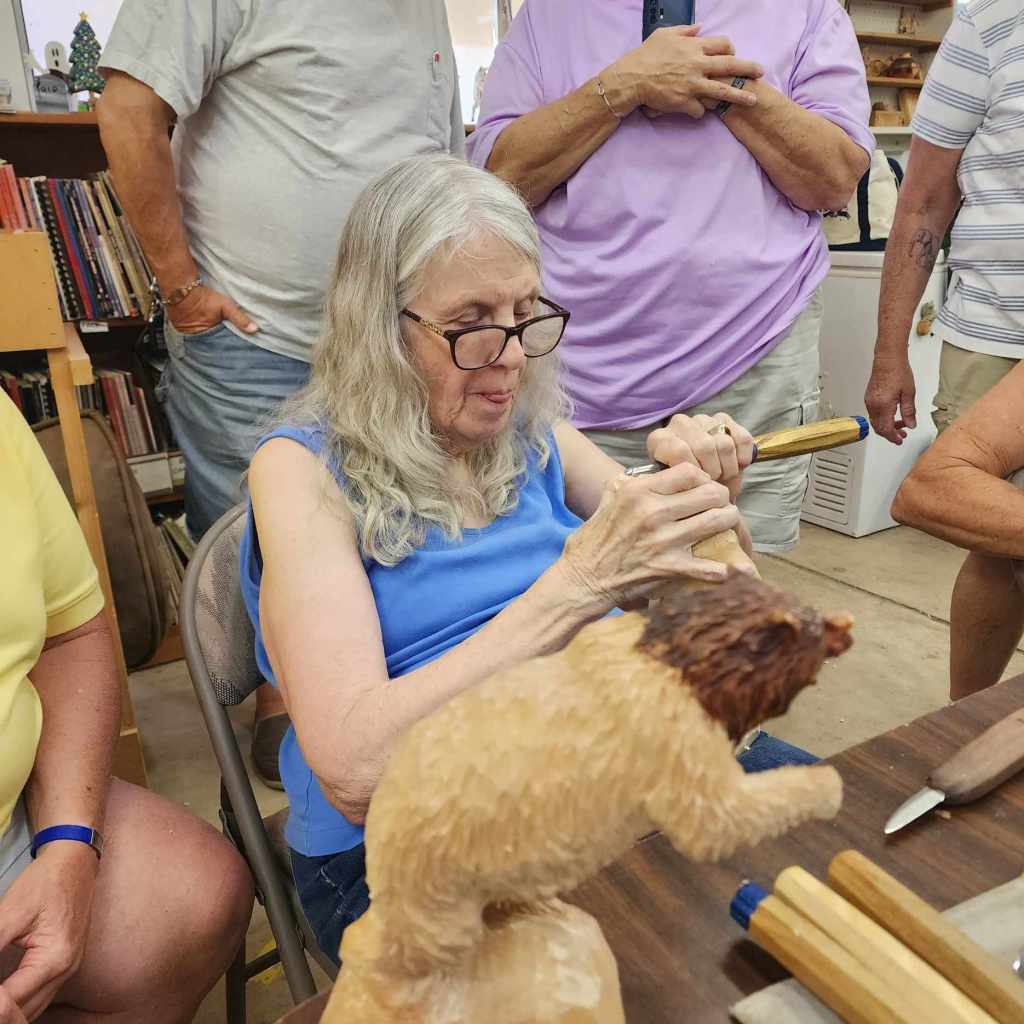
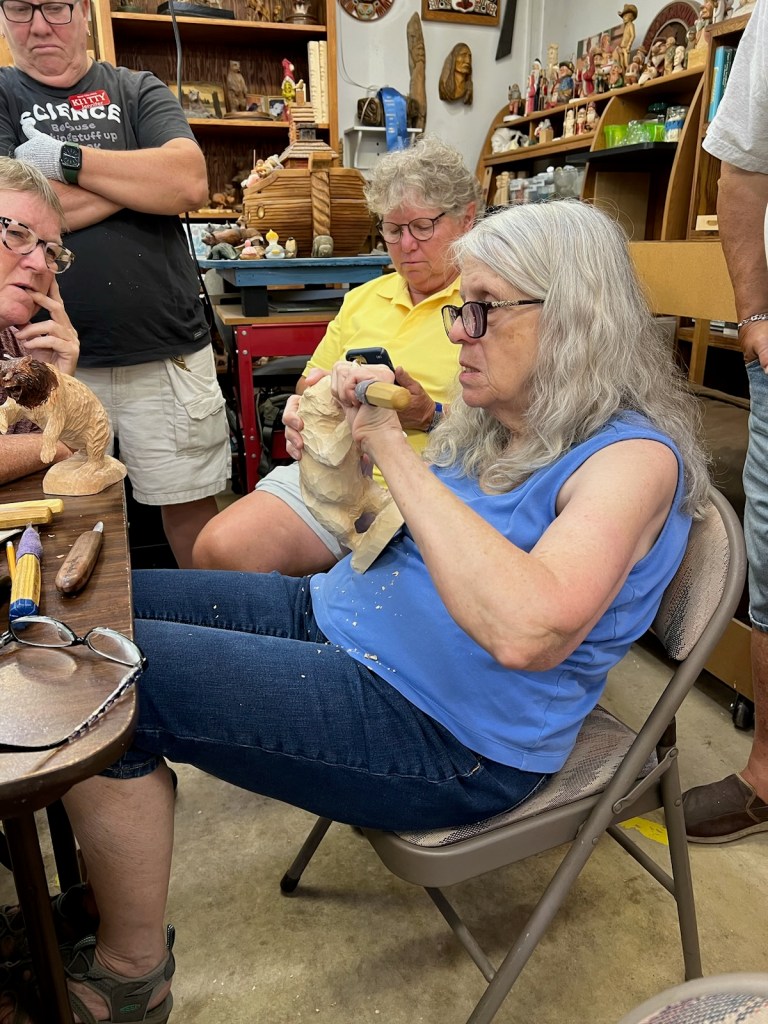
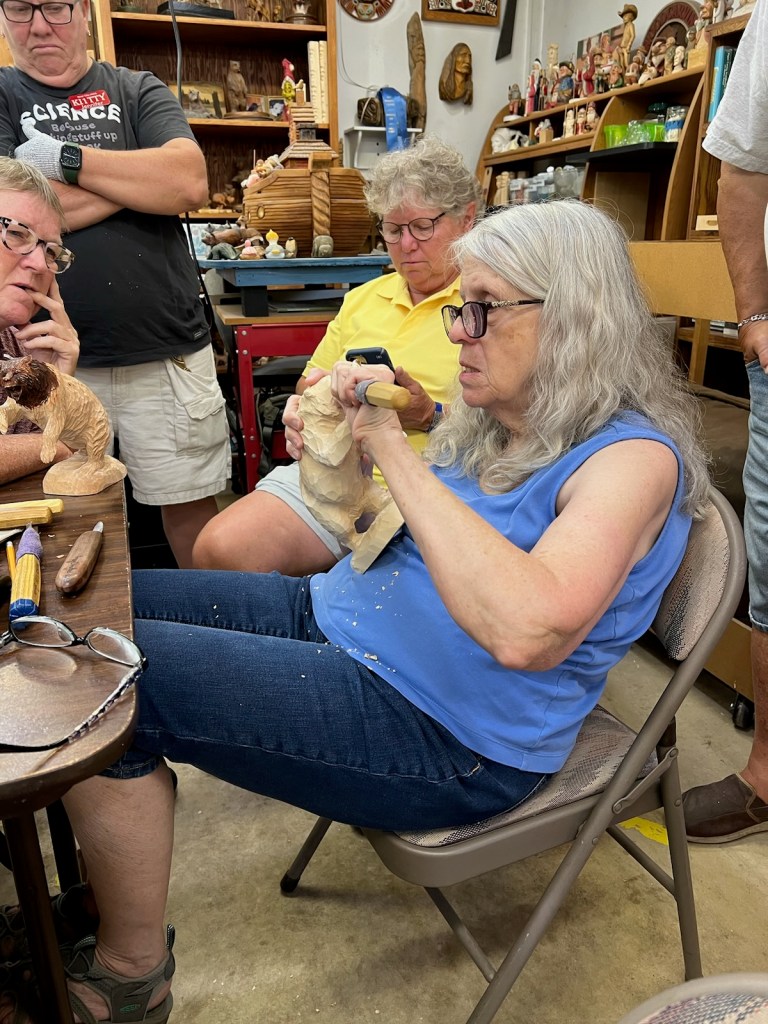
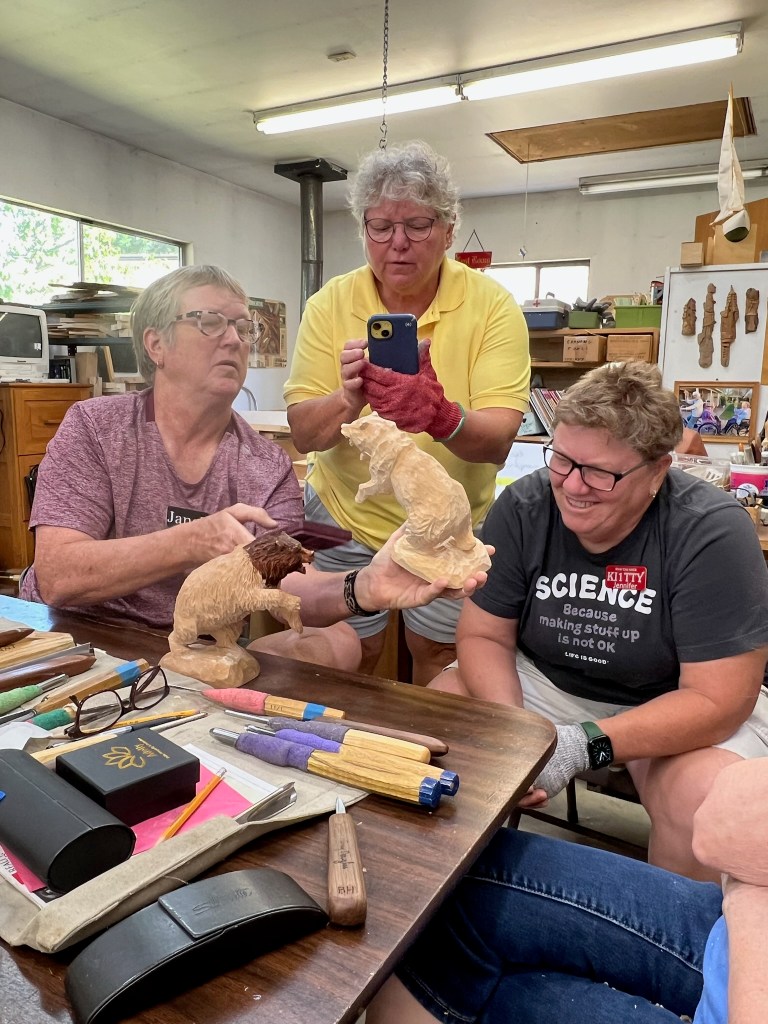
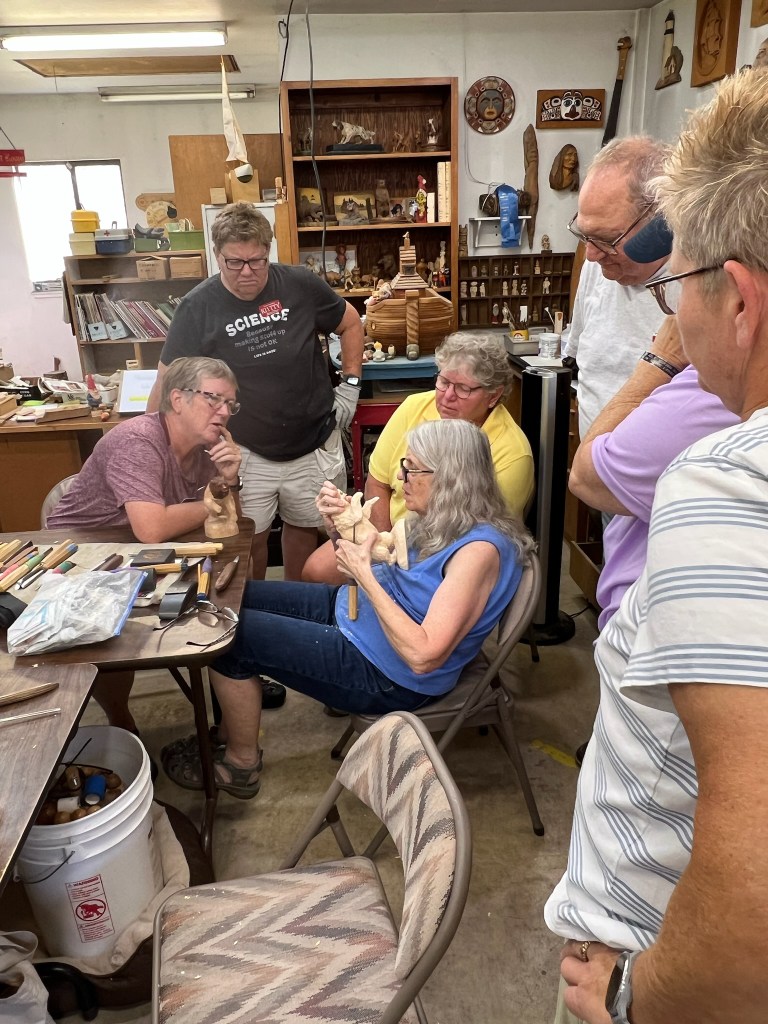
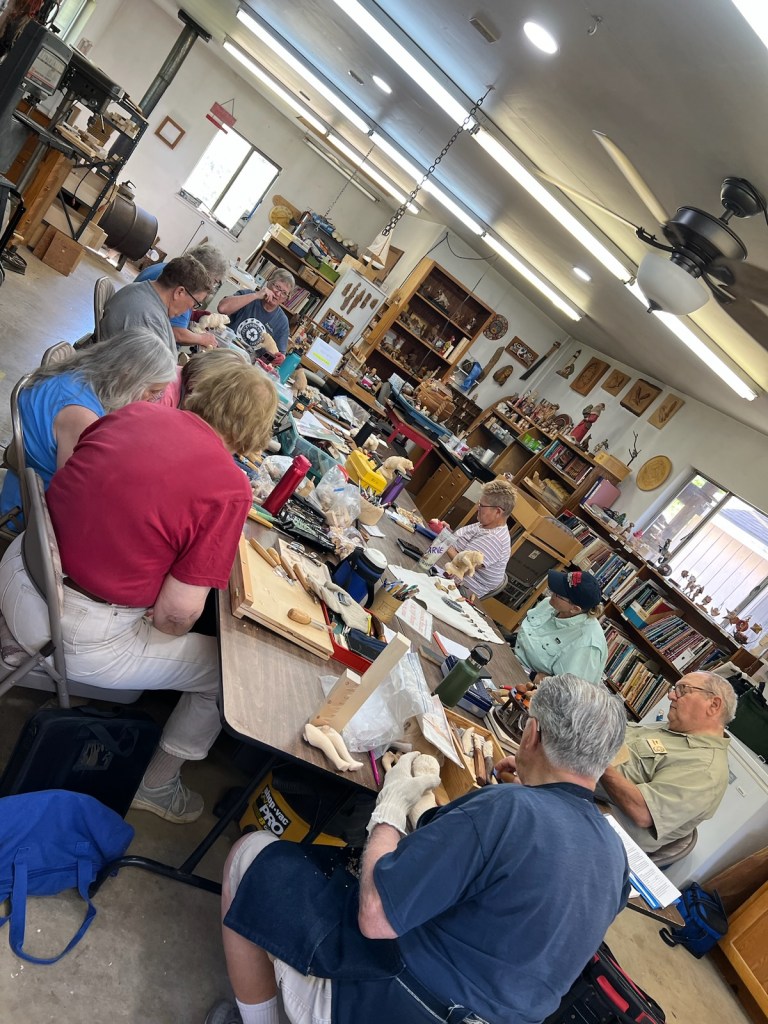
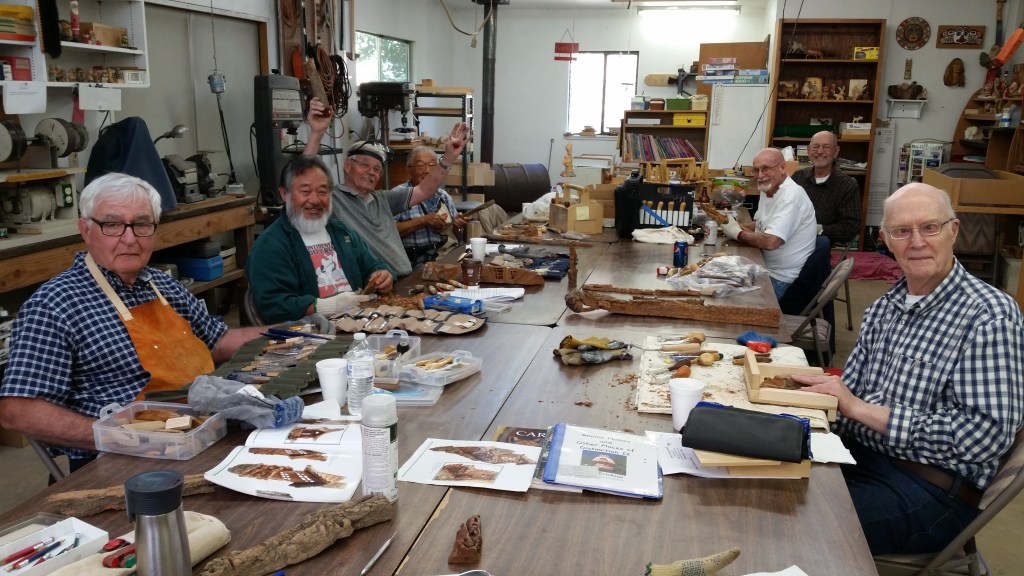
Janet Cordell presented an animal carving class sponsored by Capital Woodcarvers Association. The 3-day class met at Shirley’s shop on June 4,5 and 6, 2024. Nine beginning to advanced carvers took this class. Animal roughouts were provided. Some attendees chose to carve an articulated doll.
Like many instructors, Janet focused on sharp tools as the most important parameter in making a good carving. She dealt with varying skill levels of participants though a combination of group instruction and individual attention. Students found that she was very patient but didn’t “baby” the students. She gave lots of feedback. She was critical, but kind in her comments. Janet handled multiple skill levels and people working on several different projects well. Her sense of humor was also evident when she quipped, “I know a lot about bears, but I don’t ever want to see one.” When one of the participants broke the protruding front teeth off her bear, the comment was, “carve a fish and put it in the mouth”.
Overall, the participants felt the course was nicely paced, and they appreciated Janet’s ability to work with a variety of skill levels and projects with everyone feeling that they had the attention they needed to succeed in their carving. All were gratful for the increase in their personal carving skill level.
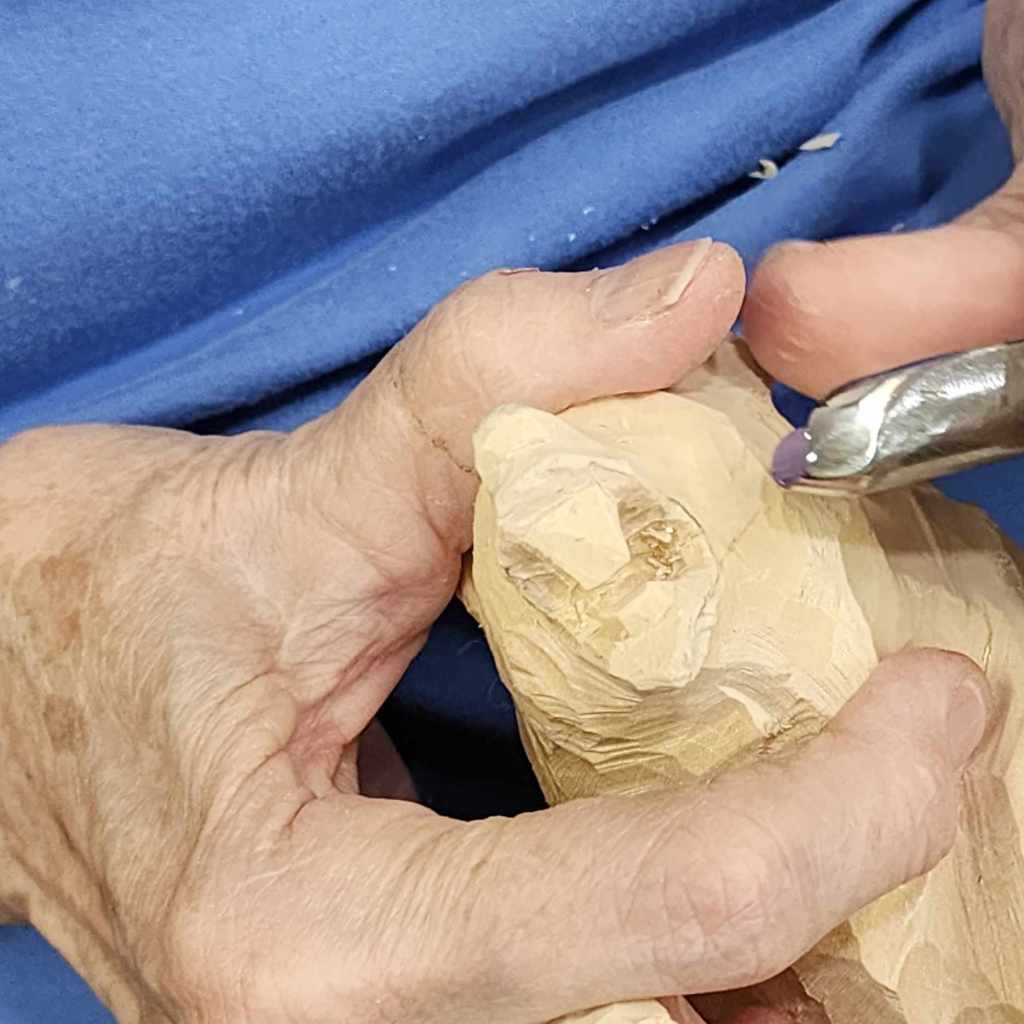
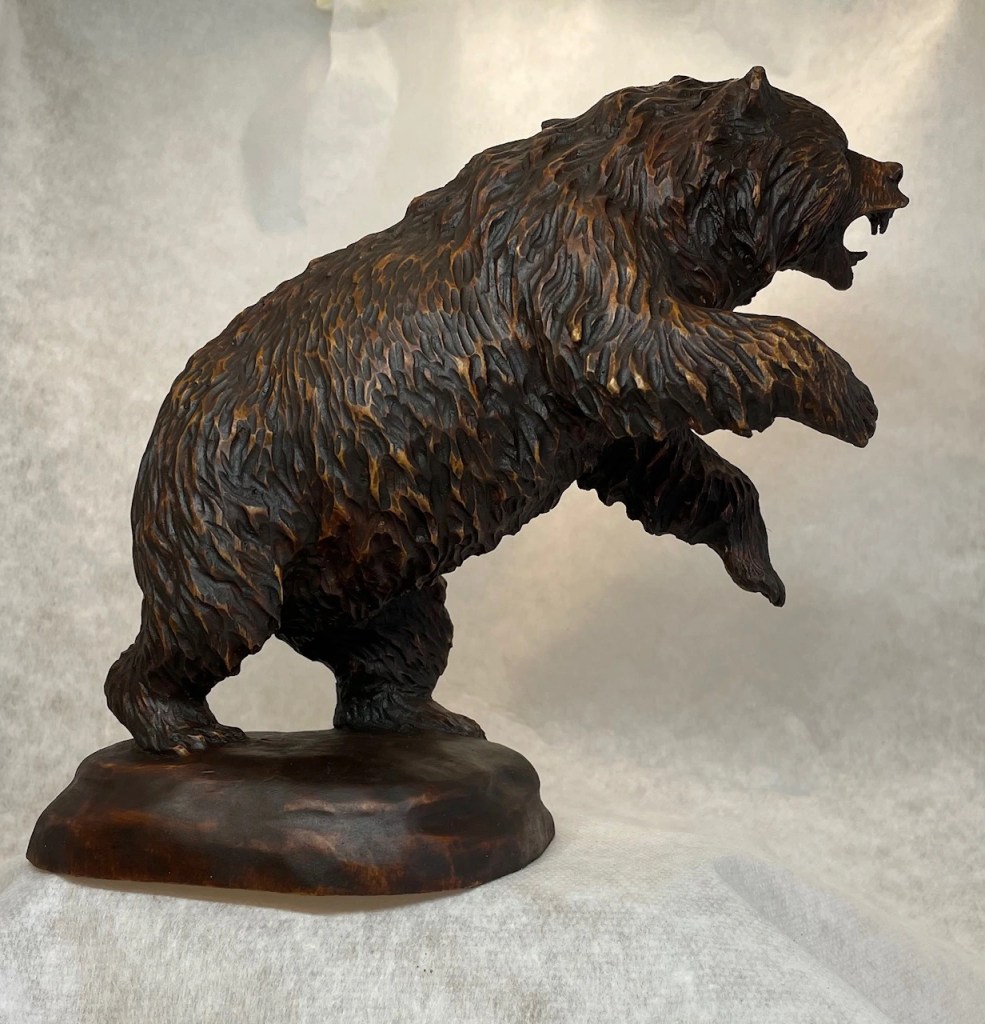
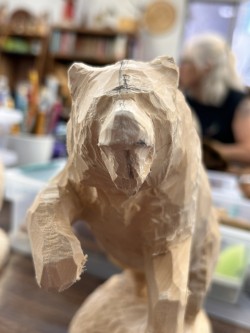
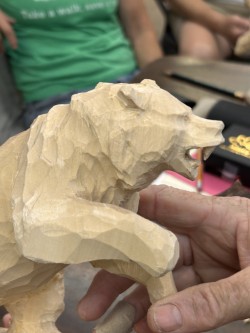
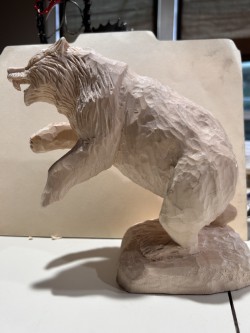
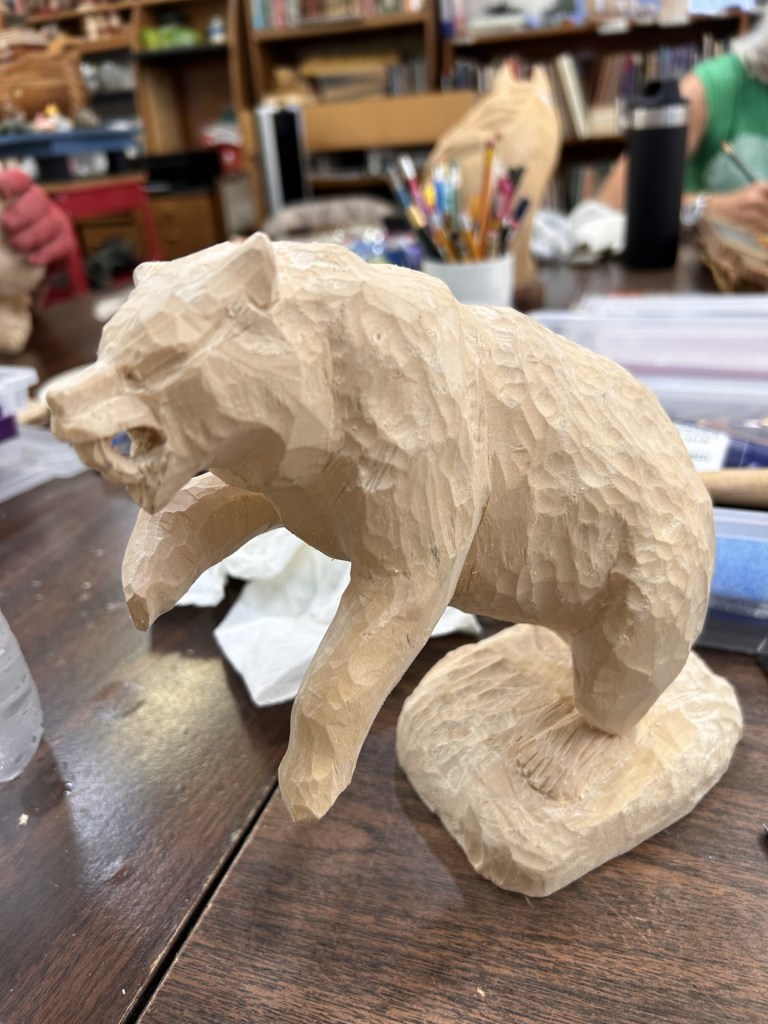
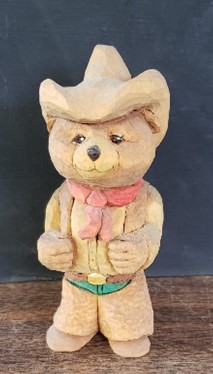
Here are pictures of the instructors model of the finished bear, the instructor the progress during the workshop and the class products.


We are pleased to announce that Janell Darroch has agreed to chair the Seminar program for the Sacramento, Capital Woodcarvers Association. Jenell has many good ideas and brings a lot of enthusiasm and energy. If there are carving projects you would like to undertake please contact her at: 916-662-4486 or email her at sumowumo1@yahoo.com.
We also want to thank Andy Hiroshima for 17 years of organizing our seminars for many participants over the years.
We are working for you and to make our club the best it can be in 2024 and beyond.
There are many different kinds of wood carving applications. For the purpose of this resource we will limit these to the following main types:
Carving in the Round and Caricature Carving: Both these types of carving require carving in 3 dimensions. Carving in the round or realistic carving is carving in 3 dimensions and is limited to some type of scale of a real model. This can include animals, humans, birds, wildlife, etcetera. Caricature carving is 3 dimensional carving but in a more free hand comical sort of way.
Chip Carving: Chip Carving is a precise, detailed type of carving using knives to remove small chips of wood from a flat surface. Often geometric in design these chips are made from triangular cuts and once removed produce an intriguing design on the surface of wood.
Relief Carving: Relief Carving cons·ists of carving a figure or picture on a flat wood surface. Relief carving is broken into 3 types; Lbw Relief, Medium Relief and High Relief. The difference in types is how many layers of depth make up the relief carving. “Low Relief” is when the picture barely stands out from the background (usually 2 or 3 layers) while “High Relief” (usually 4 or more layers) stands out considerably.
Bark Carving: Bark Carving is a mix of Relief Carving and Chip Carving on a piece of Bark. This type of carving is very free form and usually consists of many small cuts and chips to make up the complete carving picture. The two main types of bark carving are whimsical houses and wood spirits.
Power Carving: Power Carving is using power tools like Dremel, or Foredem, and a variety of cutting and smoothing bits to establish the same results gained by hand carving but in a quicker amount of time.
There are a number of different types of wood suitable for carving. As a beginner the best choice for most types of carving will be basswood. Basswood is a hard wood with a uniform grain; it is easy to carve and holds detail well. You can purchasebasswood from your local Woodcraft store, on line, or through the club. Other types of wood suitable for carving are butternut, tupelo, white pine, cherry, walnut, cottonwood bark, and driftwood.

Compiled by Ed Santarosa and Andy Hiroshima from various sources
GENERAL
SPECIFIC
SUGGESTIONS
Use a knife with a handle that is comfortable and easy to grasp. A knife with a large diameter handle is harder to control.
Soap (Ivory) – squeeze before you buy. If it is soft it is good for carving. If it is hard it will not carve well)
Balsa wood
Foam blocks – used by flower arrangers, generally green
Basswood
Pine
Practice and repetition will improve skills
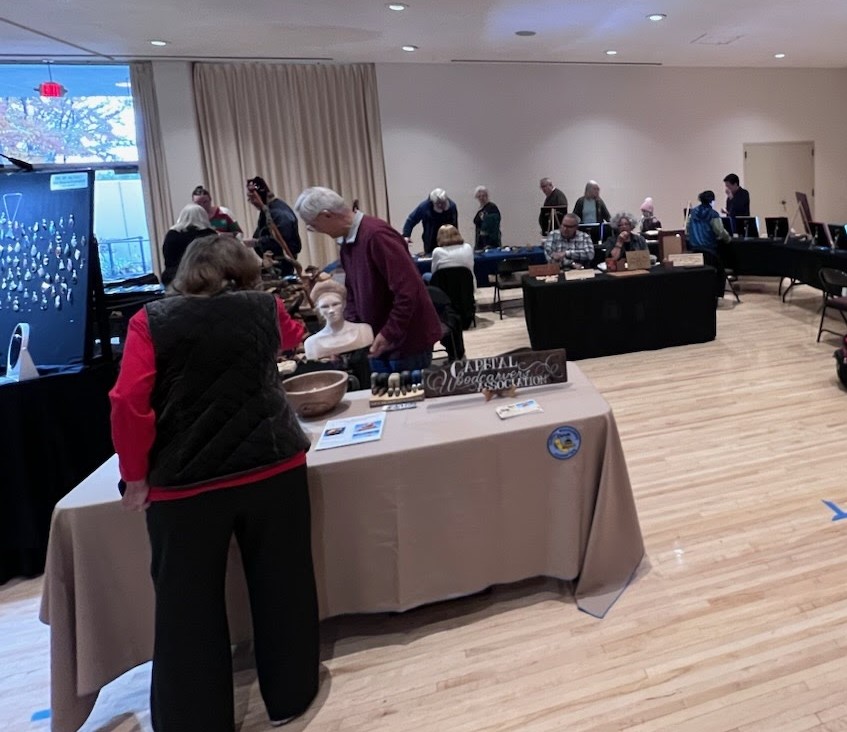
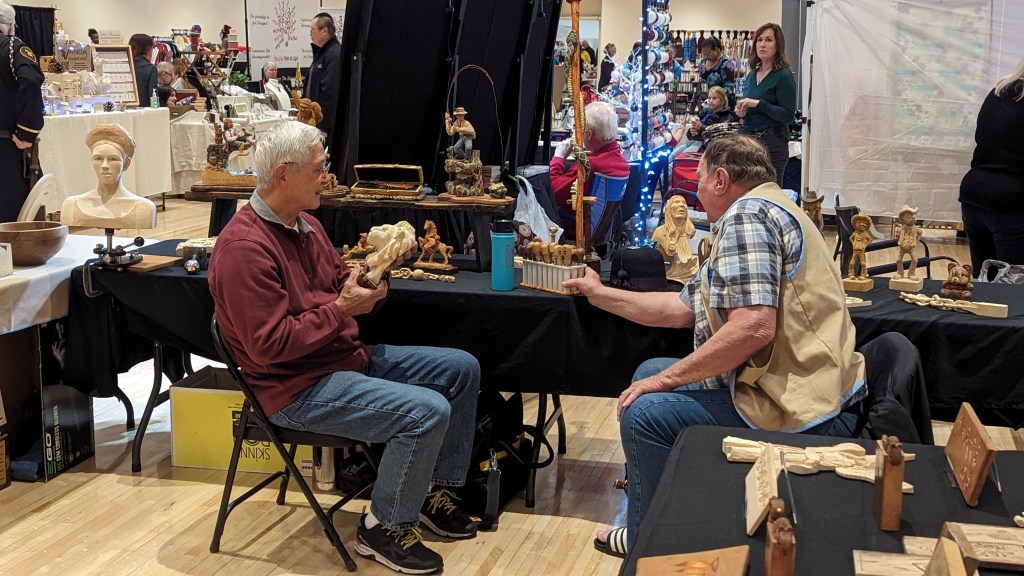
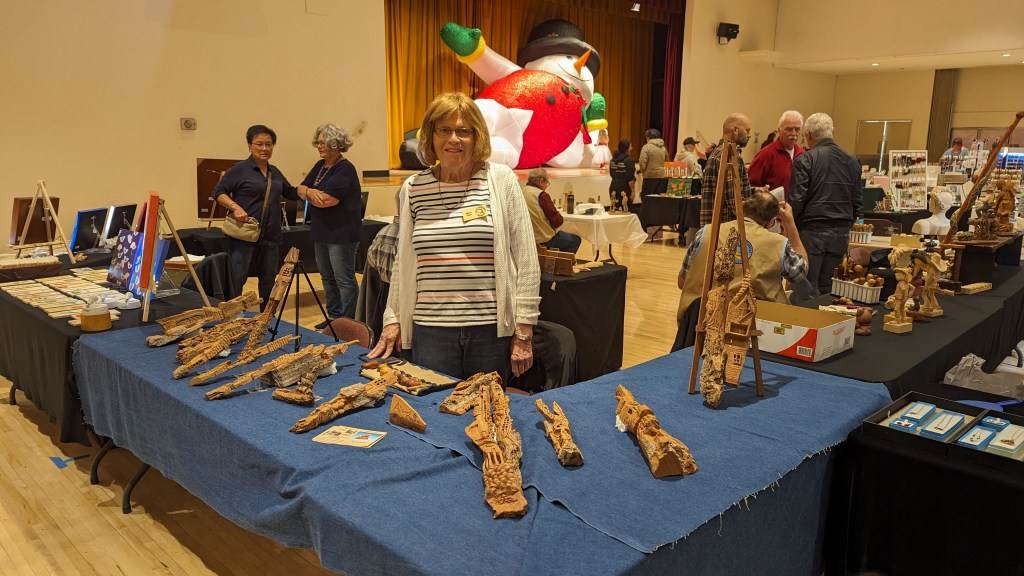
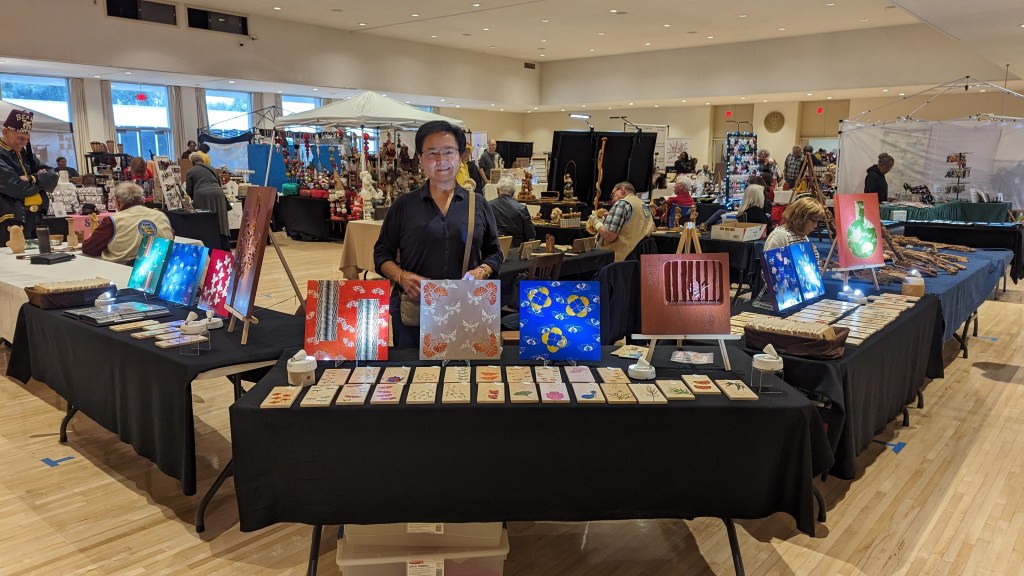
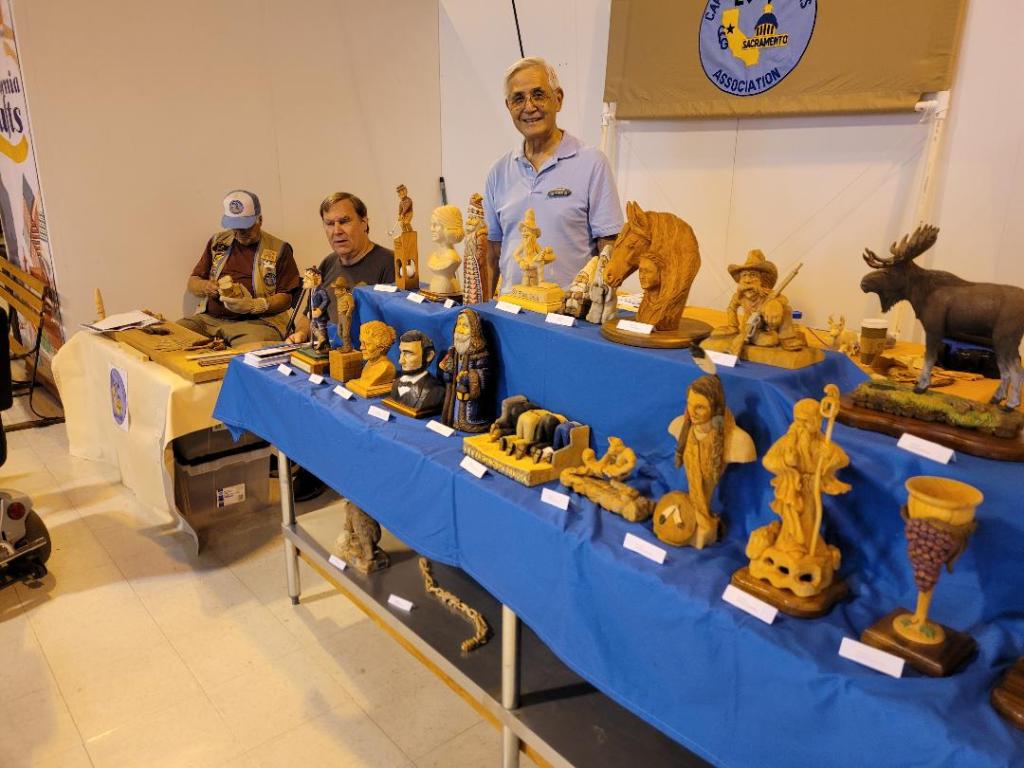
Ben Ali Shriner’s 54th Annual Craft Fair that was held on Saturday, December 2 with all proceeds going to the Ben Ali Transportation Fund. CWA had 4 – 10’x10’ booths and 12 tables for the event. Two of the booths were used by Diana Kwan and Alison Cook to sell their carvings and the other 2 booths were staffed by club volunteers to show carvings by various club members and to promote the club in general.


/
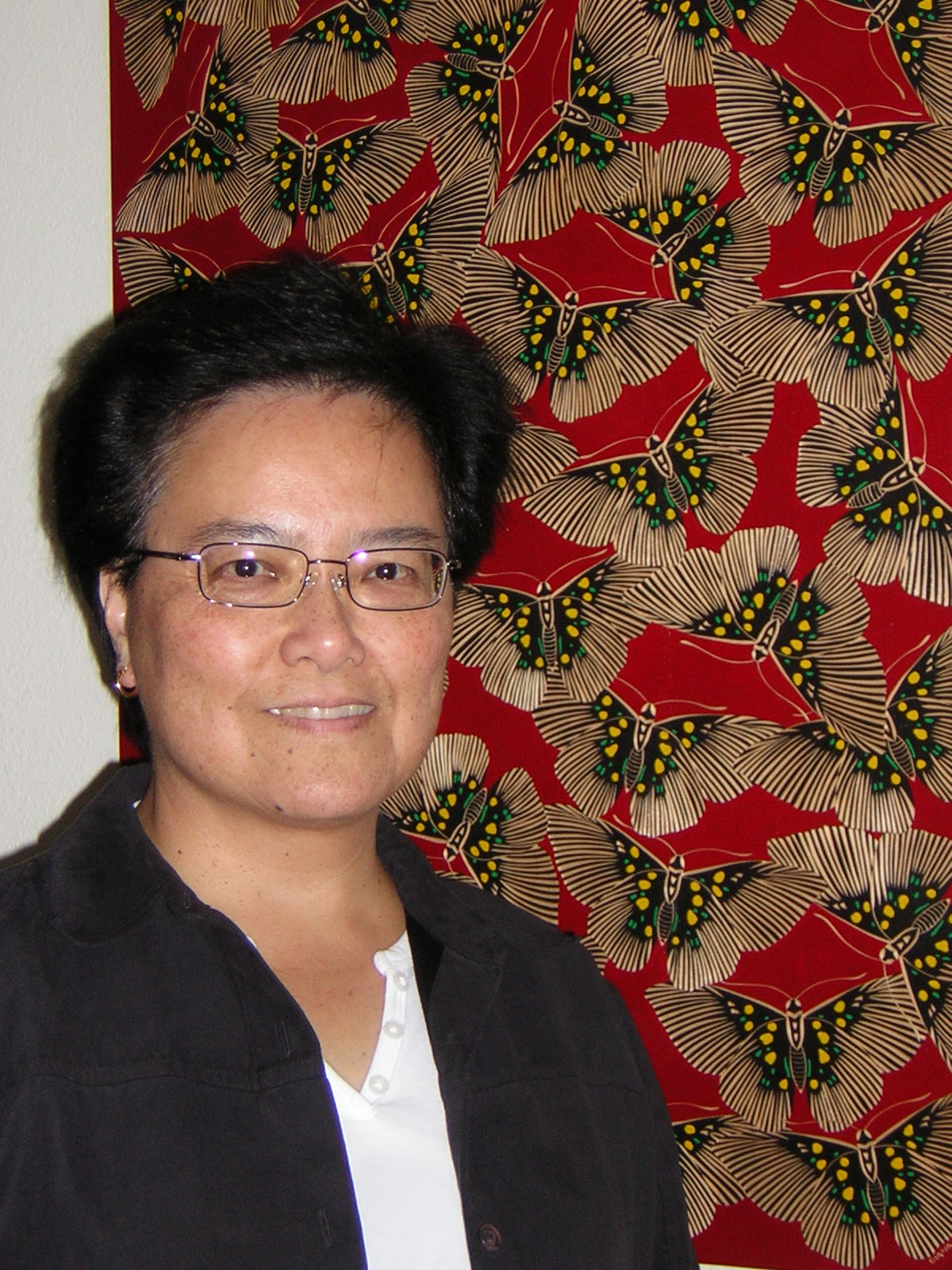
Featured CWA carver Diana Kwan: Born in Shanghai, raised in Hong Kong, Diana came to featuring Asian themes in her carvings naturally. In addition to Chinese, Japanese and Korean themes, she has been influenced by Native American, African and European touches through the years. Diana says,” I am open to many ideas”, Her work reflect that perspective, If you have seen her beautiful carvings (if you haven’t you should) you will know that she combines relief and chip carving. While that is somewhat unique, her real claim to fame is the inclusion of color in her pieces. That has turned her carvings into works of art that have been featured in high end art shows and have brought her international recognition and many commissions for elaborate pieces in homes and at the State Capitol building. This recognition and fame did not come easily, it was the result of years of hard work and dedication to excellence.
Diana studied Microbiology in the late 60’s at SF State. She also played field hockey as she had done in high school in Hong Kong, almost going to the Olympics in 1968 (ask her about that one). She met her husband, Stan in Microbiology class at SFS.. After they were married, she gave up her career to raise 3 kids.
Her entry into wood carving began in 1975. She says she “felt like carving” and went to a hobby store to buy some cheap tools and a piece of wood. She still has that first carving. Three years later she saw a CWA show at Florin Mall and signed up for the club. Her first CWA meeting was at a member’s house. That was 43rd years ago and she has been a member ever since, serving as President (4 times), Secretary, Newsletter Editor and Show Chair and She remembers everyone being very friendly and generous —just like now. She is currently the CWA Show Chair.
Diana focused on relief carving until the mid 1980s when the club brought Wayne Barton, a famous chip carver to Sacramento for a five-day class. Diana realized that chip carving “would benefit in design with my reliefs.” At first, she carved the familiar chip carving style of geometric designs. Then she began to perfect her technique and create more and more elaborate designs. After she became a CWA member in 1978 she started participating and entering into competition in numerous woodcarving shows all over California, and she made many friends.
Eventually, she incorporated color into her chip carving, defining a whole new style that is still largely hers alone. CCG had discussions whether the new style was chip carving or a separate category. After a lot of discussion, they decided to just include Diana’s pieces in the regular Chip carving category. Diana’s view is, “Chip carving is a style of carving using one knife (in my case) to incise and cut out pieces of wood (usually basswood) to create designs.”
There is an ongoing discussion about whether wood carving is an art form, a craft or just a hobby. Diana’s color addition and creative free form designs answered that question, and she began entering her work in juried art shows.
In the late 1980’s and early 1990’s, she was accepted into galleries—The Artist’s Collaborative Gallery, The Artery, Sutter, Auburn. Then, she challenged herself to apply for prestigious fine art shows where her work had to be subjected to juried selection. She was accepted by many high end shows. where her work had to be subjected to juried selection—Sausalito, San Francisco Women’s Show, Sacramento Art Festival, Davis Art Center, Crocker Art Show, Crocker-Kingsley Art Show, Blue Line Shows. I asked her if she thought that the combination of free form chip carving and painting created a unique kind of wood carving more suitable to fine art shows than the majority of carving styles. She said that there is a bias against wood carving. People think it is a craft. A turning or an abstract wall hanging is considered more art than a relief or caricature carving, Diana opened a lot of eyes toward wood carving with her painted chip carvings, some of which are very large. She has been an ambassador for wood carving in the world of high-end shows. She has a solo show planned for September 2021 at The Artery in Davis.
As her work became known, she took on many commissioned pieces, in Relief and Chip for private homes, businesses and churches. These include mantels, furniture, communion tables, altars, cabinets, balusters, a desk for the Legislature and furniture for the Senate Hearing Room in the State Capitol. Her decorative pieces hang in many homes in this country. Since her work was in galleries visited by international visitors her carvings are all over the world.
Diana summarized her carving experience this way: “Never in a million years would I have thought to be a woodcarver. Somehow woodcarving found me. As I have always said I enjoy the camaraderie and appreciate the generosity of the members and people I have met along the way. I have always appreciated the traditional arts, things made by hand, by craftspeople. Pretty cool to be in that group.”
Featured CWA carver Joe You. Like many members of our club, Joe grew up in Sacramento. He attended C.K McClatchy high school where he met his future wife, Chris, in home room. Since Chris focused on English and Joe on science, they had few classes together outside of home room. Luckily, they went to the same church and eventually both went to UC Davis where they got to know each other better. Joe majored in botany and became a UC Master Gardener. After graduation from UCD he went to dental school at UOP. Halfway through Dental School Joe proposed to Chris and they were married in 1977. Following Dental School, Joe had clinical placements in Elk Grove and on the Mendocino Coast (Joe’s favorite). Joe and a partner set up a practice in Elk Grove that they kept 42 years. I asked joe what reflections he had on his career. He said, “I had the greatest patients in the world, great staff and I surrounded myself with great people.” Joe and Chris have three children. Two sons live in Elk Grove and their daughter lives in Sunnyvale, and they have six grandchildren.
Like other CWA members I have featured, Joe’s first club contact was at a CWA annual show at Country Club Plaza in 1993 or 94. Joe was an artist and he loved wood; carving seem the ideal place to combine these two interests. He was invited to a member’s house where he got a knife and some wood. He started with a Santa carving, giving him his start with CWA He enjoyed making signs and carved one for the front of his house. One Saturday CWA member Bob Travis had an open house. He had a collection of caricature carvings being photographed for a magazine. This was Joe’s first exposure to caricature carving, and he was instantly hooked. Here was a way to combine his interest in art with wood carvings that told a story. Bob was the education chair for CWA, and he arranged for many outstanding nationally recognized carvers to offer workshops in Sacramento. Joe eagerly took all the classes Bob scheduled, learning from some top names in caricature carving. The club also had a Rendezvous over the Labor Day Weekend. Four days of carving with instructors from across the country. Joe’s expertise grew rapidly. Bob Travis was also a founding member of the Caricature Carvers of America, an exclusive group of 25 members who are voted into membership when a vacancy occurs. He nominated Joe and Joe was admitted in 1999.
Joe found that when he was asked to carve a face as a demonstration, it took him too long. His solution was practice, practice, practice, practice. Literally hundreds of faces later he now enjoys carving them and has developed techniques that he willingly shares with CWA members at our regular meetings. When Joe was first elected to CCA he didn’t realize what an honor it was, but he soon realized that rubbing shoulders with some of the world’s best caricature carvers was an honor that he compared to Olympic Athletes learning from each other.
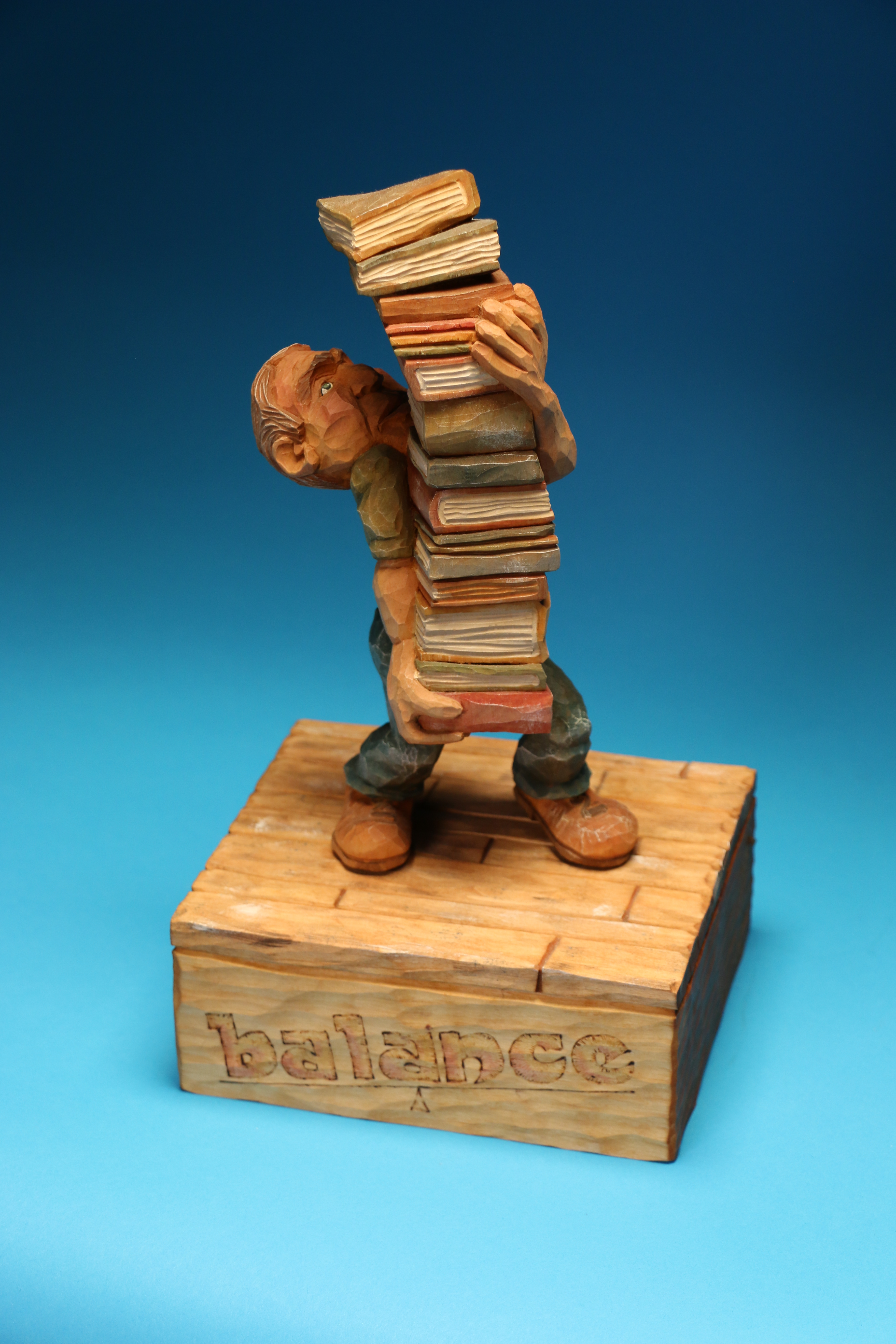
Joe has had some interesting experiences relating to his carving. CCA does various fund-raising events to support their organization. One of those was an on-line auction of carvings with each member providing one. Joe’s carving was purchased by a Canadian wood carver. Sometime later, Joe was in Canada and met the man who had bought his carving. Both men found it interesting to meet the person behind the name. Joe did a workshop in Stevens Point, Wisconsin. The members of the club there had obtained a design for one of Joe’s carvings and several had carved it. It was a great feeling for Joe to see the club members versions of his design and to have been copied by the local carvers. As Oscar Wilde noted, “Imitation is the sincerest form of flattery ….”. The carving that was copied is called “Balance” and is shown here.
I asked Joe about the value he sees in CWA. He said, “If it weren’t for the club, I wouldn’t be a woodcarver” then he added, “The purity of carving is just being in it for the joy. The club is the place to go. Members support each other, and the annual show is always a highlight”. Over his years in the club, there have been lots of people come and go from whom he has learned. He owes a lot to the club.
His advice to new carvers: “Choose something you are really interested in. Focus on it, and get really good at that. There is greater satisfaction in being really good at something than being mediocre at a lot of things.”
On one trip Joe was at a CCA meeting in a shop in Boise, Idaho. As he looked around at this great shop, he thought about carving at home in his garage where he froze in the winter and sweltered in the summer, so he decided to build a standalone shop in his backyard. He designed what he wanted and got an architect to draw up plans. He hired an independent contractor who had constructed fairy tale cottages. The resulting shop is a wonderful space where he can work with power tools and his hand tools, do his painting, and create his fantastic caricature stories. There is also space to display carving’s, some his and some by others. He included a table and chairs for fellow carvers to sit and exchange ideas. Joe generously included his shop in the CWA Shop Hop tour a few years ago.
Joe thought about including a bathroom for convenience. Chris’s first question was, “Who’s going to clean it?” That was the end of that idea. She named the shop “the Doghouse” so when people asked where Joe was, she could say, “He’s in the doghouse.” CCA does big projects that involve carvings by members. One street scene was brought to Joe’s shop in three pieces and assembled for a photo shoot. There was lots of black paint on the background and inevitably that led to black spots on the floor. The spots are still there as a reminder of the project.
While Joe talks about the value he has gotten from the club, the Club has also benefited from his participation in many ways. He has served as President and has contributed to the annual show by running the silent auction and enhancing the exhibits by displaying his caricatures every year. Joe is also a willing and available mentor at club meetings and in his shop. We are fortunate to have a carver of his skill in our club.
President Leroy Stebner stebner@sbcglobal.net
Vice President Andy Hiroshima ahiroshima05@yahoo.com
Treasurer Libby Schram libbyschram@yahoo.com
Secretary James Veach jveach369@yahoo.com
Major Seminars Andy Hiroshima ahiroshima05@yahoo.com
Mini Seminars vacant
Newsletter Editor James Veach jveach369@yahoo.com
E-Mail & Roster Terry Hajek terrynandrea@comcast.net
Shirley’s Shop &
Library Shirley Coffelt
Annual Show Vacant
Webmaster Alison Cook alison.cook99@outlook.com
Diana Kwan in front of “Dancing” 36”x24” Basswood Chip Carving. Private Collection.
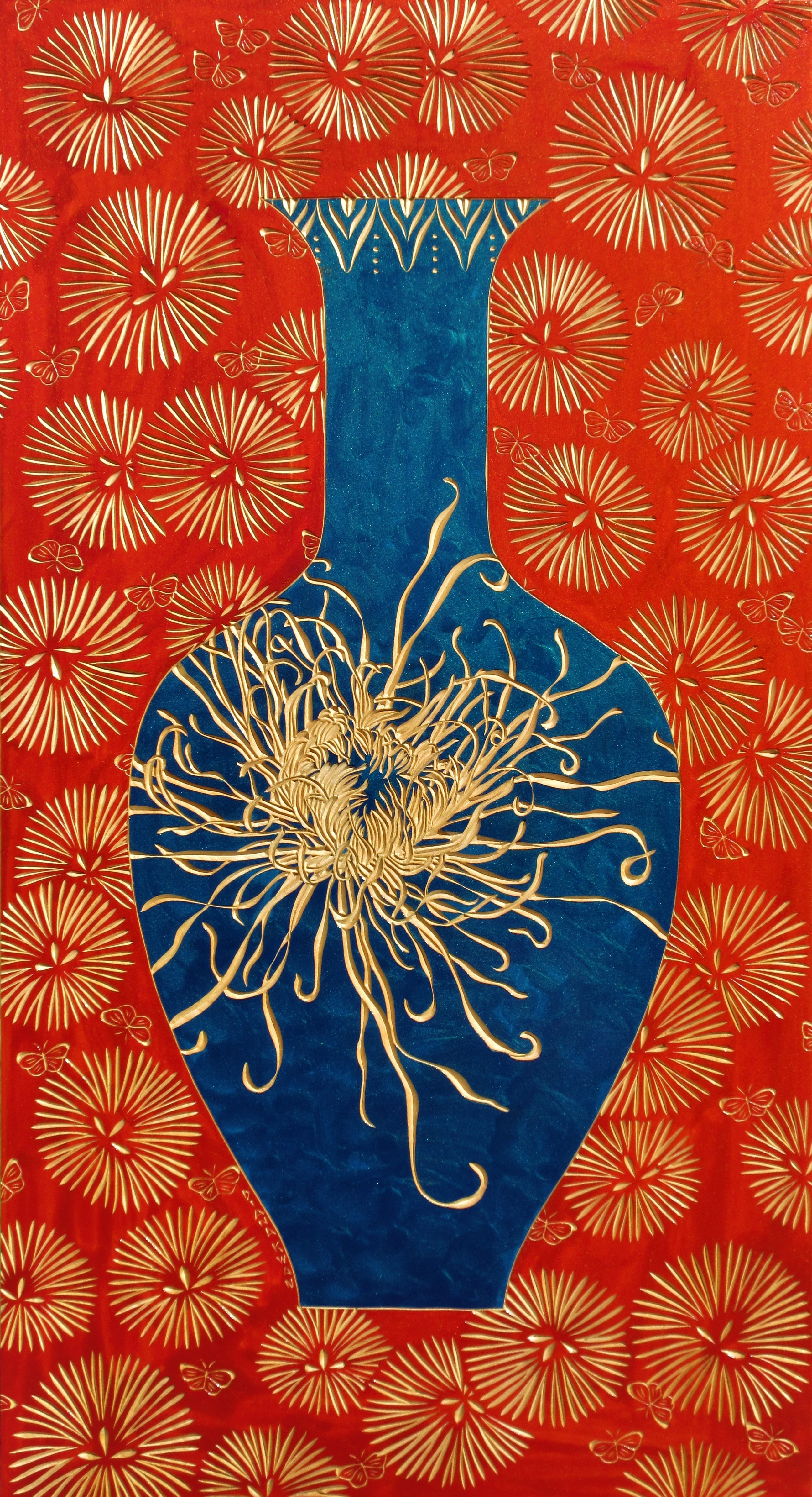
“Blue Chrysanthemum Vase” 26”x14”
Basswood Chip Carving. Best Of Show.
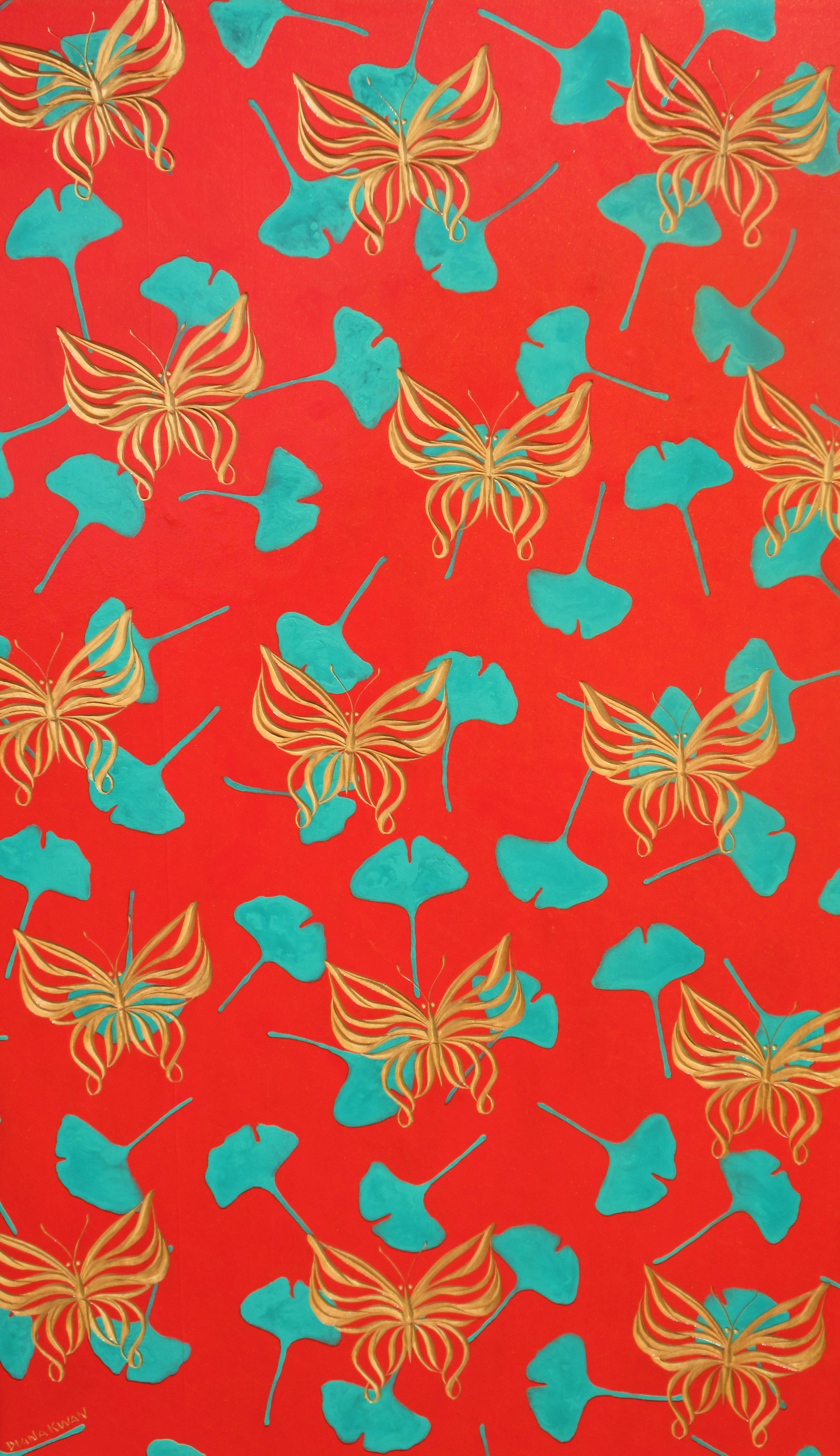
“Butterflies And Gingko On Red” 24”x14”
Basswood Chip Carving.
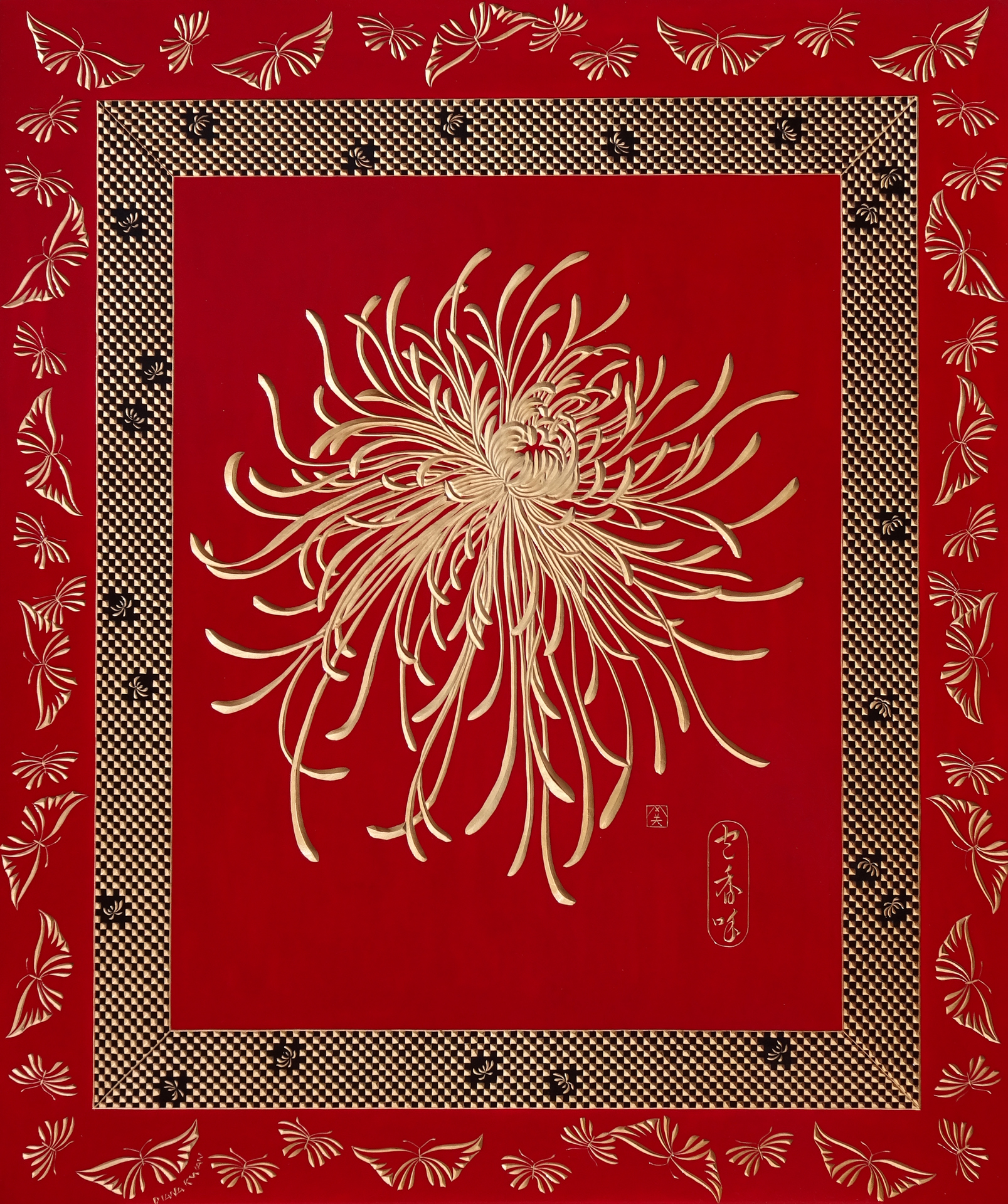
“Flair, Fragrance, Flavor” 24”x21”
Basswood Chip Carving. Best Of Show.
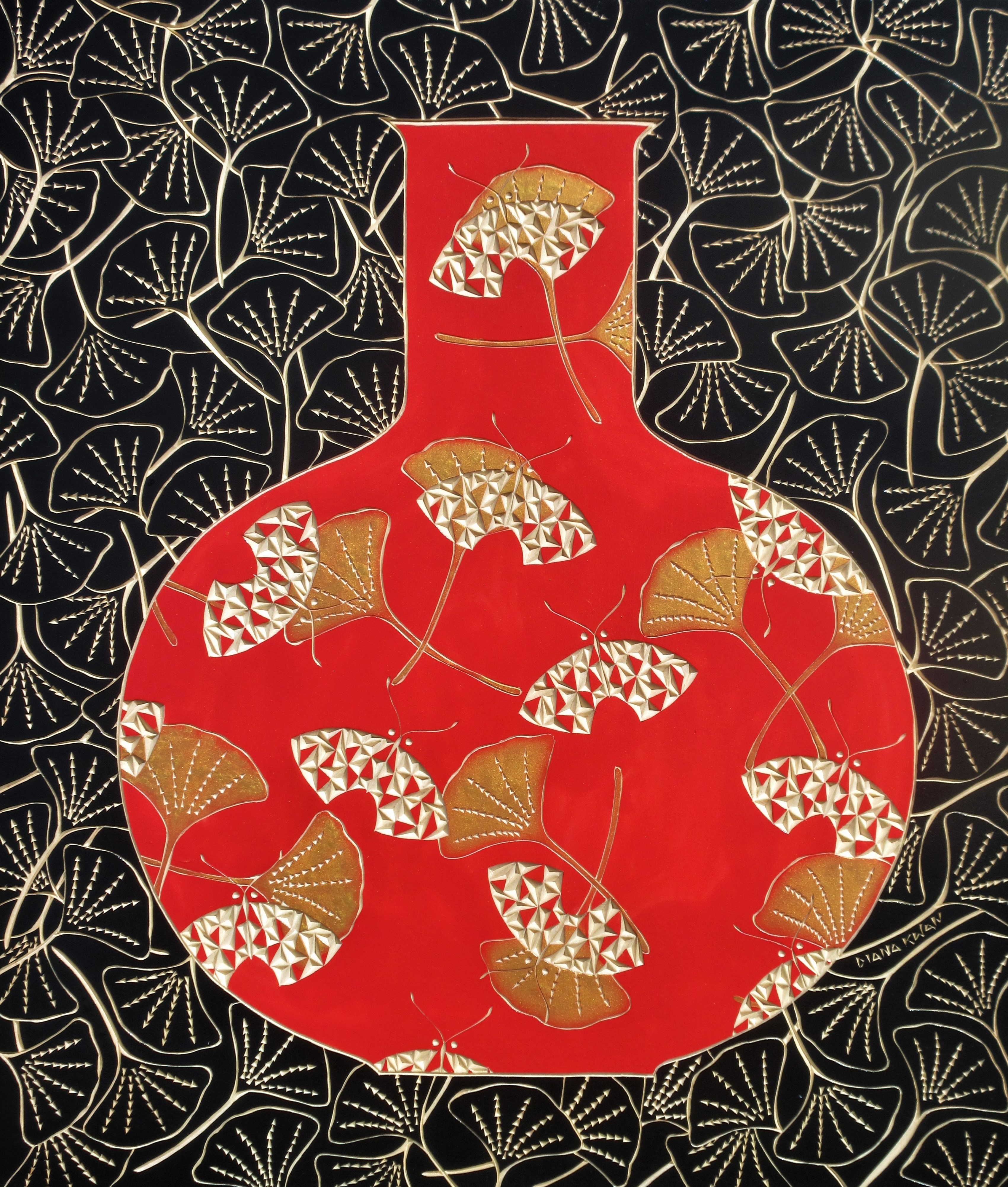
“Red Vase With Butterflies And Gingko” 17”x15” Basswood Chip Carving.
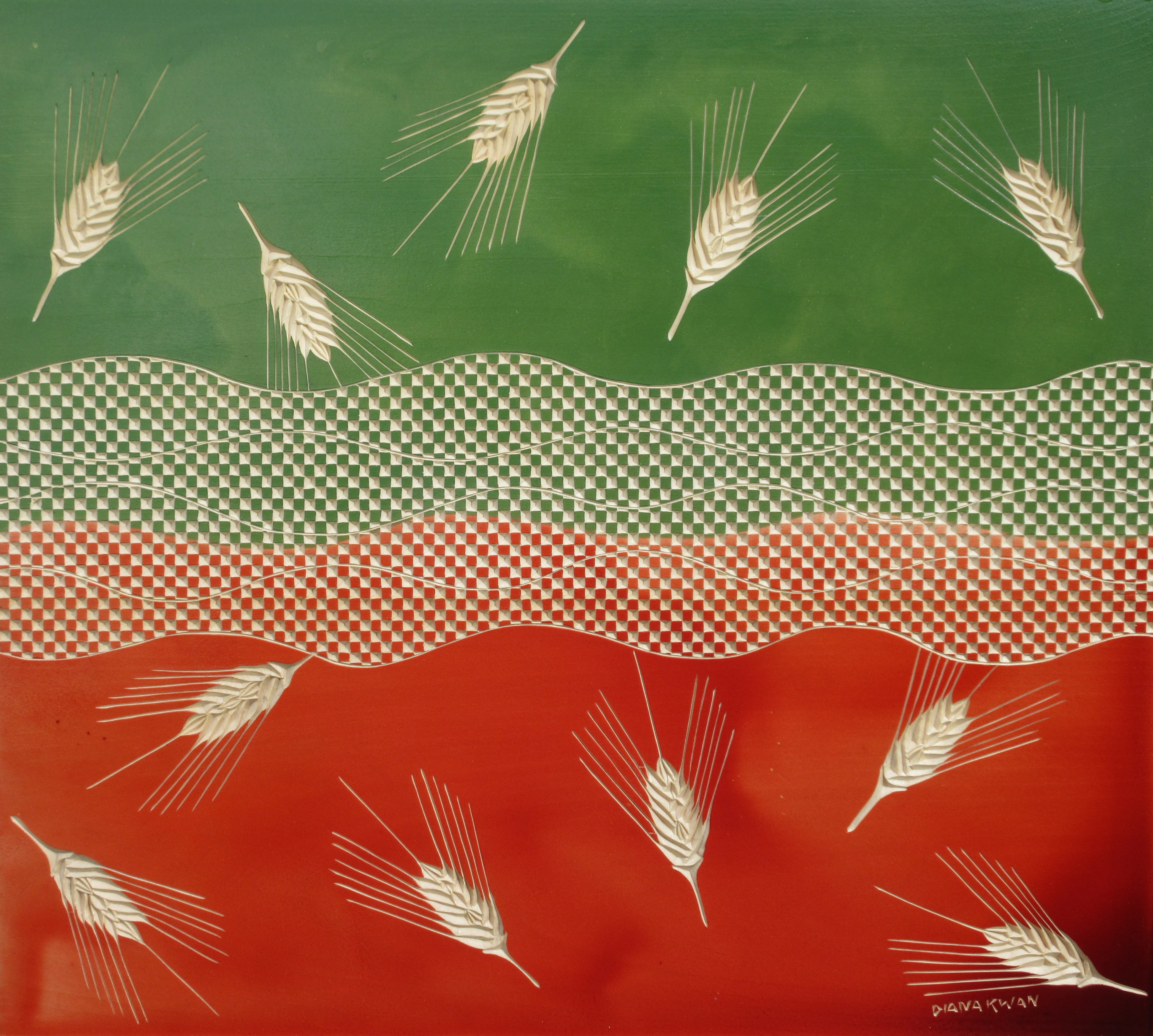
“Wheat Field” 15”x13” Basswood Chip Carving.
“Butterflies And Blossoms” 12”x12” Basswood Chip Carving.
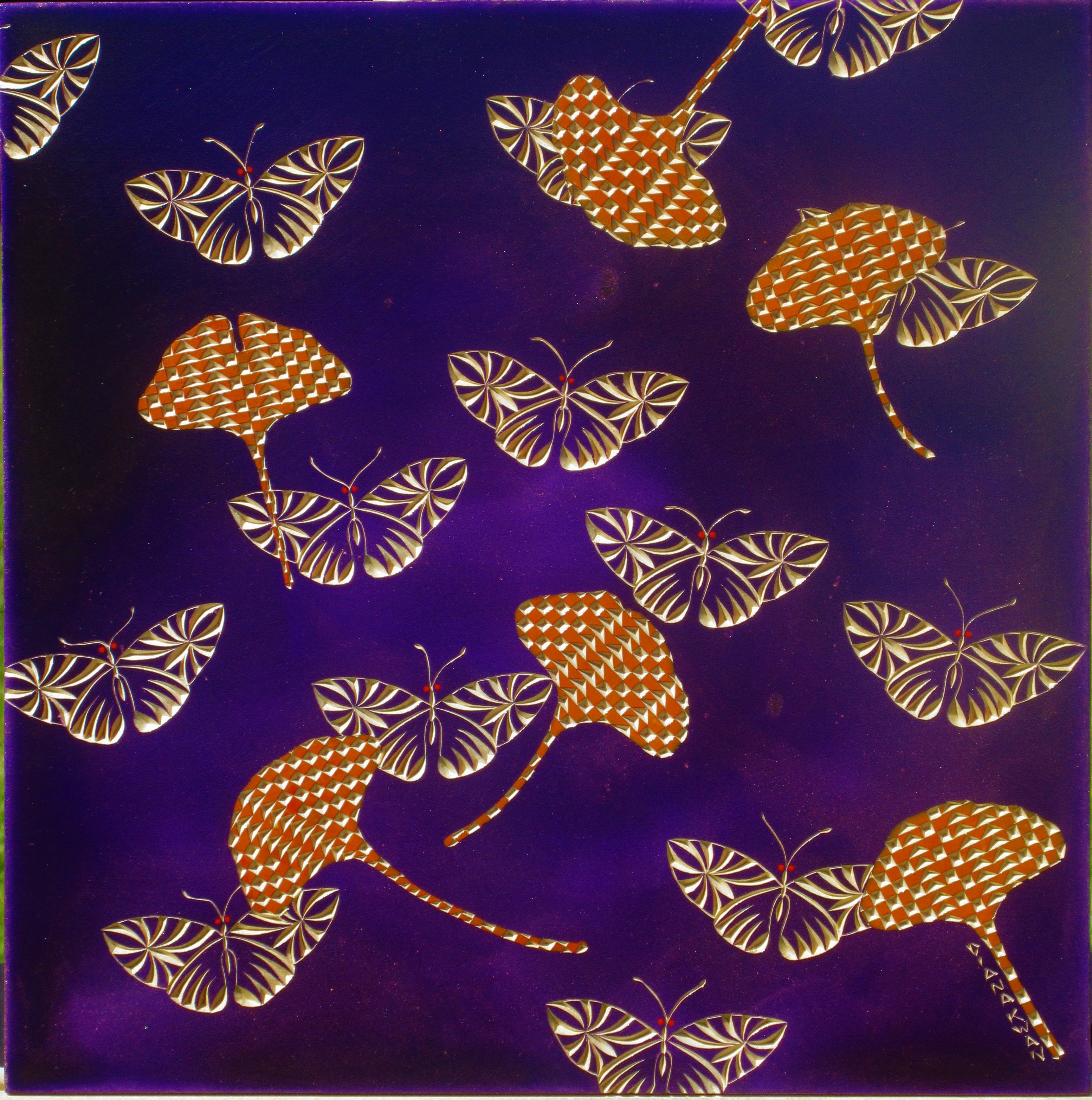
“Butterflies And Gingko On Purple” 12”x12” Basswood Chip Carving.
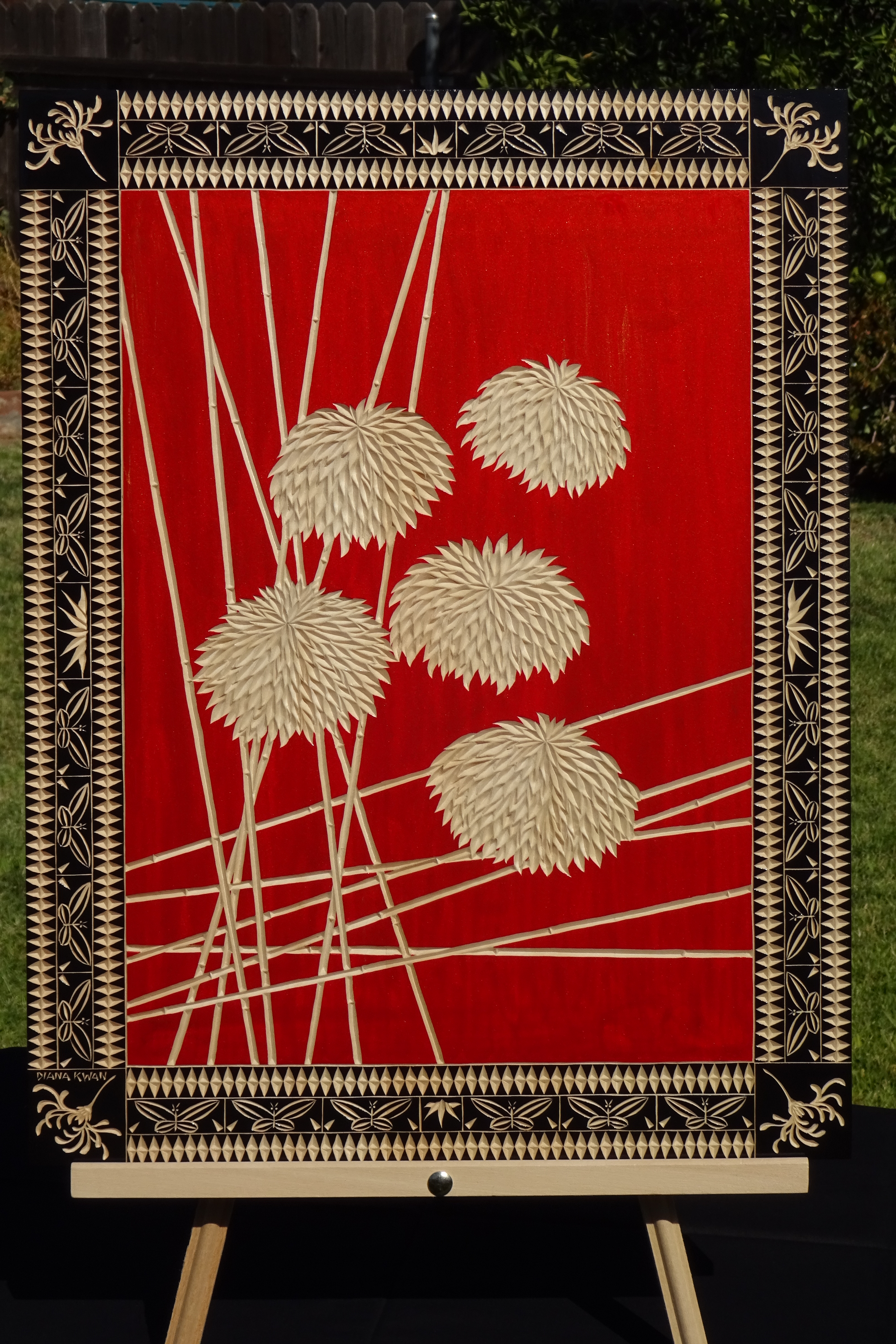
“Chrysanthemums And Bamboo In Carved Frame” 22”x17” Basswood Chip Carving. Private Collection.
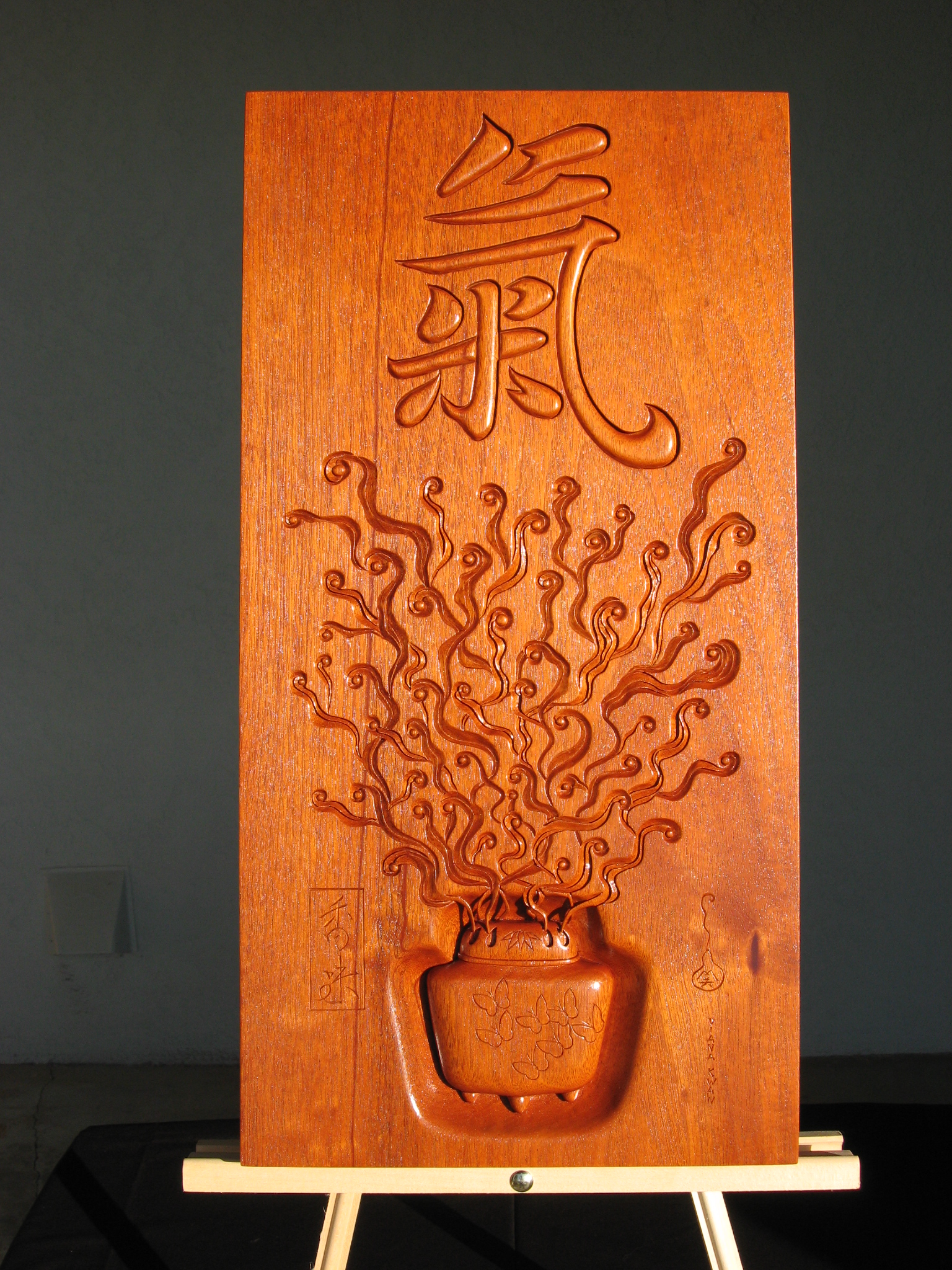
“CHI (Energy, Strength, Breath)—Censer” 25”x12” Honduras Mahogany Relief Carving. Best Of Show.
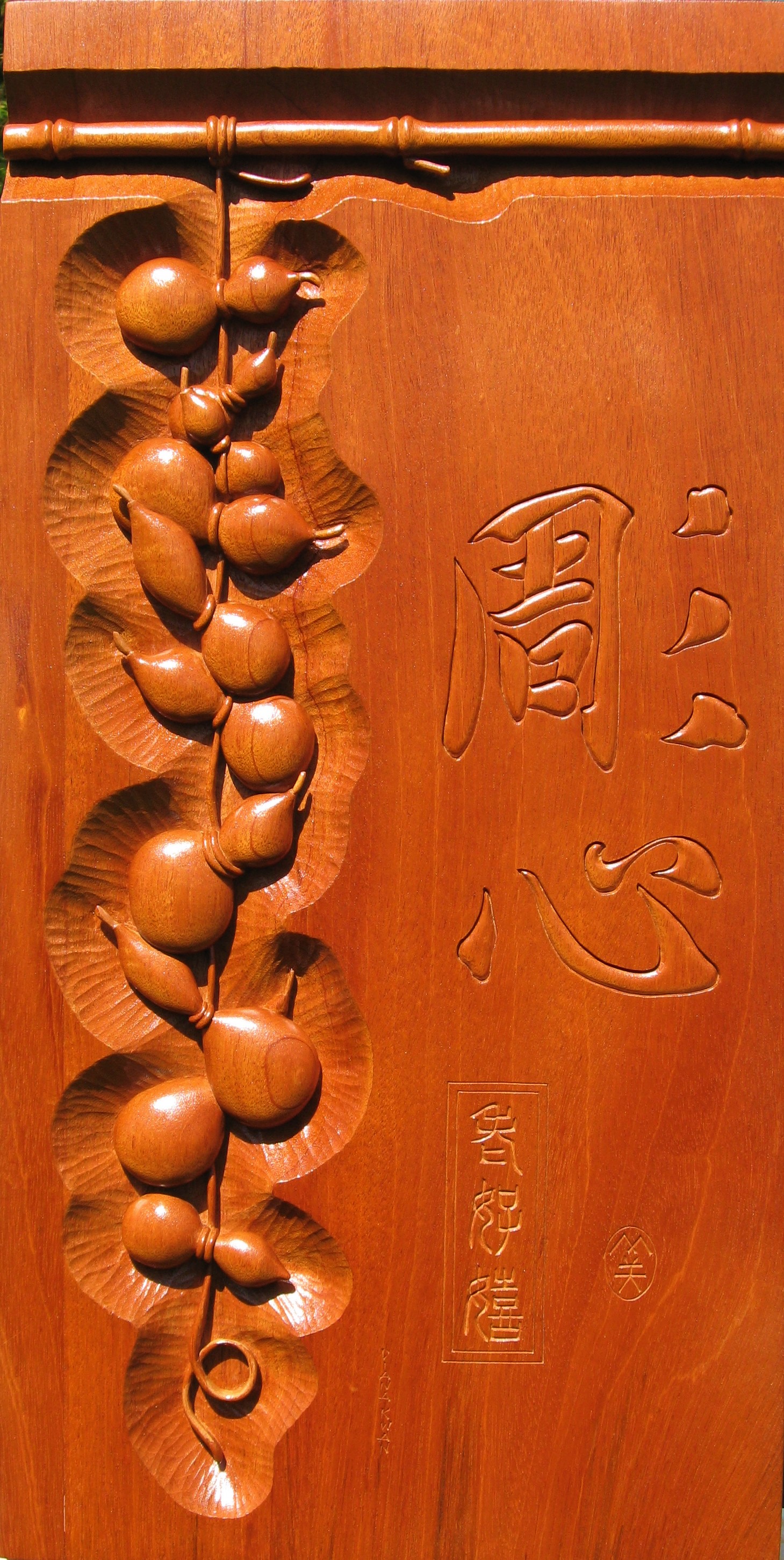
“Carving From The Heart—Hanging Gourds” 25”x12” Honduras Mahogany Relief Carving. Best Of Show.
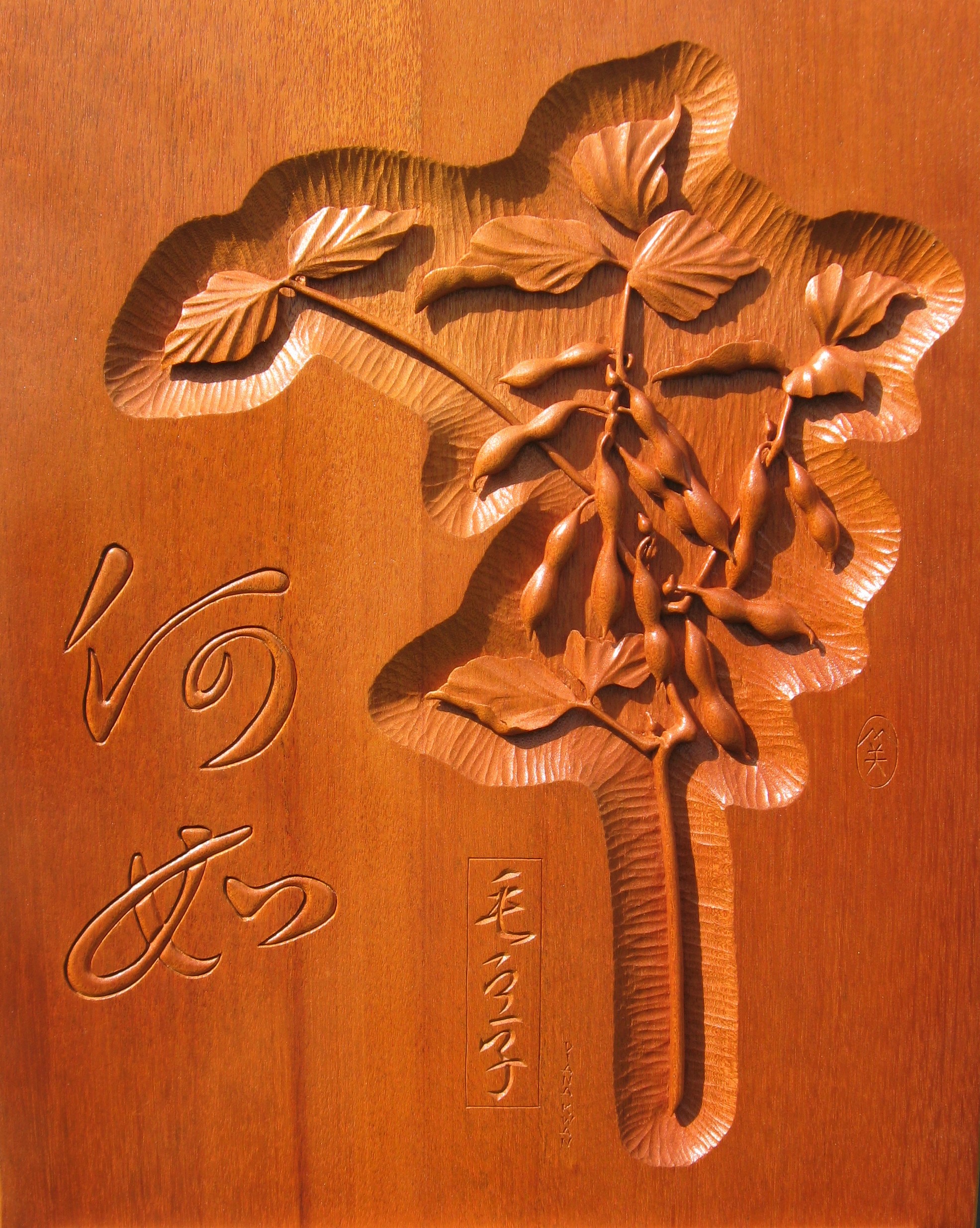
. “How Incomparable—Soy Beans” 22”x17” Honduras Mahogany Relief Carving. Best Of Show.
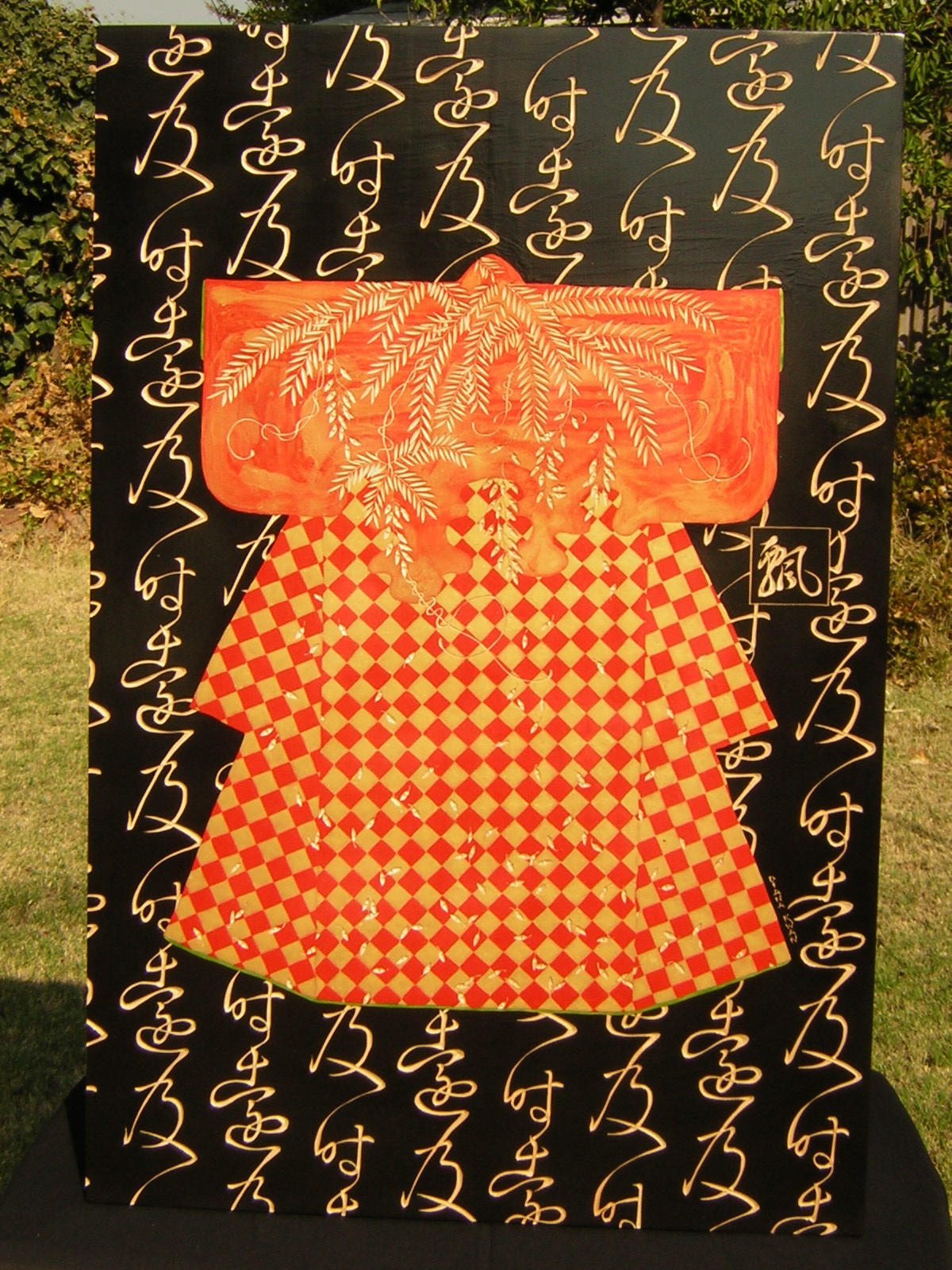
“Wisteria Kimono—Timeless” 36”x24” Basswood Chip Carving. Best of Show.
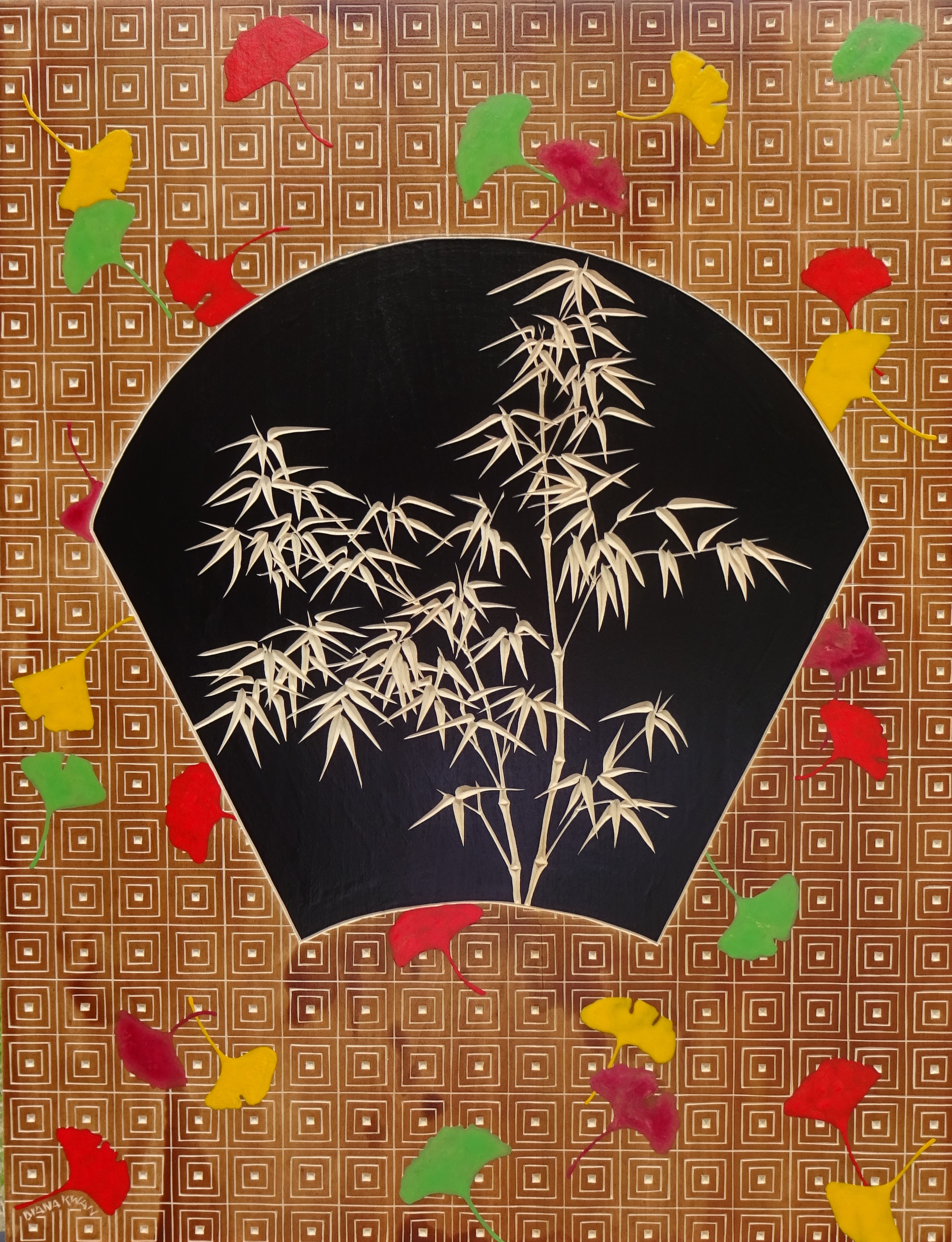
. “View Of Bamboo Through Gingko Wall” 22”x17” Basswood Chip Carving. Private Collection.
The club is bringing back the Friendship Canes starting with our 2023 Spring Show which will be held on May 20 and 21, 2023 at the Scottish Rite Temple. The purpose of the program is to encourage carving by the members and to build friendships between new and long term members and to build relationships between novice carvers and more experienced carvers.
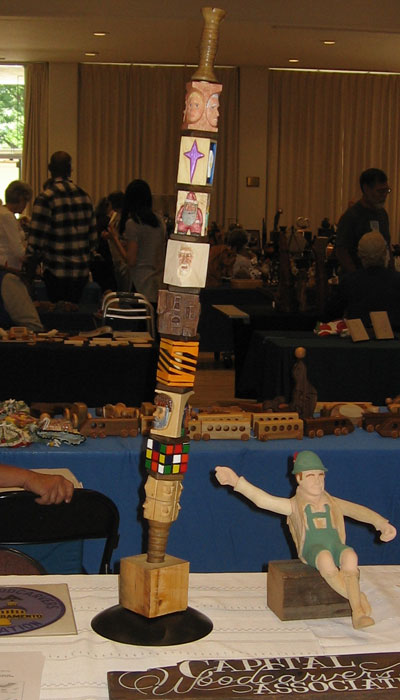
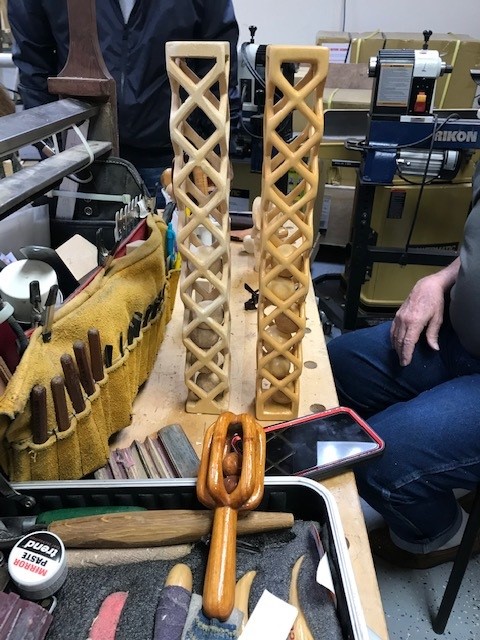
The rules for the program are to carve most anything you want as long as it fits on a 2”x2”x3” block with a 5/8” hole drilled through the middle in the long direction. The finished block may be unpainted and coated with a mineral oil finish or it could be painted with acrylic paints or other paints of choice and finished with a top protective top coat. The blocks will be stacked with a 5/8” dowel through the holes and held in place with a special bottom and top piece. A total of 9 blocks are needed to make one cane. If 18 finished blocks are received wo canes will be assembled, etc. The carvers name should be placed on the blocks at a location such that the name will be visible after the cane has been assembled.
The 2019 CWA Show was again held at the Scottish Rite Center on May 18 and 19..
Now that the show is over we can settle down and do some serious carving until show time next year. Thanks for all of the hard work by our show chairperson and her support committee. Thanks also to all who helped and supported the show in any way – the volunteers that moved things back and forth from storage, those who had display tables, the photographer, the demonstrators, those who entered items for judging, the greeters at the front door, and especially those who supported the country store by purchasing items that you just needed. Without all of you the show would not have been a success.
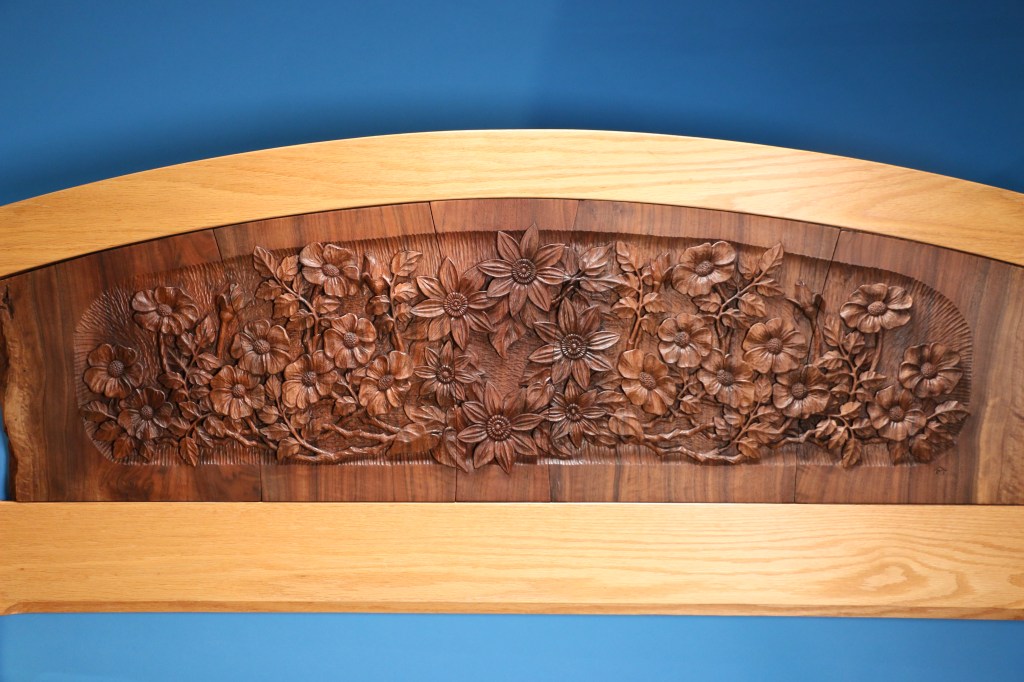
Mary Olsen won Best of Show with this carving of a bed head.
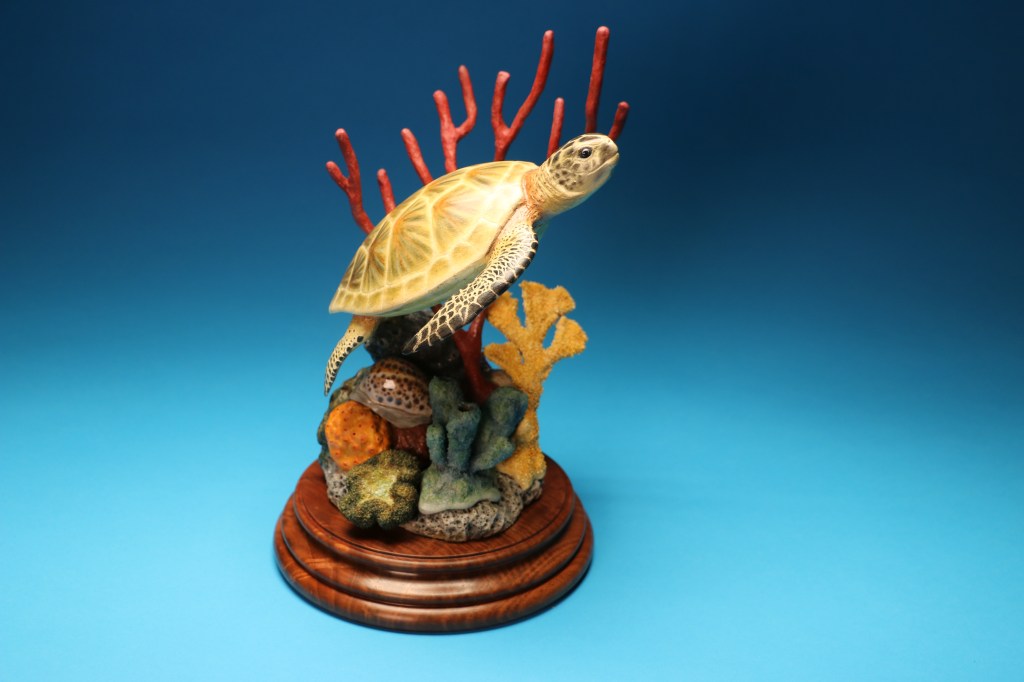
Michael Buelina won second best of show with this turtle swimming in the reeds.
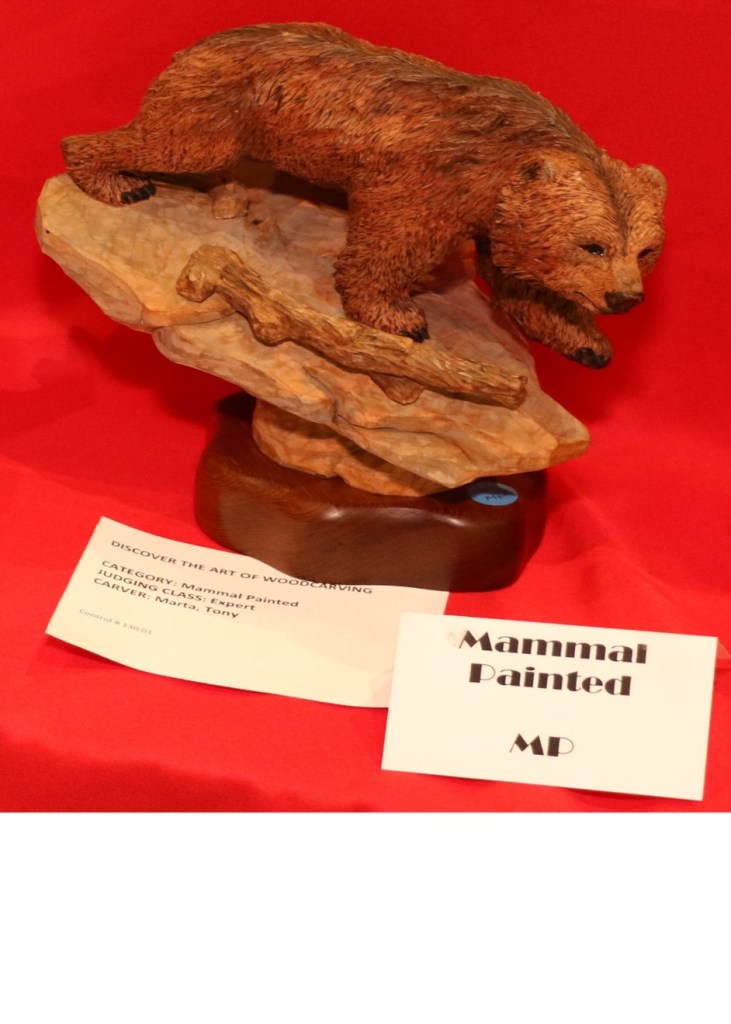
Tony Marta took 3rd Best in Show for this dynamic bear carving.
Tony Marta and Nick Baldmore discuss their carvings.

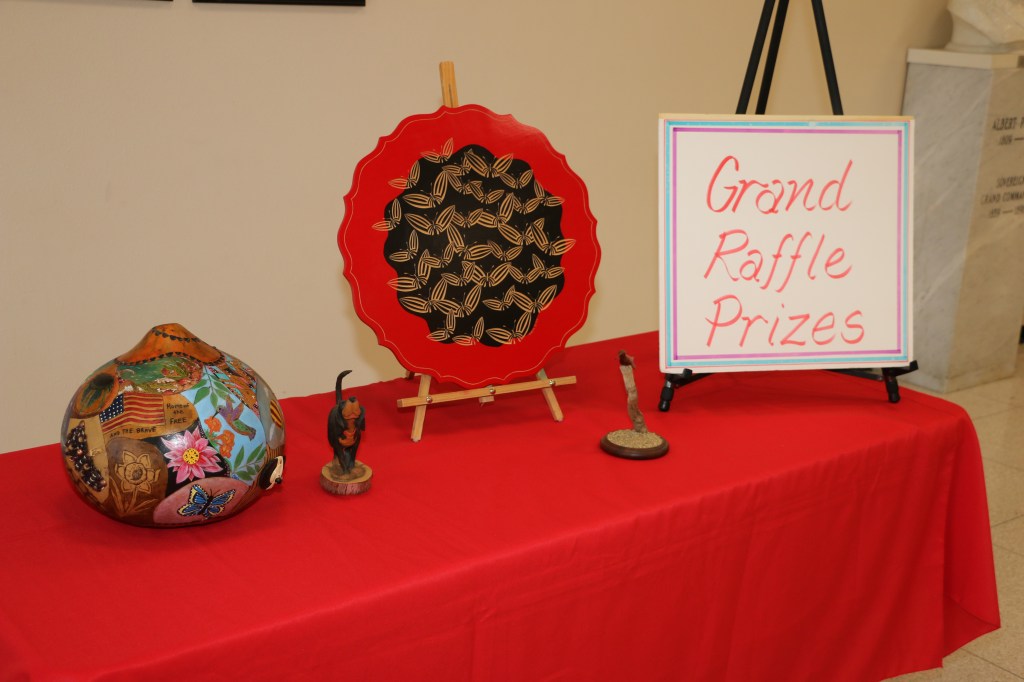
The raffle prizes included a colorfully decorated gourd and a beautiful chip carving.
Gordon and Polly Lipp shared a table with Nelson Krouse. It was good to see them all ath the show.
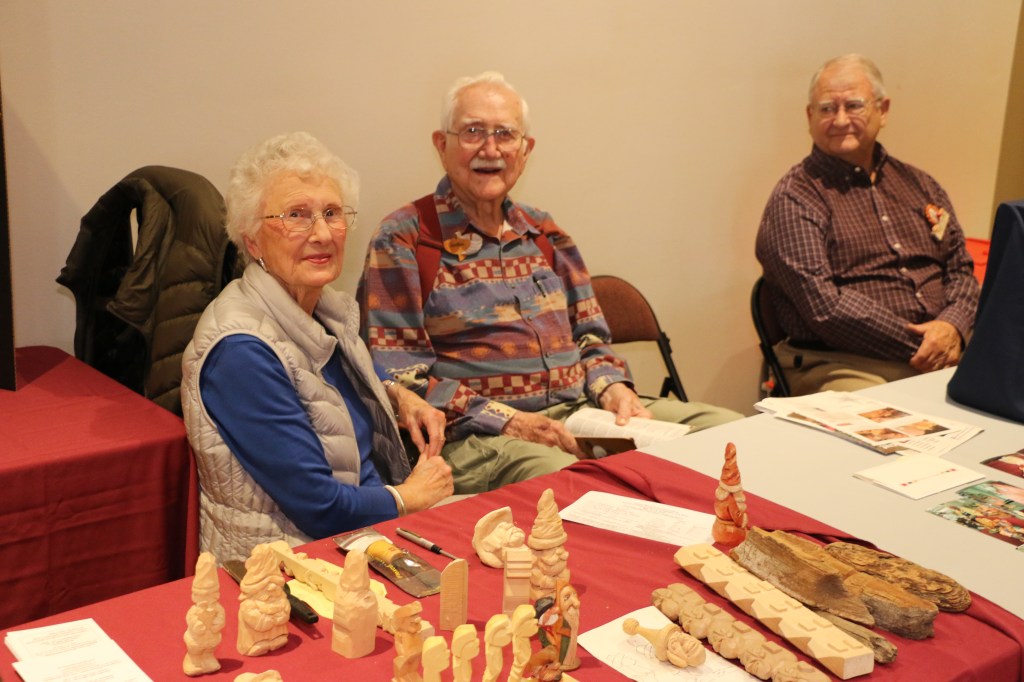
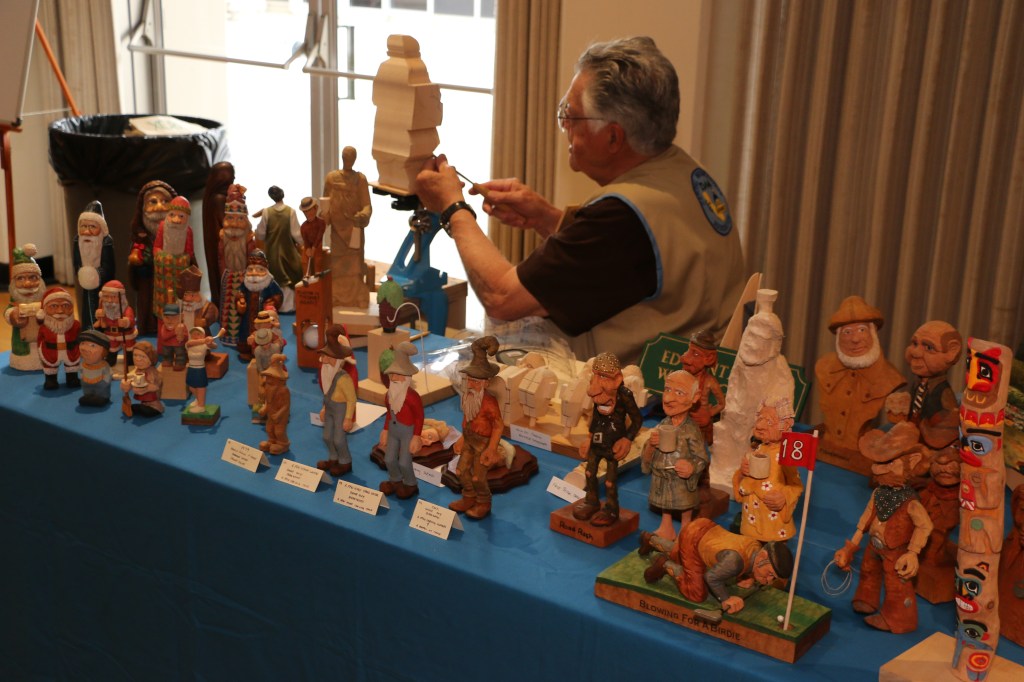
Ed Santarosa demonstrated his carving skill during the show, and displayed examples of his work.
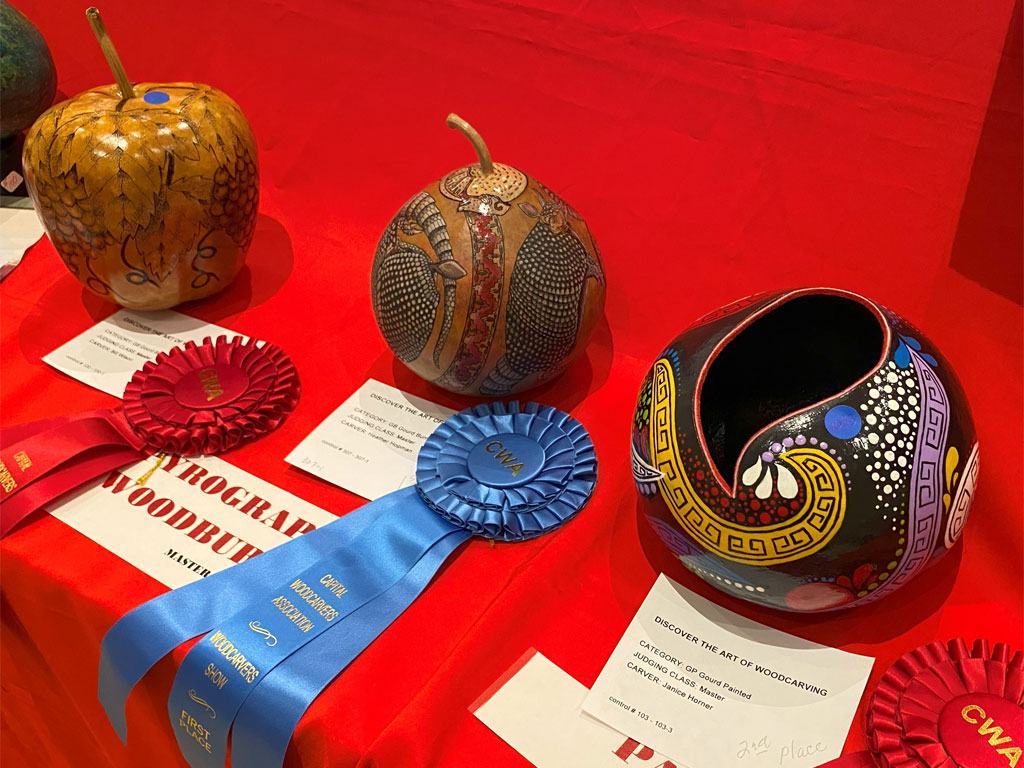
Folsom Gourd Society member Janice Horner help recruit the gourd societies to the show and assisted in many areas during the show.
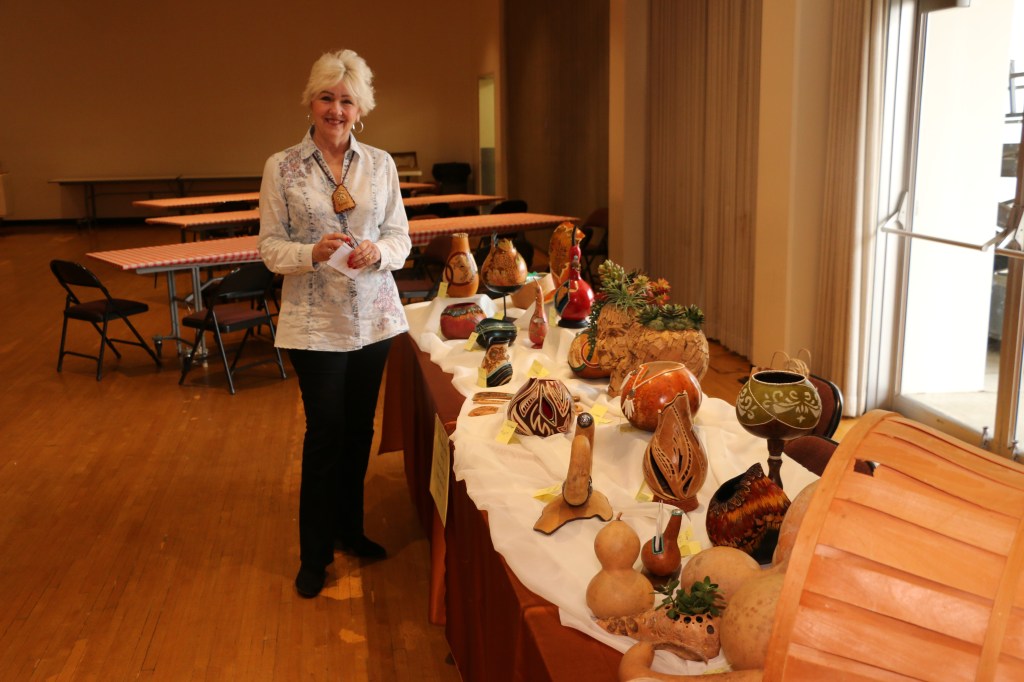
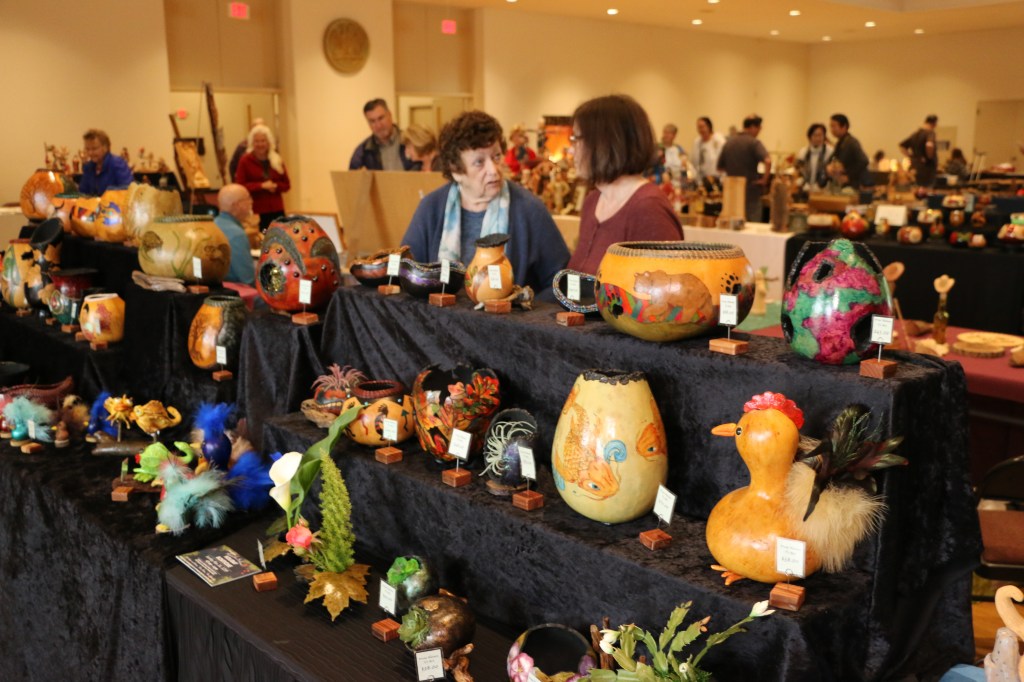
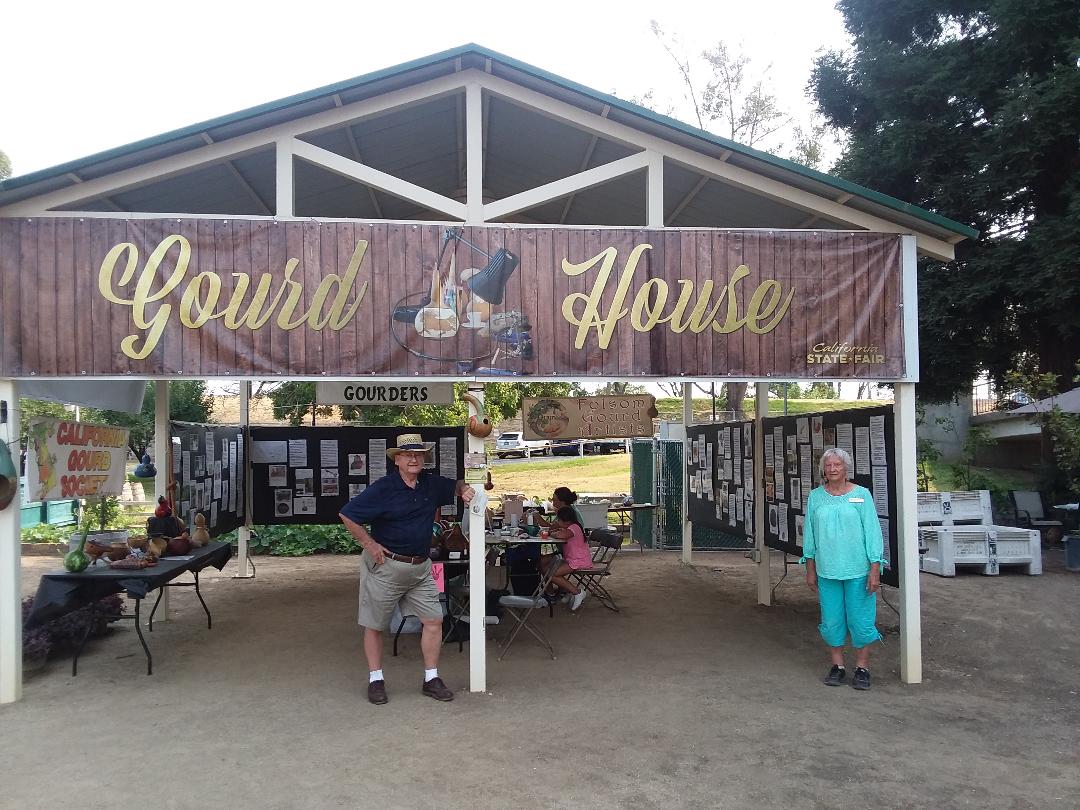
We were fortunate to have lots of gourds on display form several gourd patches and artists in our area.
Jim Hunter displayed his wide array of whimsical houses carved from cottonwood bark carvings.

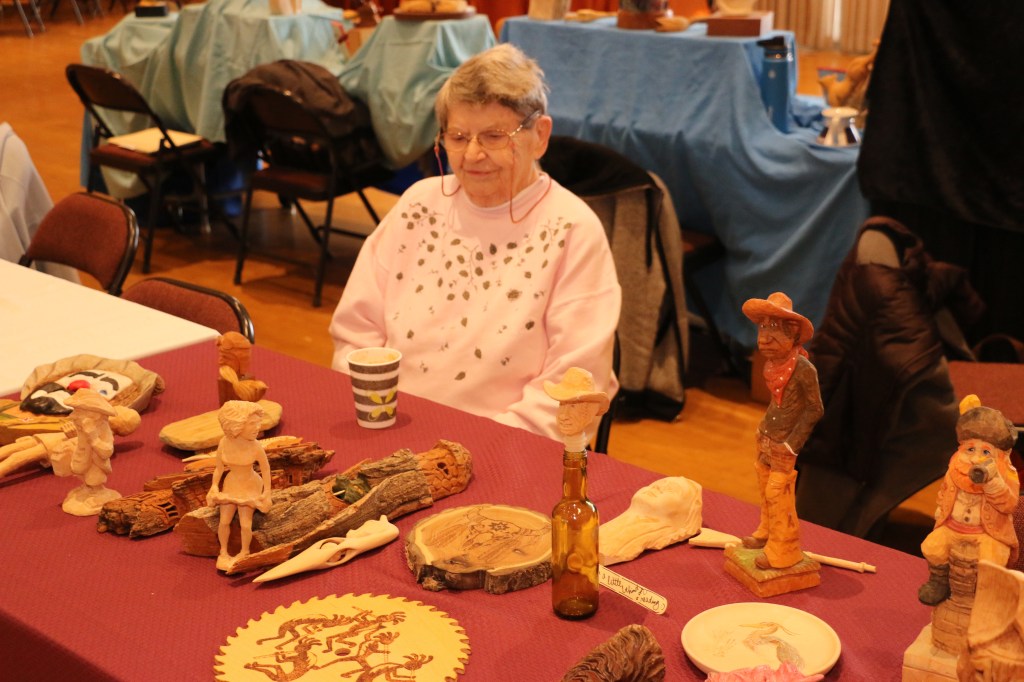
Cathy Lindsey shared her little people carvings as well as a range of her other work.

Fred Hansen with his collection of animal carvings.
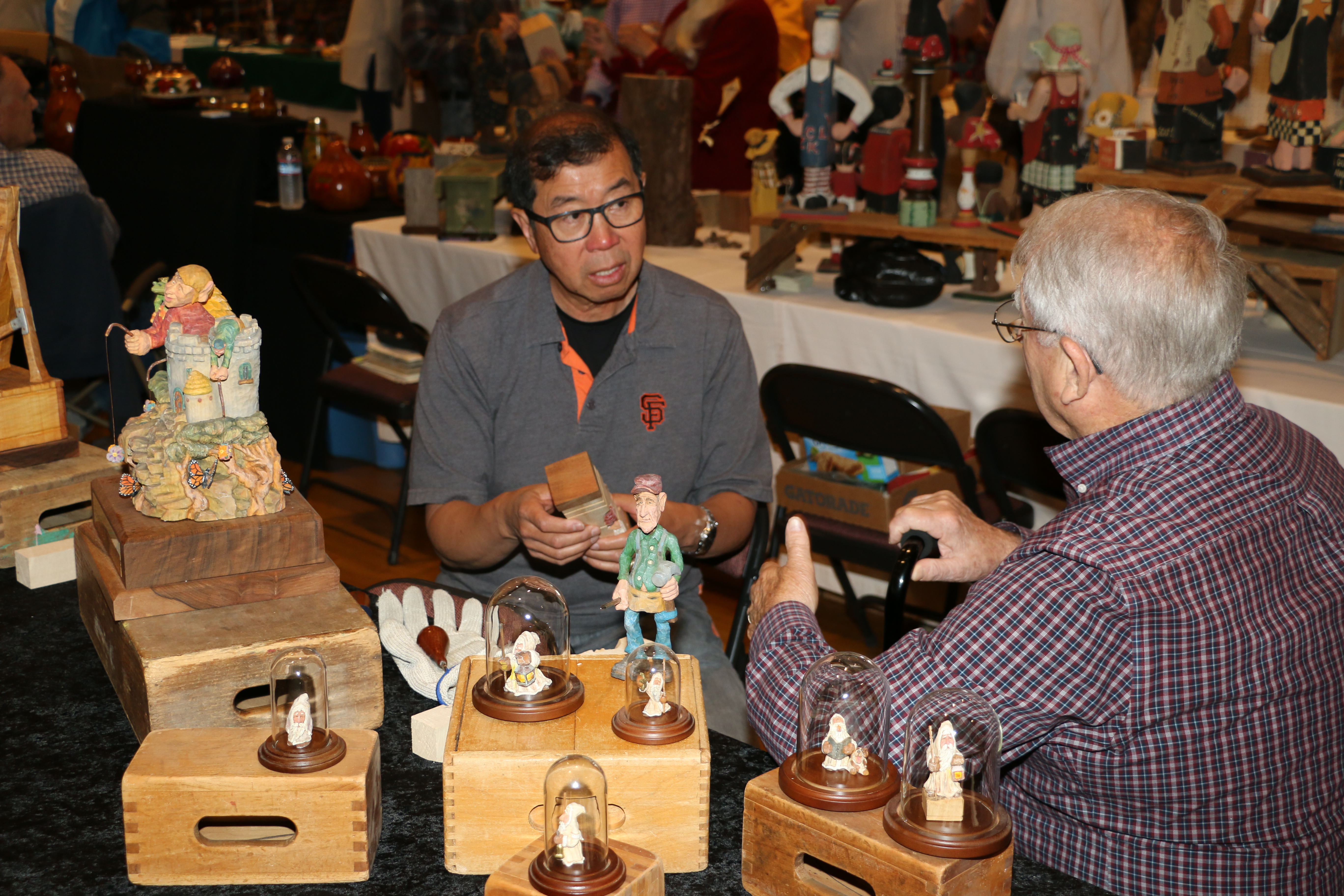
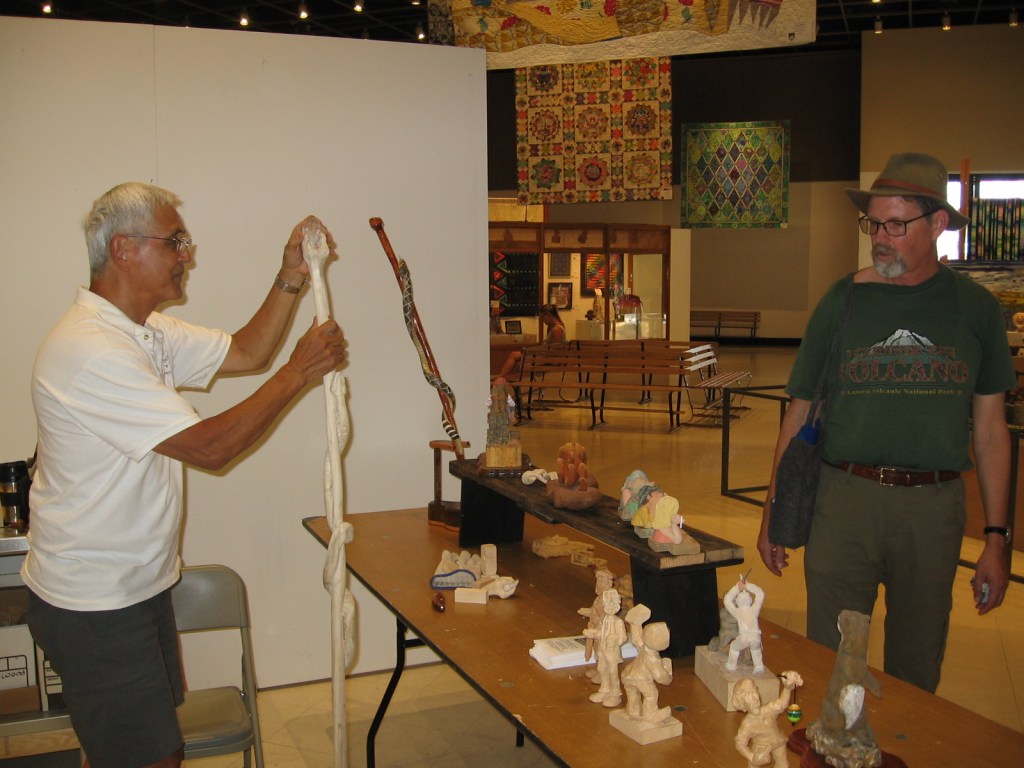
Andy Hiroshima’s carvings are always interesting and engaging. He is able to show action and movement in static basswood caricatures.
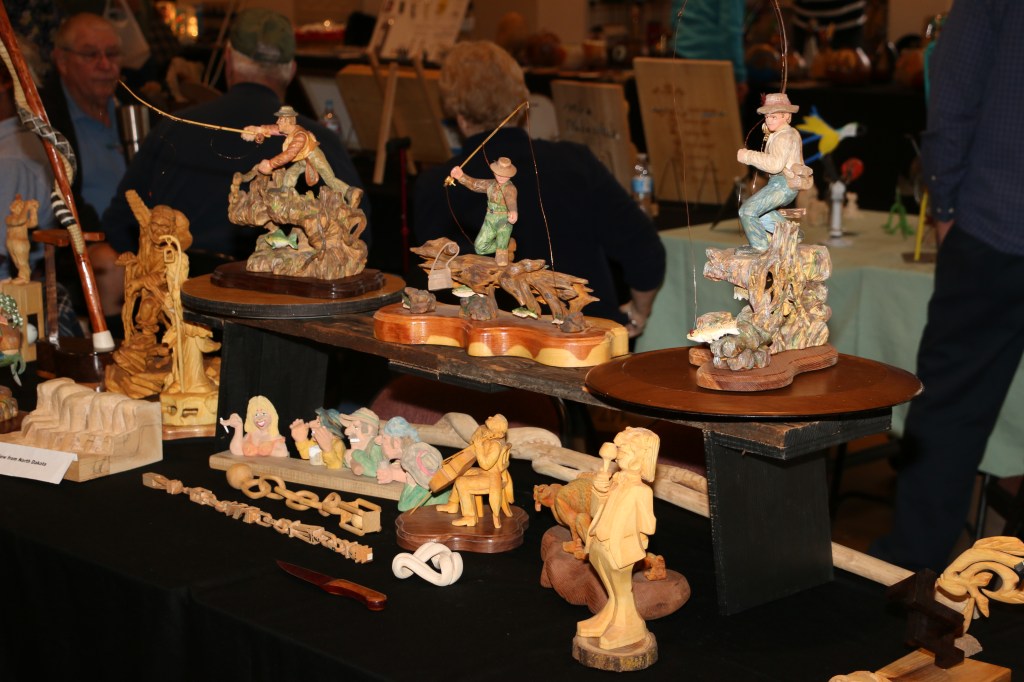

Joe You and Nelson Krouse discussing the finer points of caricature carving.
Randy Moore once again brought lots of high quality wood and rough outs all the way from n
orth Dakota. for our members.


Th gourd displays attracted interested buyers as well as those discussing the intricacies of gourd art.
/
SHOW COMMITTEE:
Alison Cook, Chair
Joe You
Andy Hiroshima
Libby Schram
Barbara Rippetoe
Debora Remington
Kathi Gervais
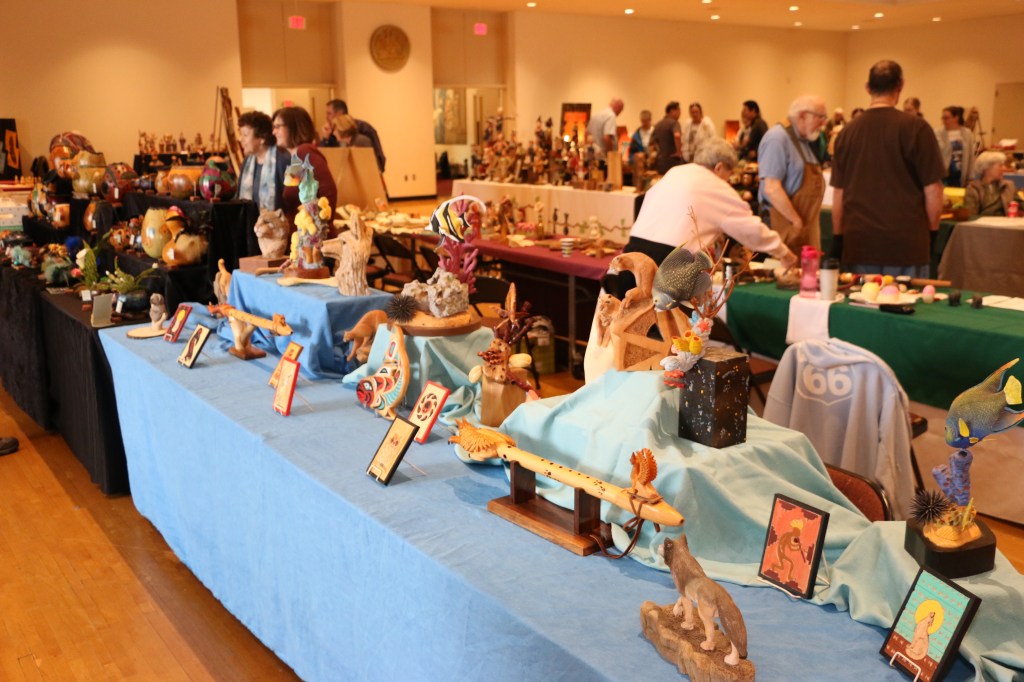
CWA held its Fifty-First Wood carving show and competition on May 20 and 21, 2023 at the Scottish Rite Center in Sacramento. This year we returned to our favorite Scottish Rite venue –the Memorial Hall.
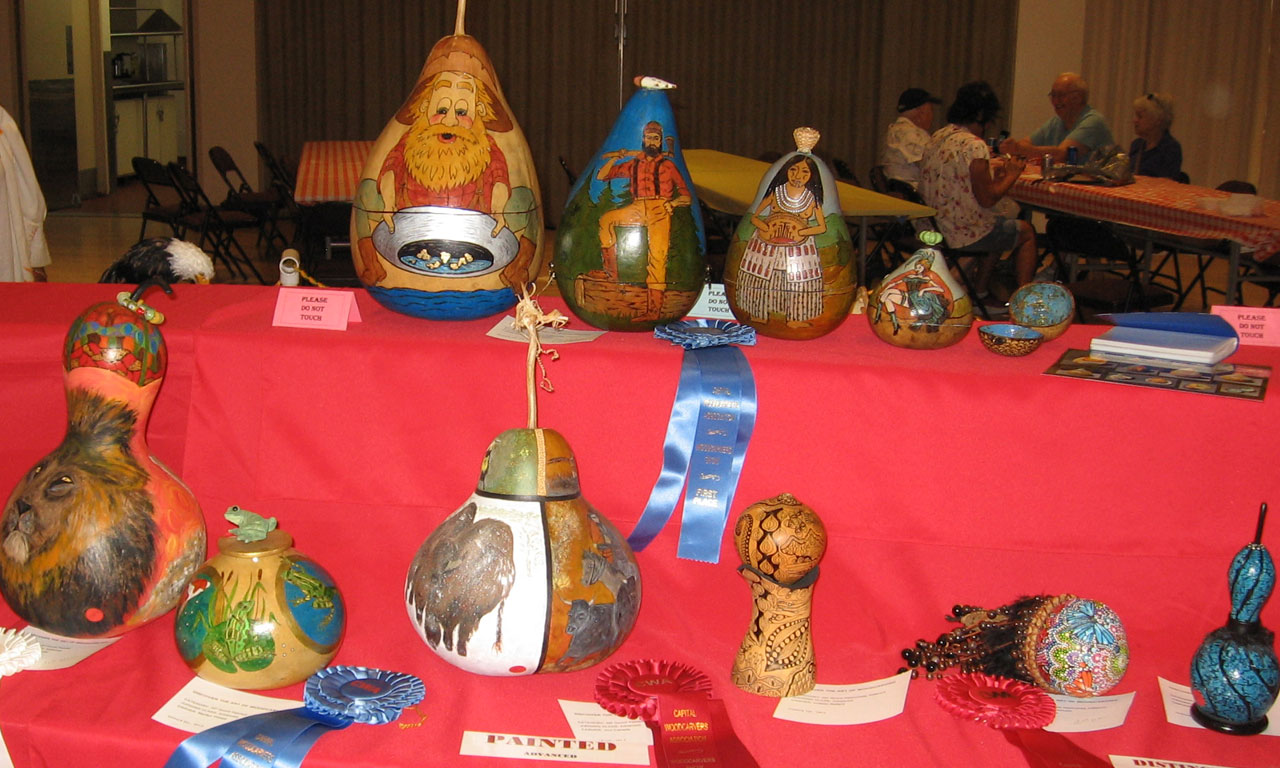
We were again pleased to have our friends from the Amador Gourd Artists and Folsom Gourd Artists participate in our show. Janice Horner served as a liaison to our club from the gourd patches. She also took on many other tasks during the show.
There were fifty-eight (58) wood carvings that were judged by Pat Moore. Twenty-nine (29) gourds were judged by Mary Hufft, Colleen Ballard, Sylvia Nelson, Barbara Cody, Susan De Guara, Pam Argo and Carol Des Voignes.
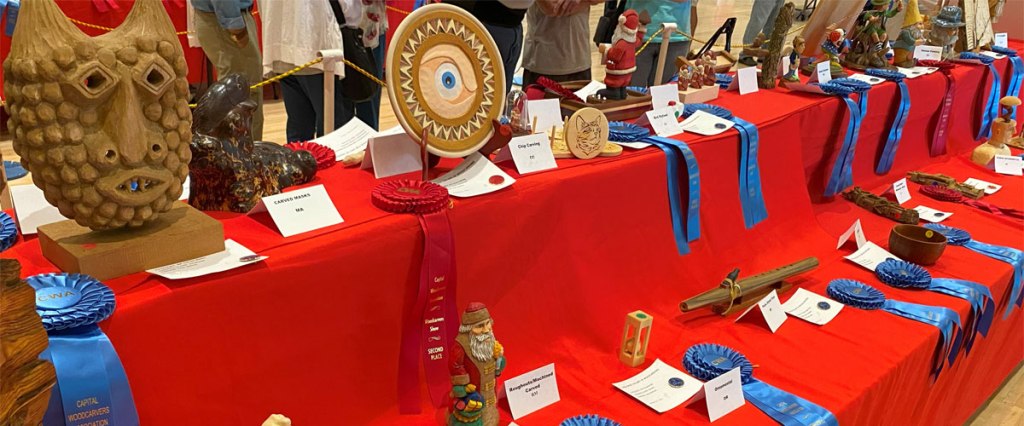
There are three wood carving levels: Novice, Advanced, and Expert, The gourd judging levels are Novice, Intermediate, Advanced and Master. The major job of registering wood and gourd entries once again fell to Andy Hiroshima. Each entrant chooses the level they feel they best fit into and then chooses the category or categories for their piece(s). Each piece is examined by the show judges and may be awarded a blue, red, or white ribbon, based on the merit of the piece. All entries are on display during the show regardless of whether an award is given or not.
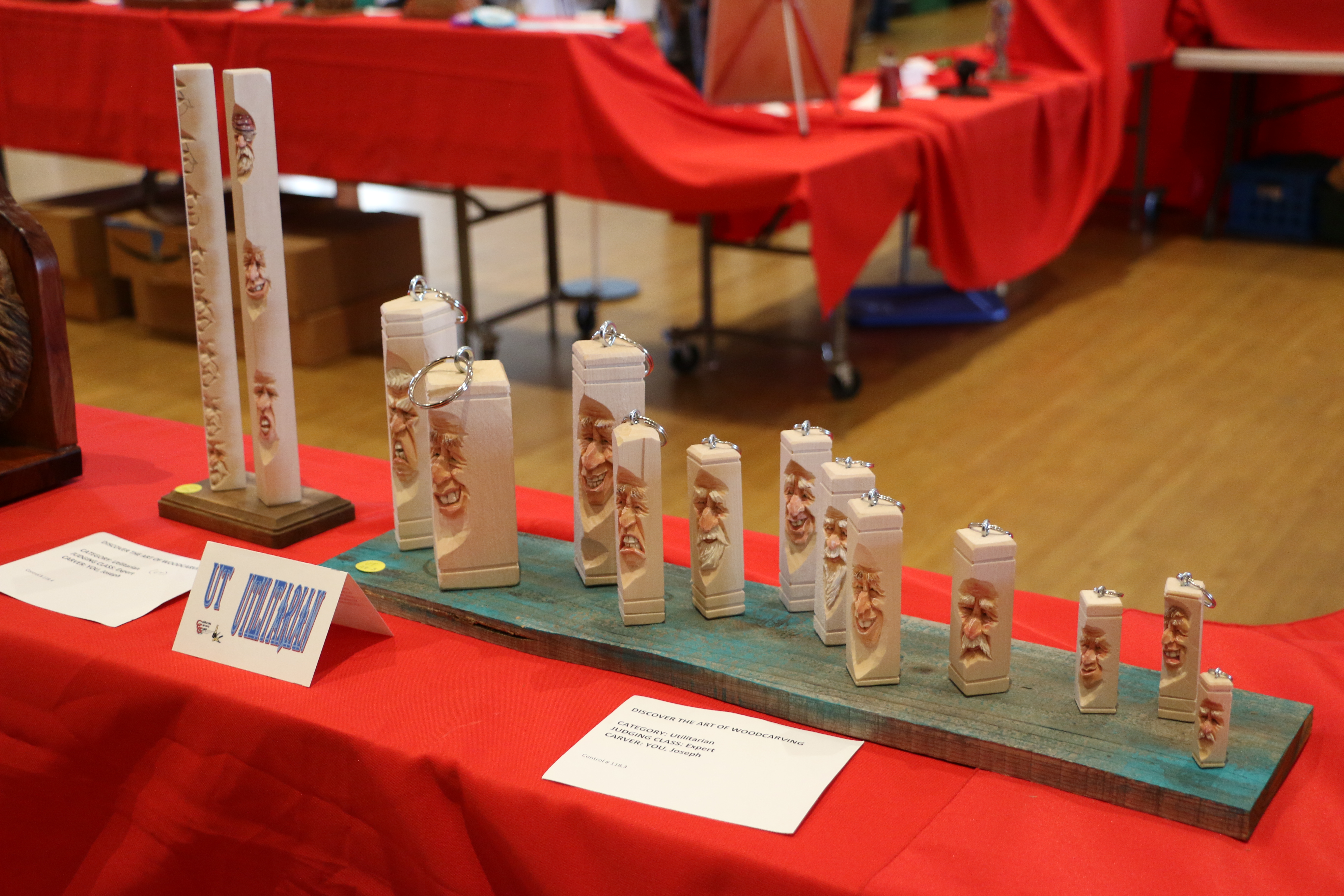
The big winners in the wood carving competition were Joe You, Best of Show with his clever set of six bearded faces with each one in the series having less facial hair, making the choice of title for the piece inevitable: “Hair Today Gone Tomorrow”. The terrible pun, notwithstanding, the faces, which are Joe’s Specialty, were engaging and brought a smile to the observers in the crowd.

Gourd artist Heather Hopman from Amador won “Best in Show” for her painted gourd which was a variety of frog species.
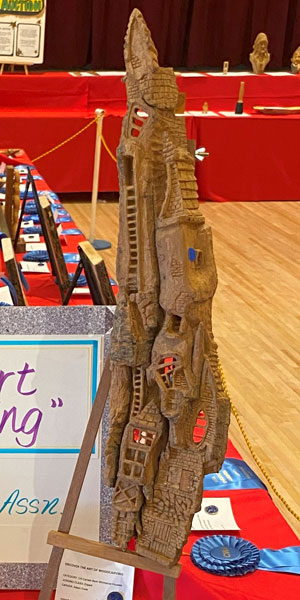
Alison Cook received Second Best of Show for a 2½ foot long cottonwood bark carving. The judge noted the level of detail and a design that featured a variety of textures, forms and shapes adding interest and variety to the piece. She also pointed out the value of having uncarved areas giving the observer a place to rest their eyes.
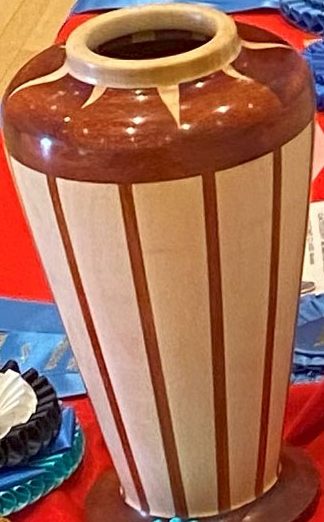
Brad Dano won Third Best of Show with a beautiful 15-inch-tall vase with staved-type construction of maple and padauk wood. The top was maple segmented with a compass inlay. Brad recounted that this vase evolved as he worked on it, resulting in this striking finished piece.
Heather Hopman from Amador won “Best in Show” for her painted gourd which was a variety of frog species.
Wood carving first place People’s Choice Award went to Joe You for his “Hai r today Gone Tomorrow” caricature. Gourd artist. eAndy Hiroshima won both second and third places.
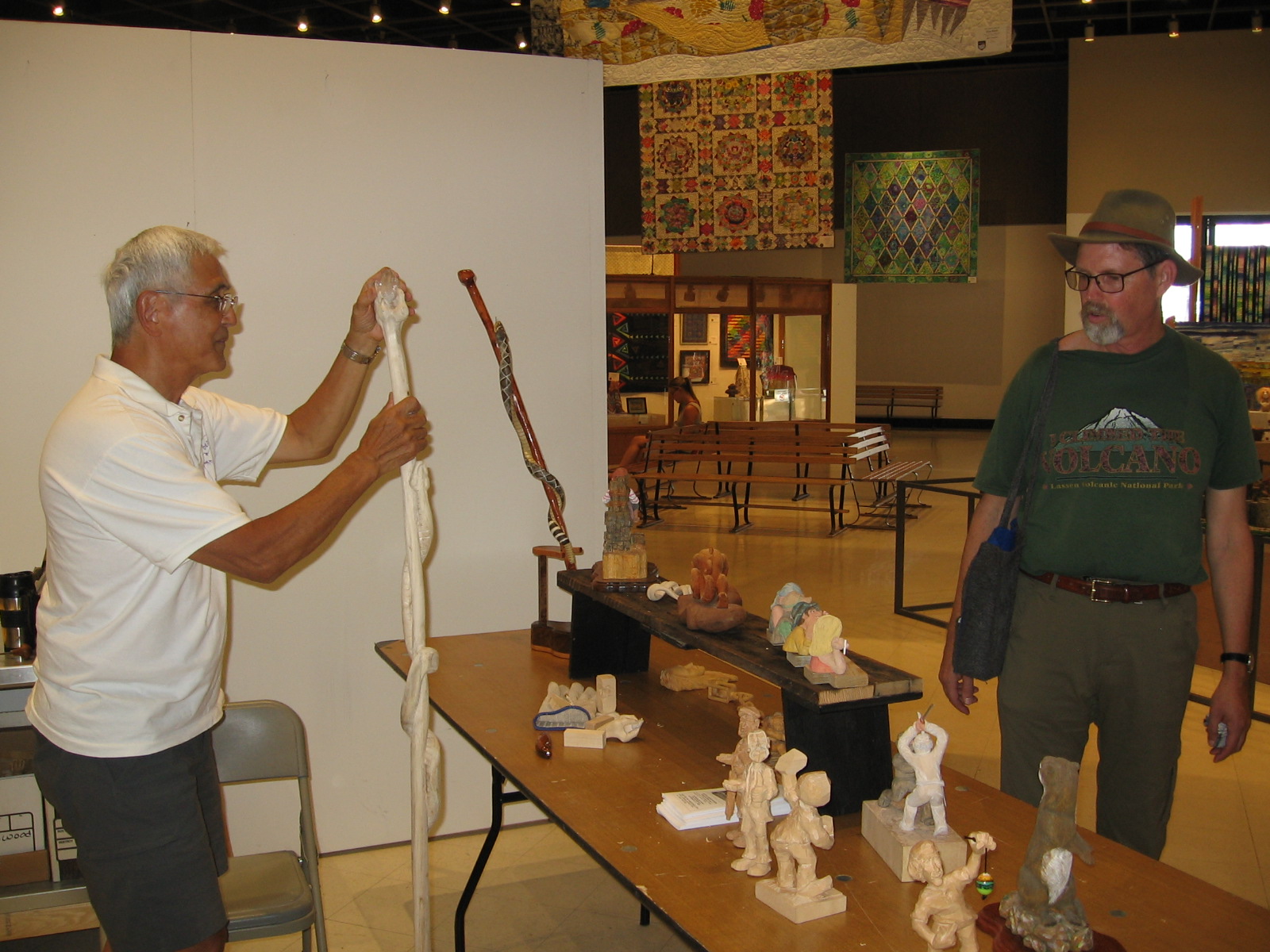
Andy Hiroshima’s snake cane (top) earned second place people’s choice.
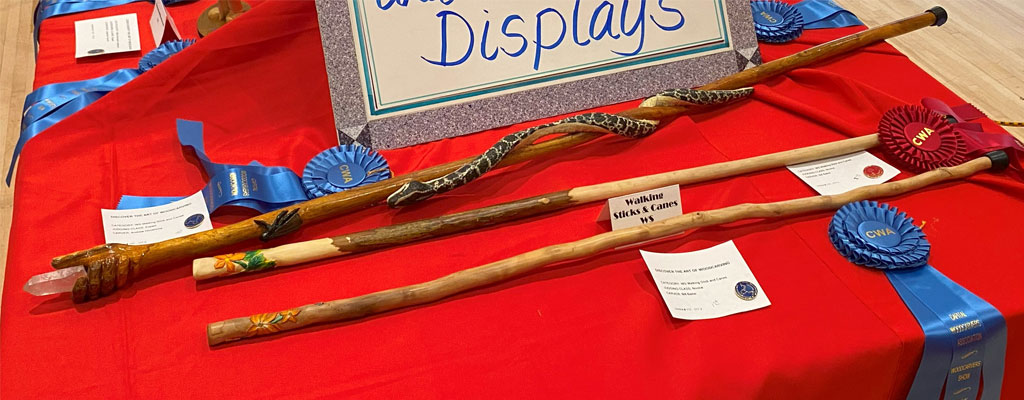
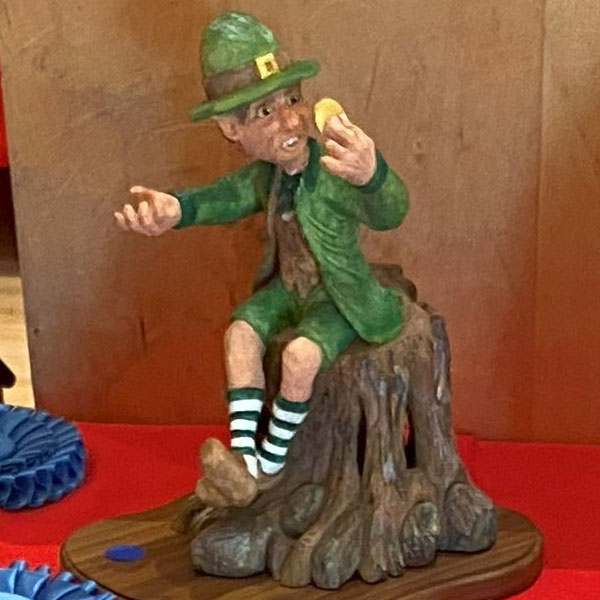
Andy Hiroshima’s third place people’s choice
For Gourds Bill Wilson (Folsom), won first in People’s choice Heather Hopman (from Amador) won the #2 spot for her painted gourd and Barbara Banholzer (Folsom) took third place.
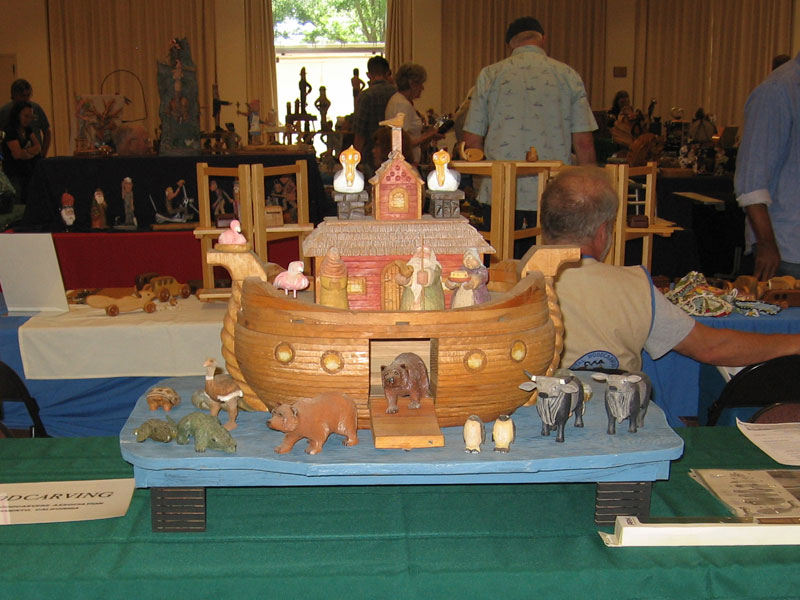
The Club table featured literature, magazines and the Noah’s Ark project completed by members at Shirley’s Shop weekly carving sessions. Club members meet at Shirley’s, 4651 Moddison Ave, Sacramento on Mondays from 2- 5 PM and Saturdays from 10 AM-12 PM.
The club brought back the friendship cane. Andy Hiroshima made up a group of cubes with a hole through the center. These were distributed to club members. Each person carved the cube and then they were all assembled into a unique cane. A drawing among those who carved pieces yielded the lucky member who took the cane home. This year that privilege went to Ron Kremer.
Despite the smaller number of entries, the interest from carvers and visitors generated a high level of enthusiasm and interaction as evidenced by lots of noisy conversation.
/
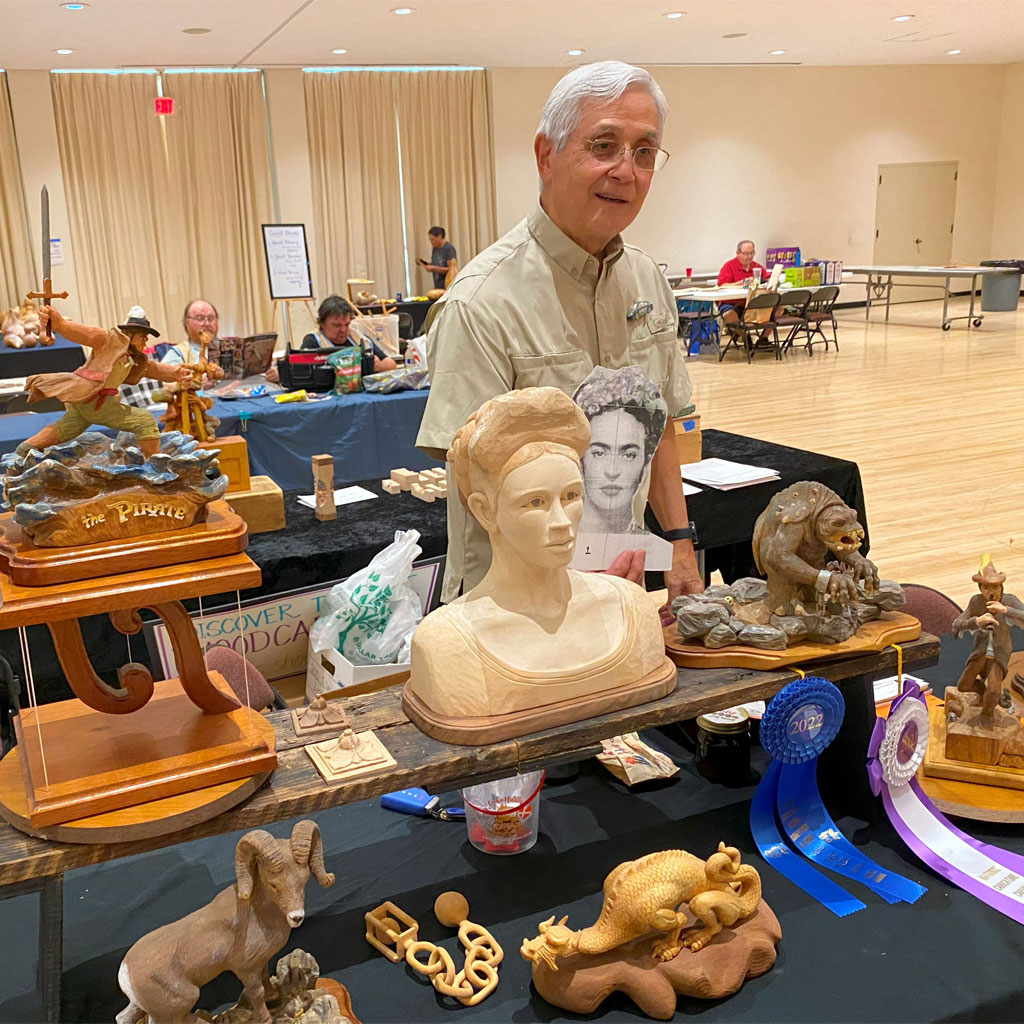
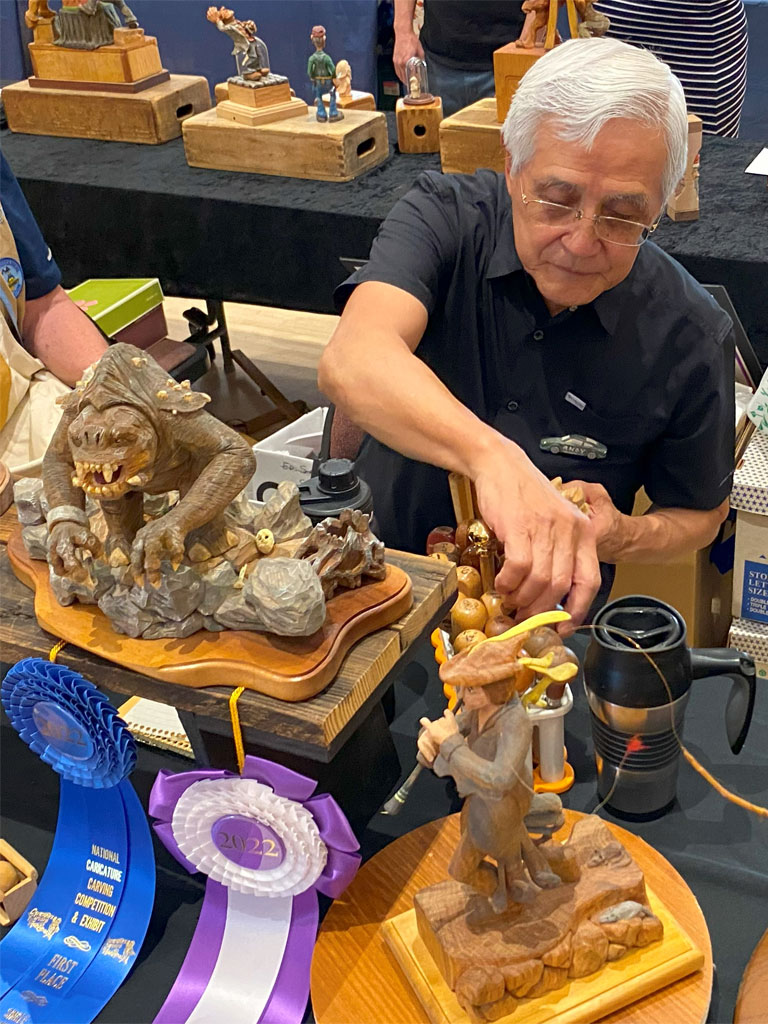
Andy Hiroshima at his display table. Beautiful work, eh? To see more of Andy’s work in his Gallery Andy serves as mentor to many club members, always giving freely of his time.
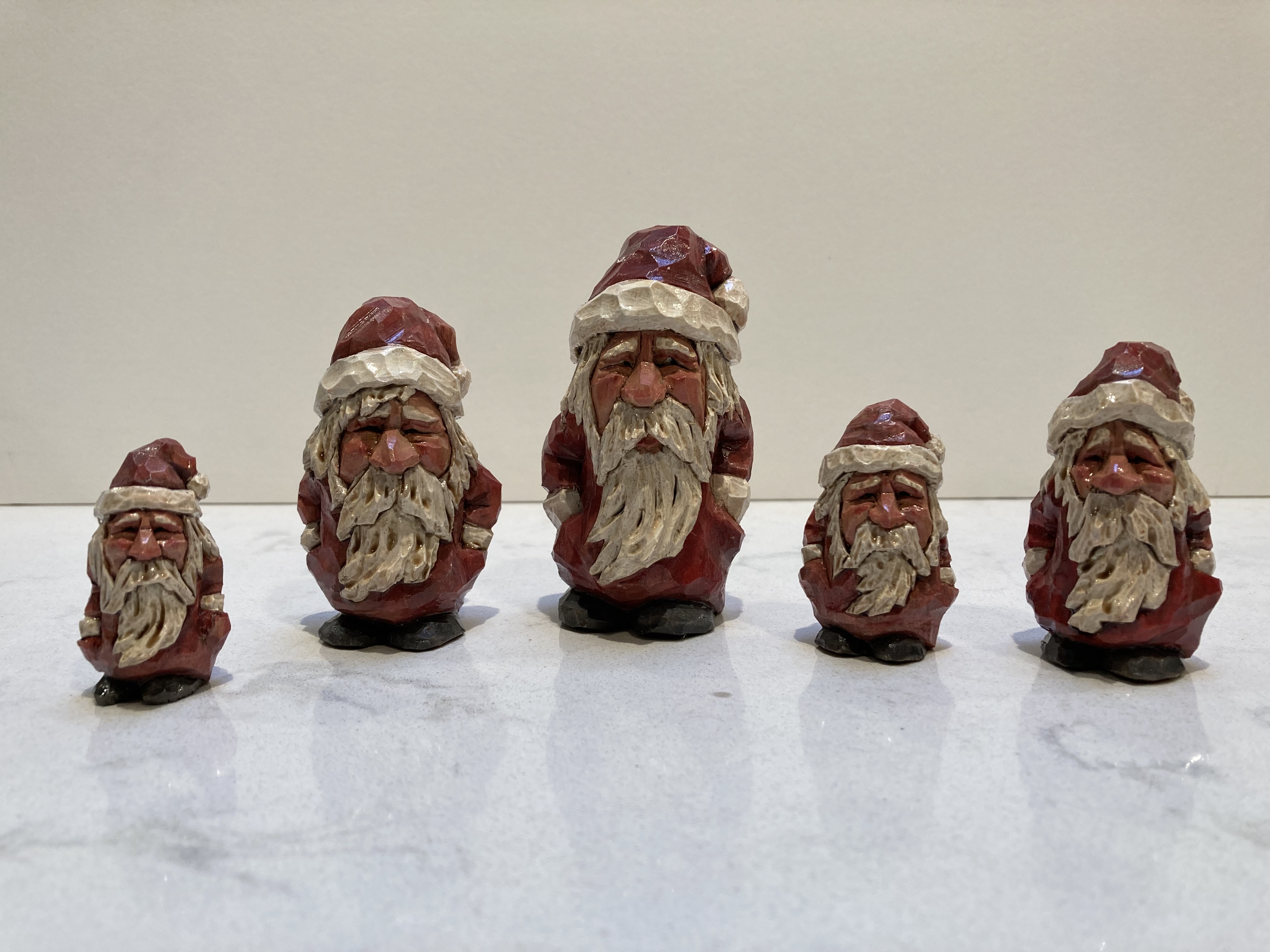
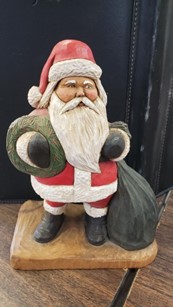
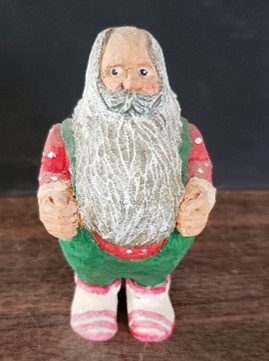
Ed Santarosa, shown at far left, displayed his rich collection of caricature carvings. He is particularly known for his Santa carvings. Ed is also the editor of the club newsletter “Sacramento Shavin’s’”
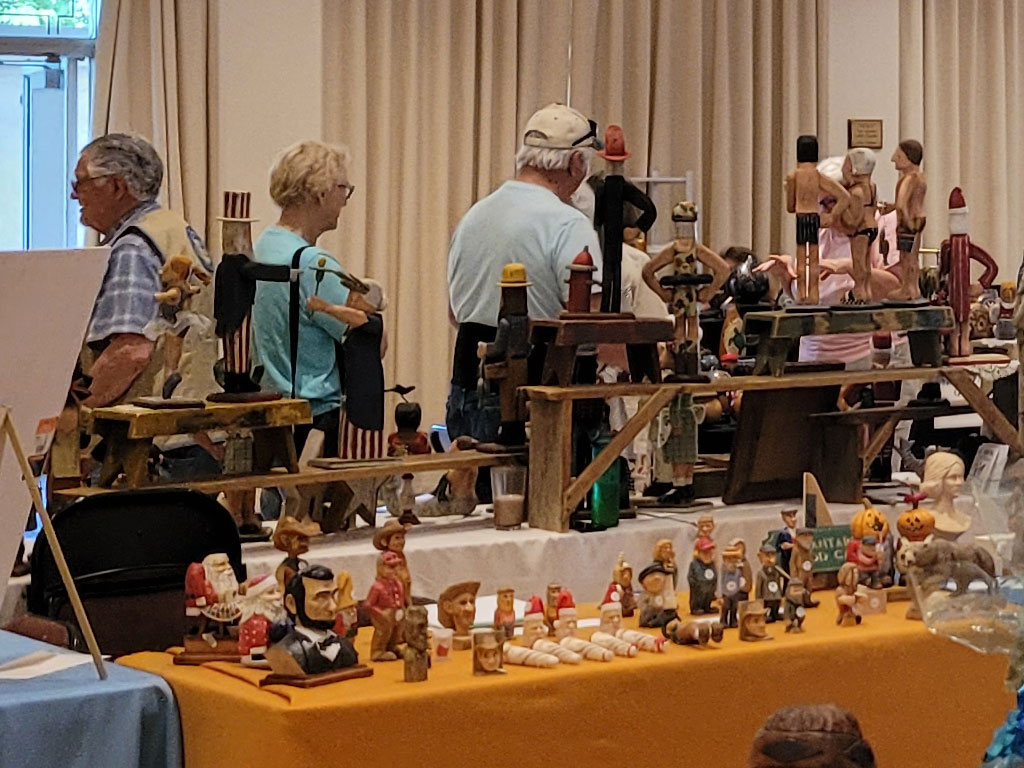
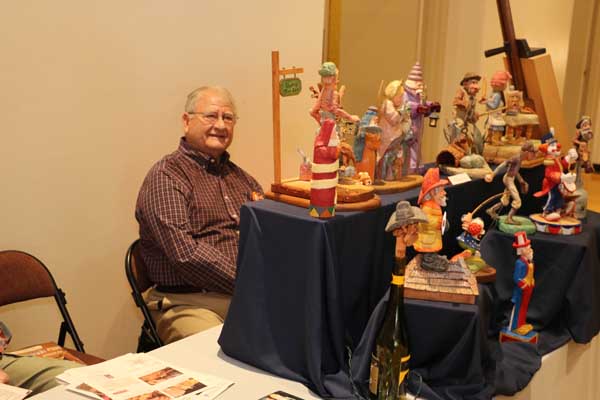
Long-time club member Nelson Krouse is known for his humorous caricature carvings.
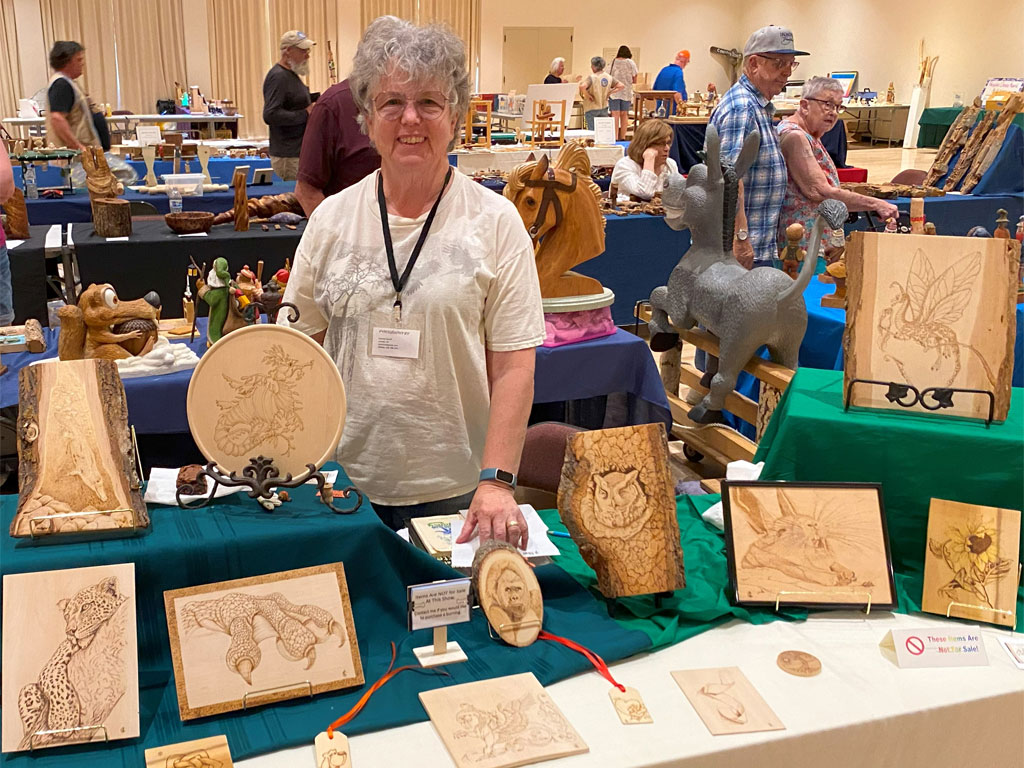
Joanne Carroll displayed her beautiful pyrography and spent time with visitors telling the stories behind each picture and explaining wood burning techniques. To see more of her pyrography visit her gallery on the Santa Clara Valley Carvers website.
/
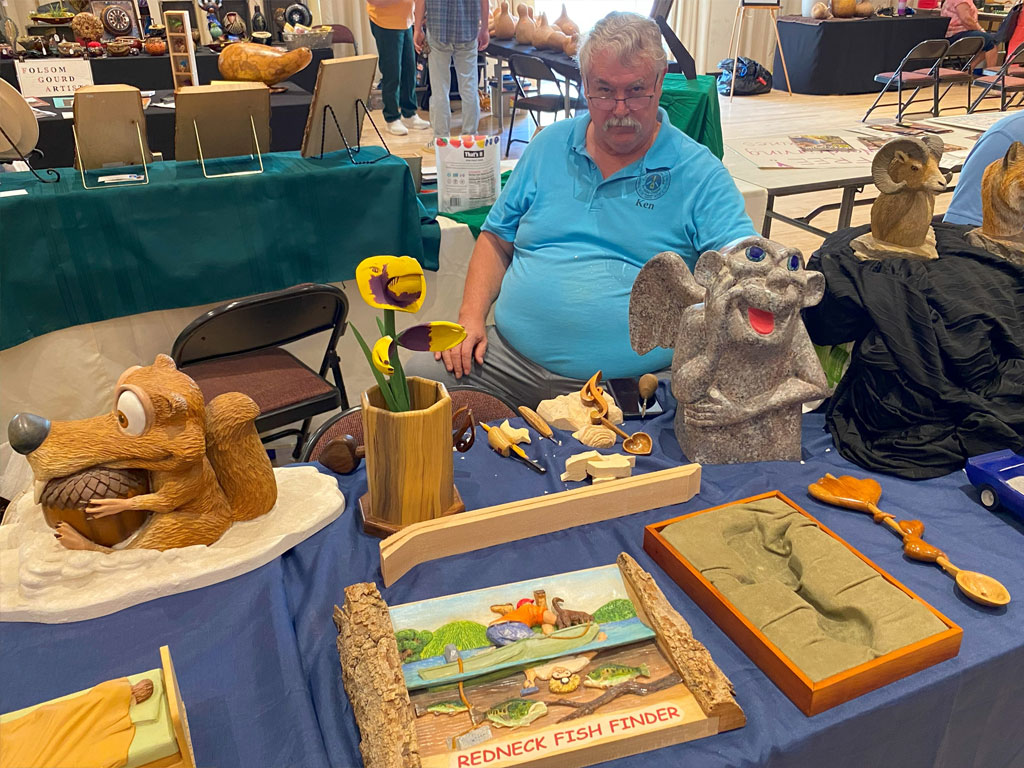
Ken Morgan from Tri-Valley Woodcarvers shared his work at CWA Show 2023. It is great to share our love of wood carving with other clubs.
Roman Chernikov demonstrated chip carving and whittling at CWA Show 2023. Roman has been a major contributor to the CWA website development. Open Roman’s Gallery or visit his website about whittling and chip carving: https://readntry.com
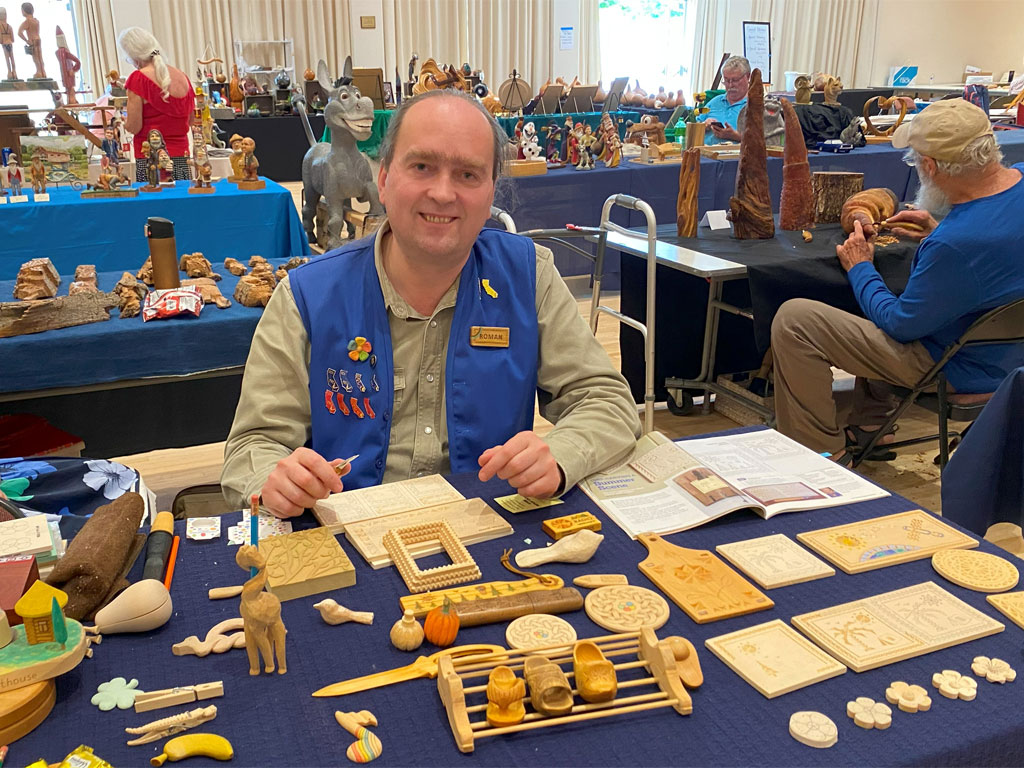
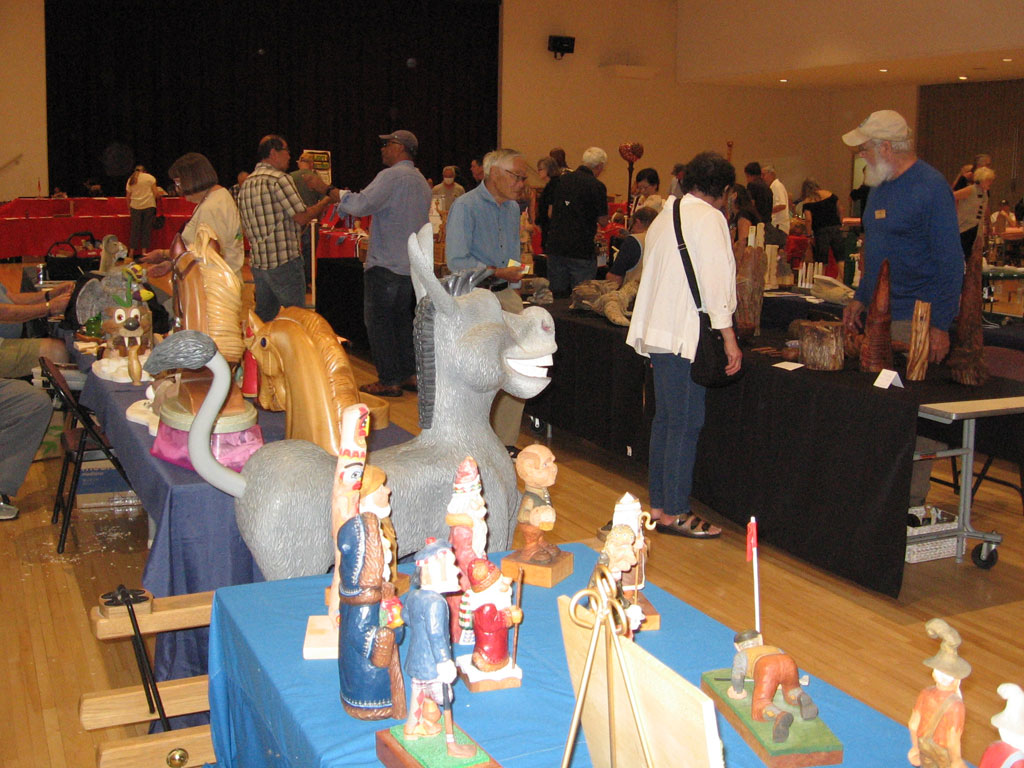
After COVID restrictions it was nice to be able to see and appreciate the work of our fellow club members and guests again.
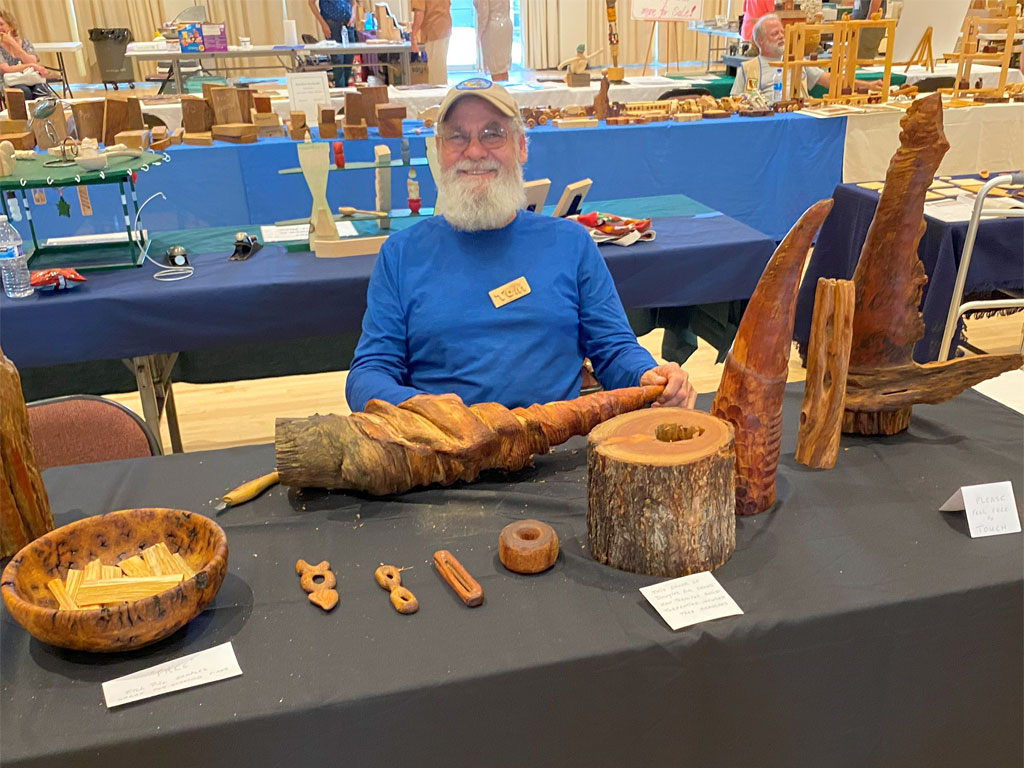
Tom Petersen and his pine knot carvings at the CWA show 2023. Living in Georgetown, Tom has a real focus on pine forests and these unique products from the core of the tree. He also carves cottonwood bark houses.
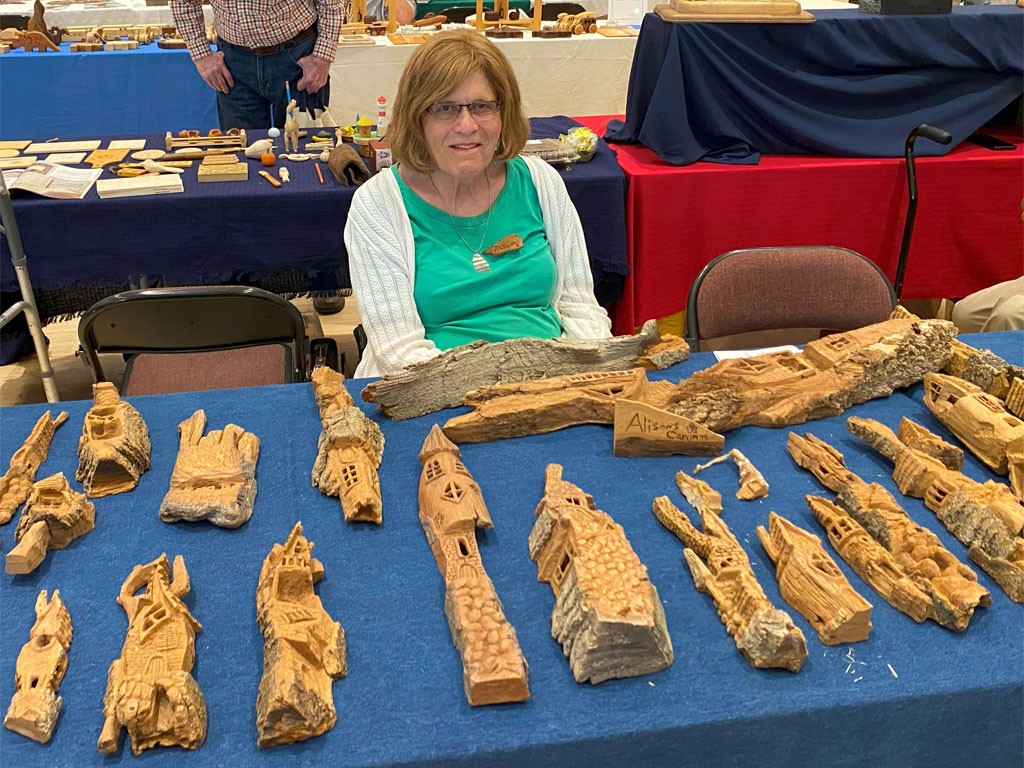
Alison Cook and some of her whimsical bark houses. Check out Alison Cook’s Gallery for more examples of her work. An attraction of carving cottonwood bark houses is that each house is different since each piece of bark is unique. She also enjoys the creative aspect of thee houses since there are not patterns and the wood reveals what it wants the house to be as carving proceeds.
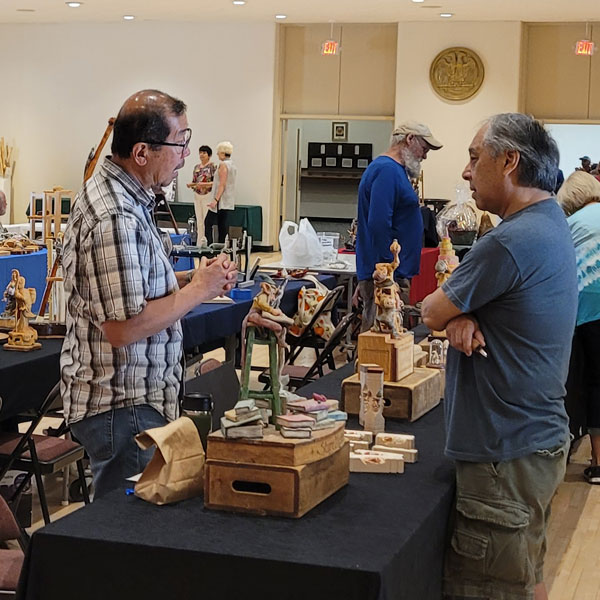
Joe You sharing his insight with an attendee at the show. Joe is an outstanding caricature carver and member of the exclusive Caricature Carvers of America (CCA)
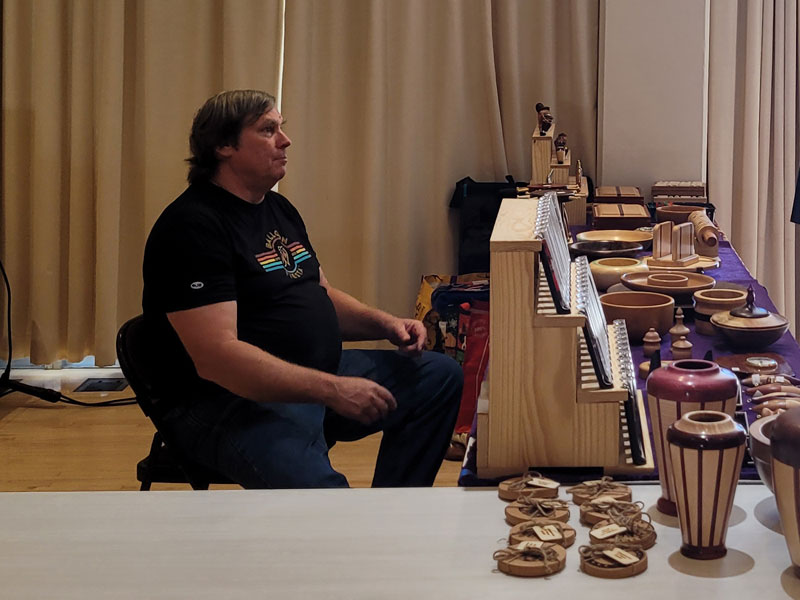
Brad Dano displayed his carving accomplishments. He is also an accomplished wood turner. For the past two years Brad has also provided our food concession during the show.
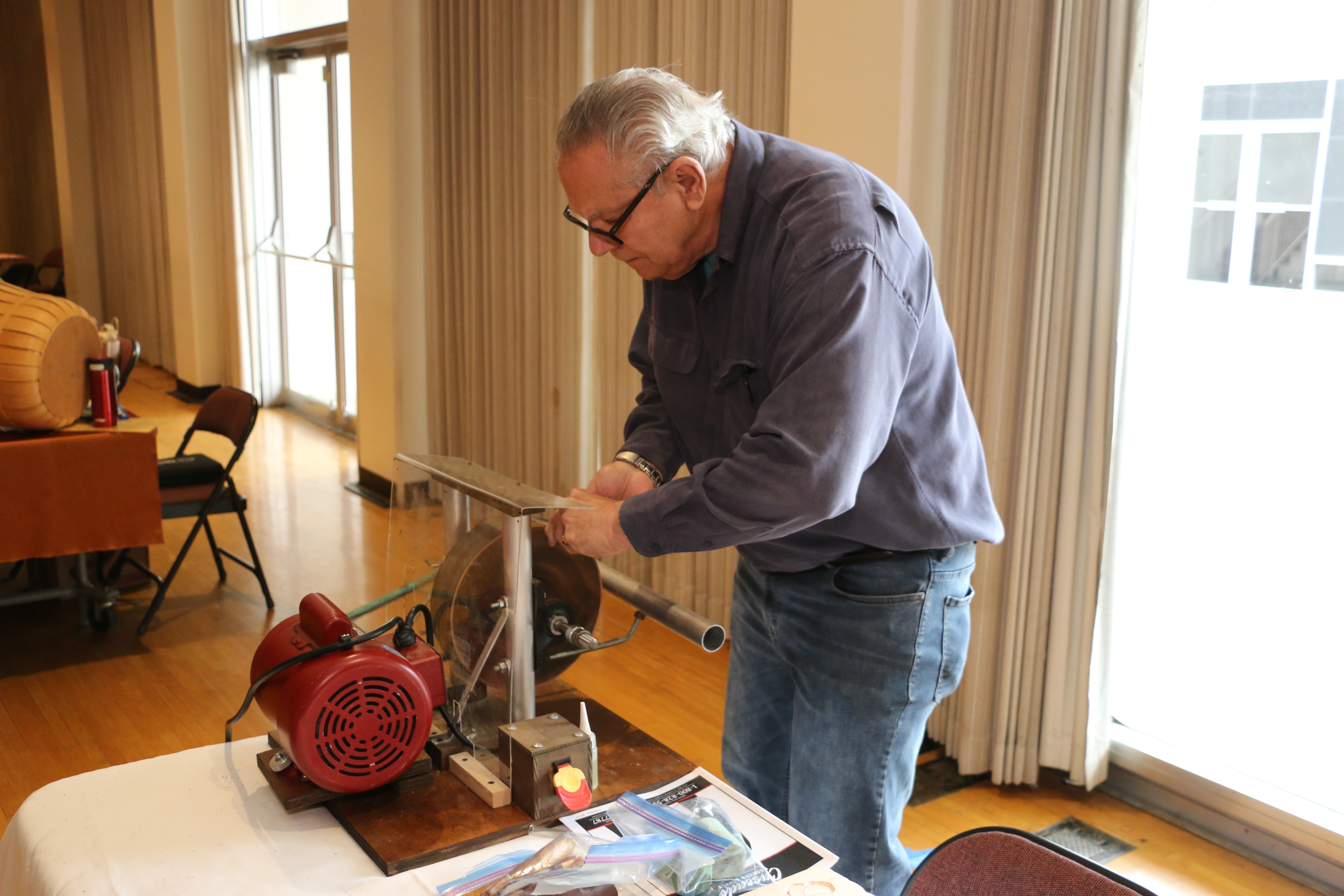
Peter Coombs, shown here at last year’s show, once again generously provided free tool sharpening for show participants.
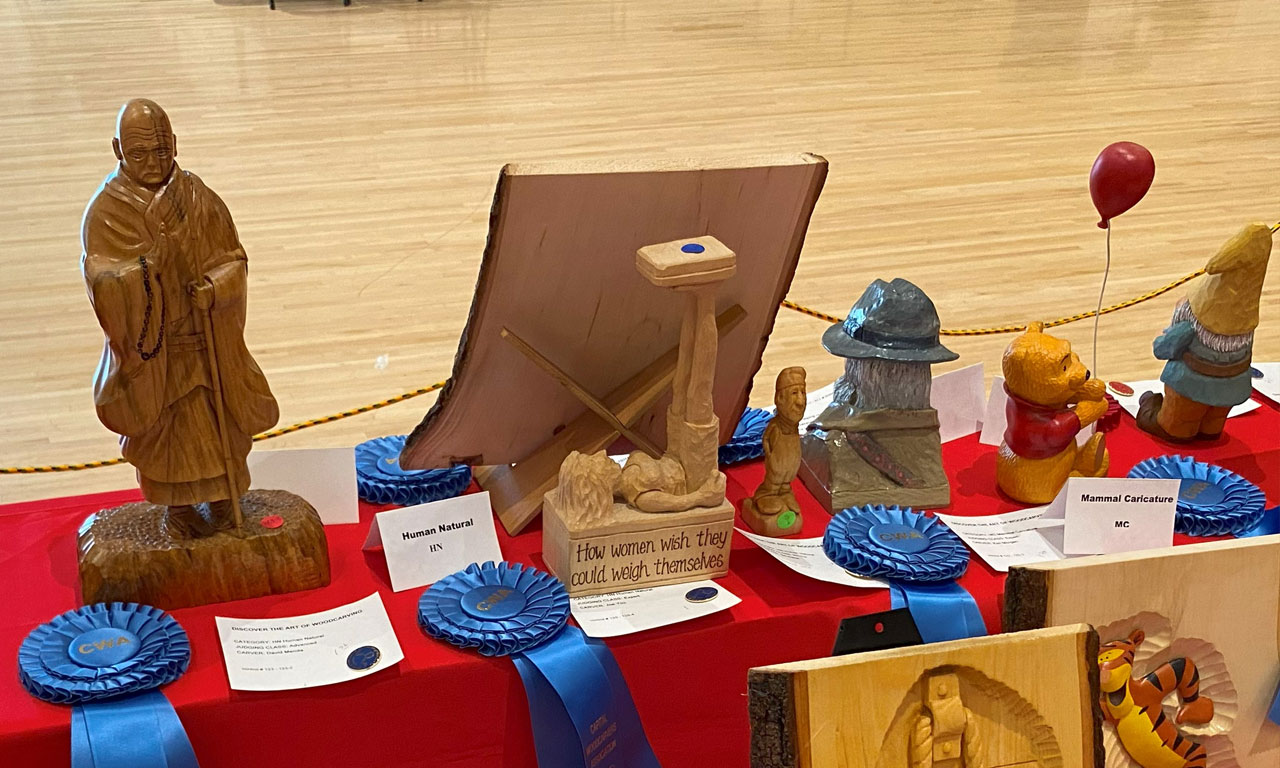
The entries showed great diversity in both gourd art and wood carving.
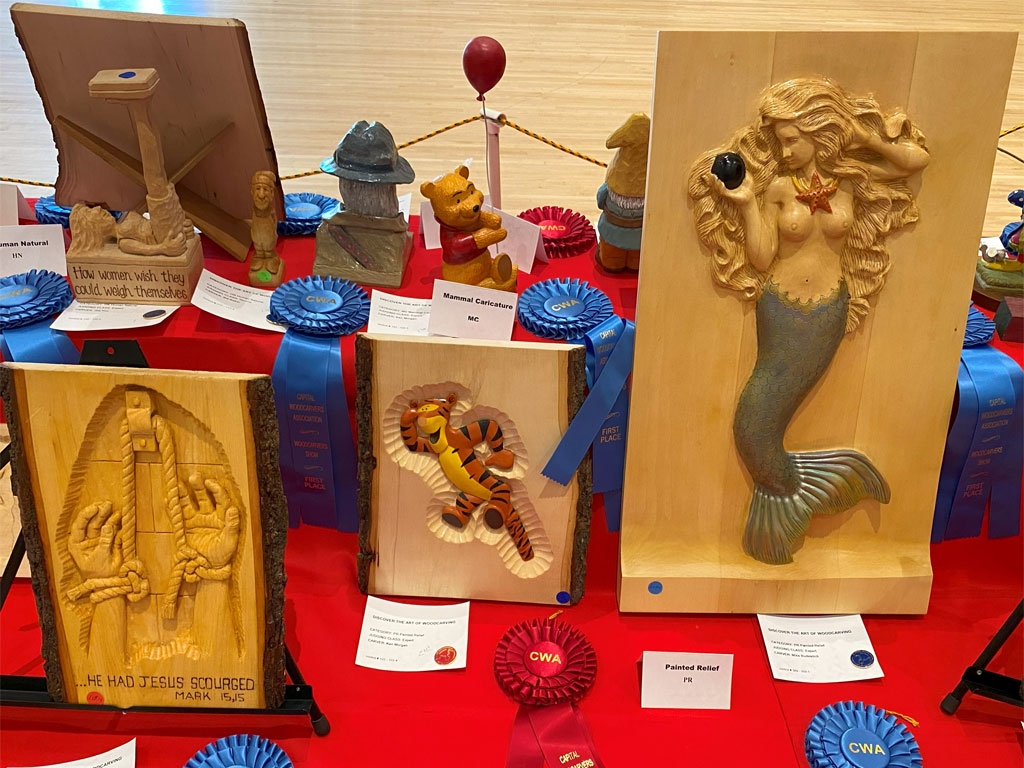
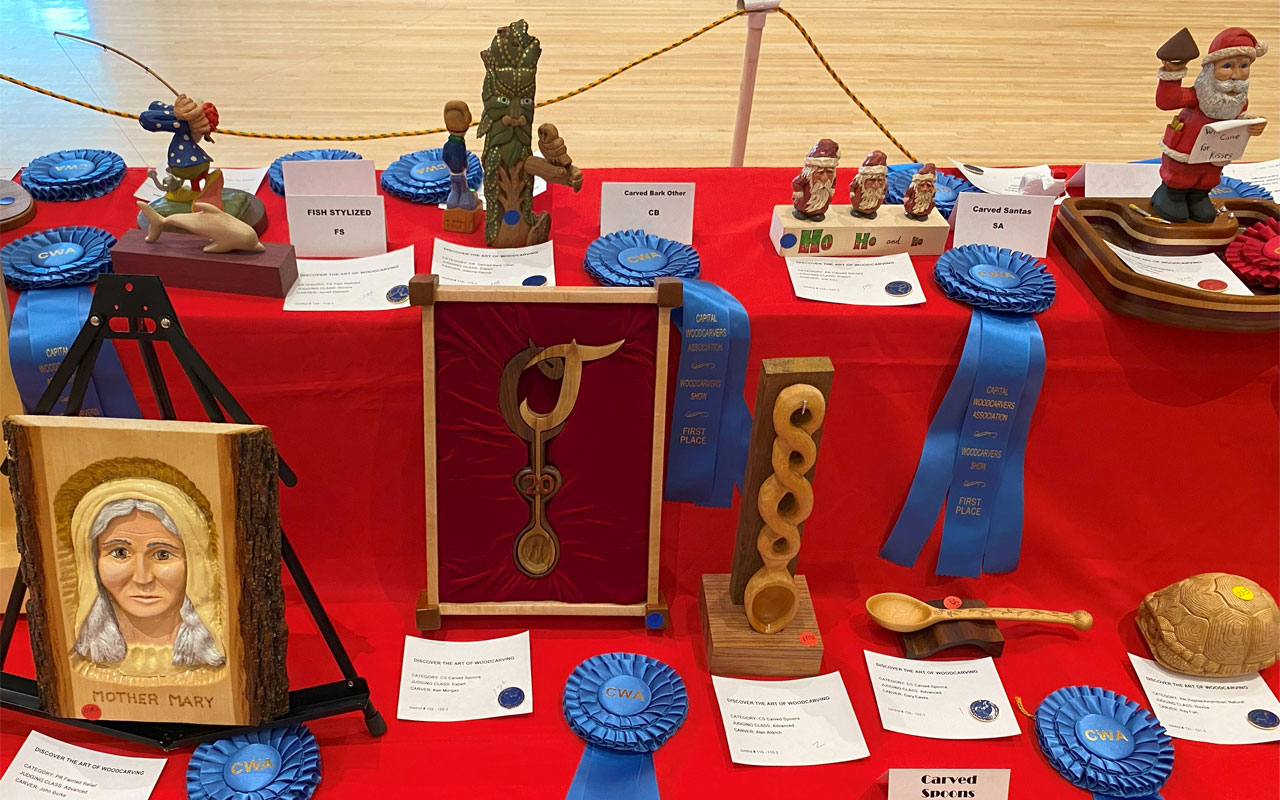
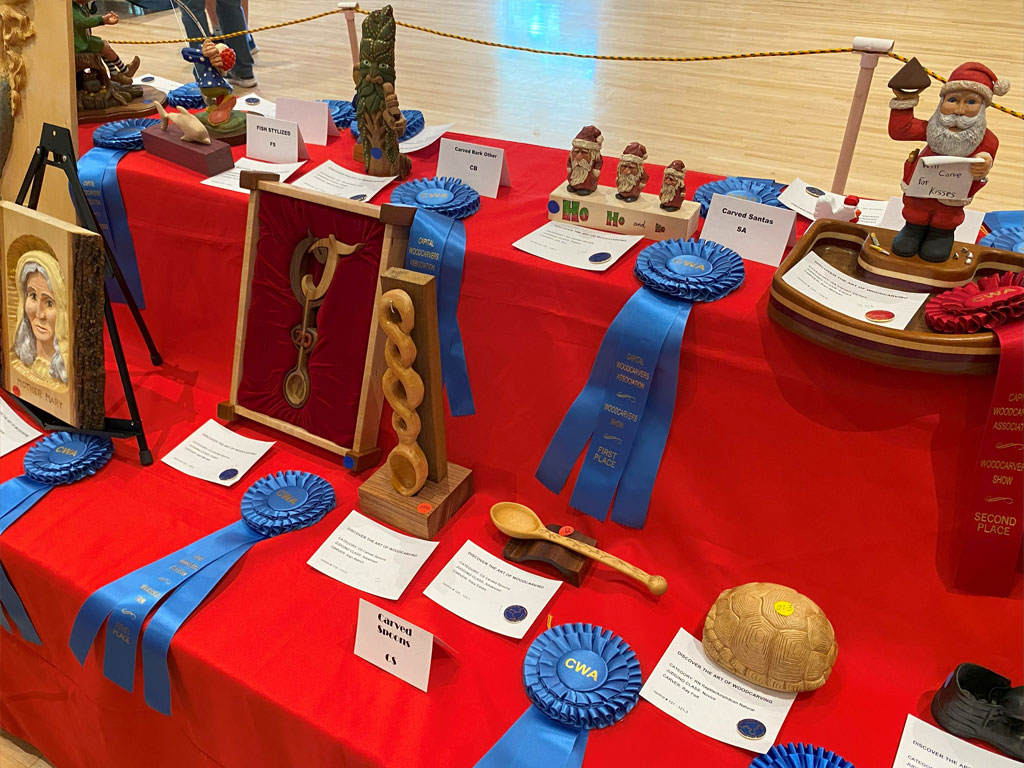
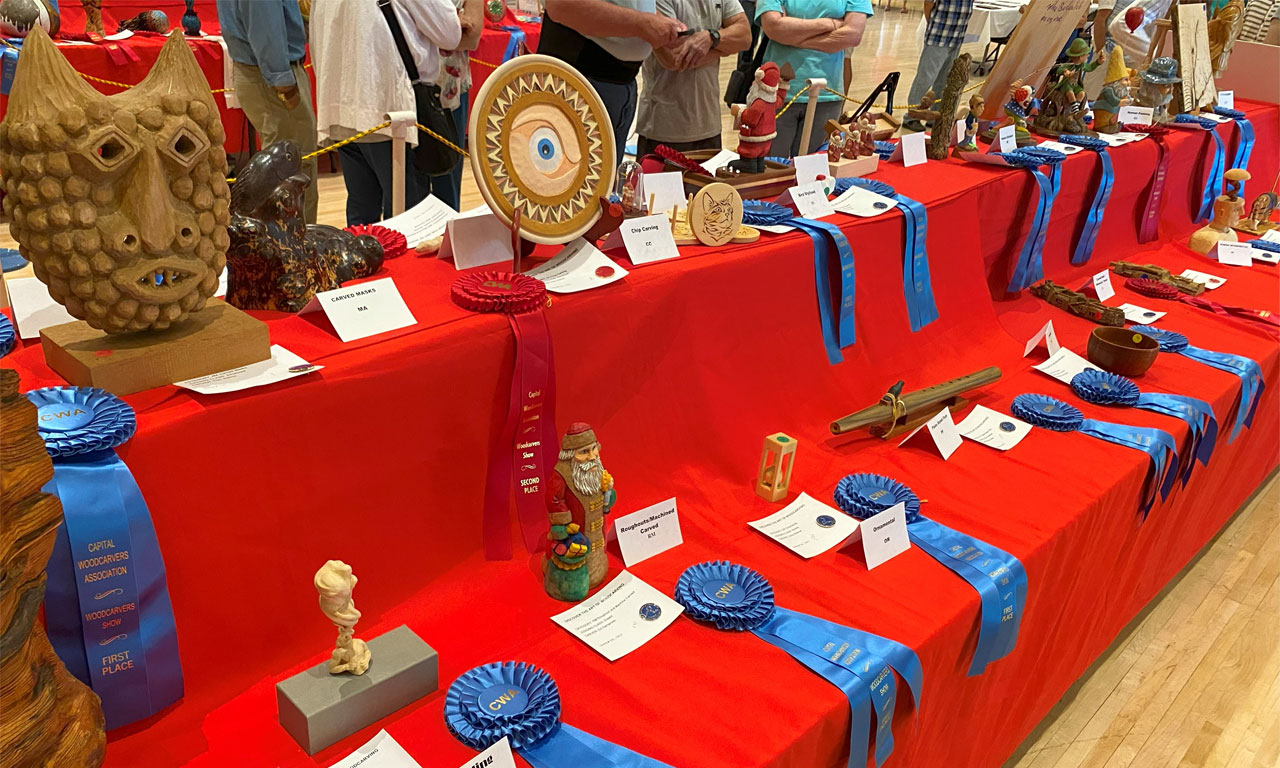
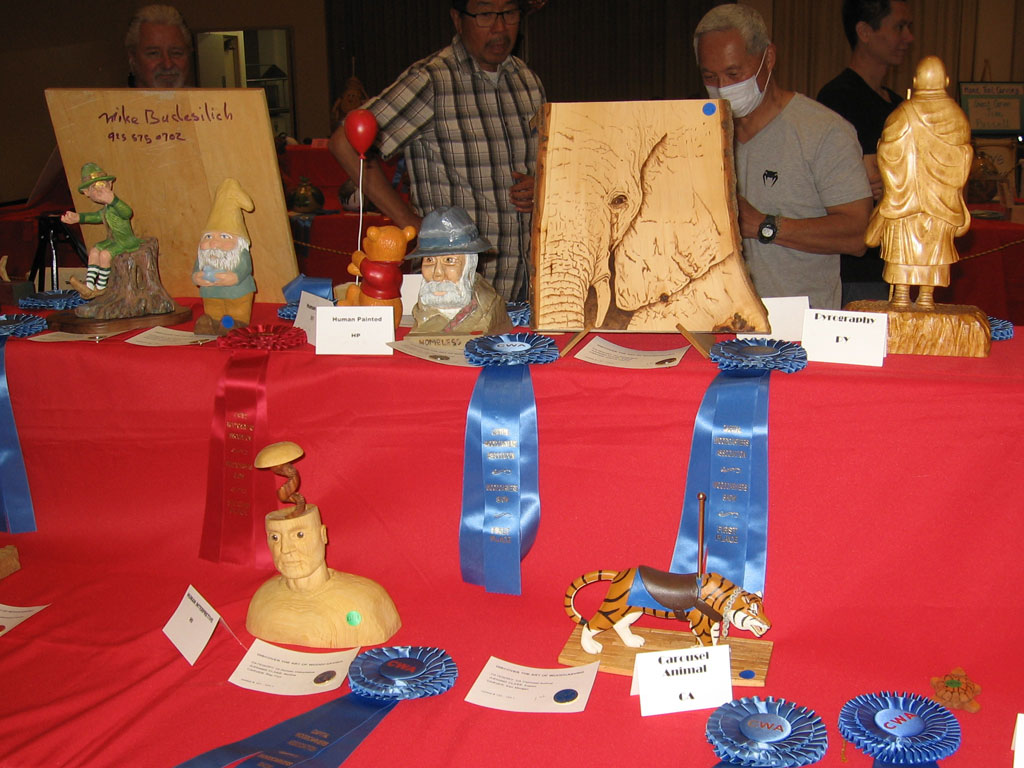
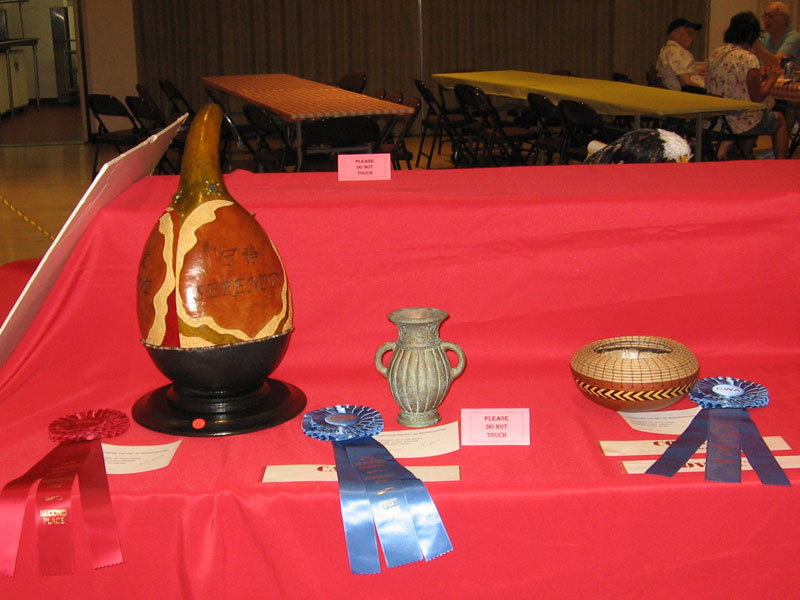
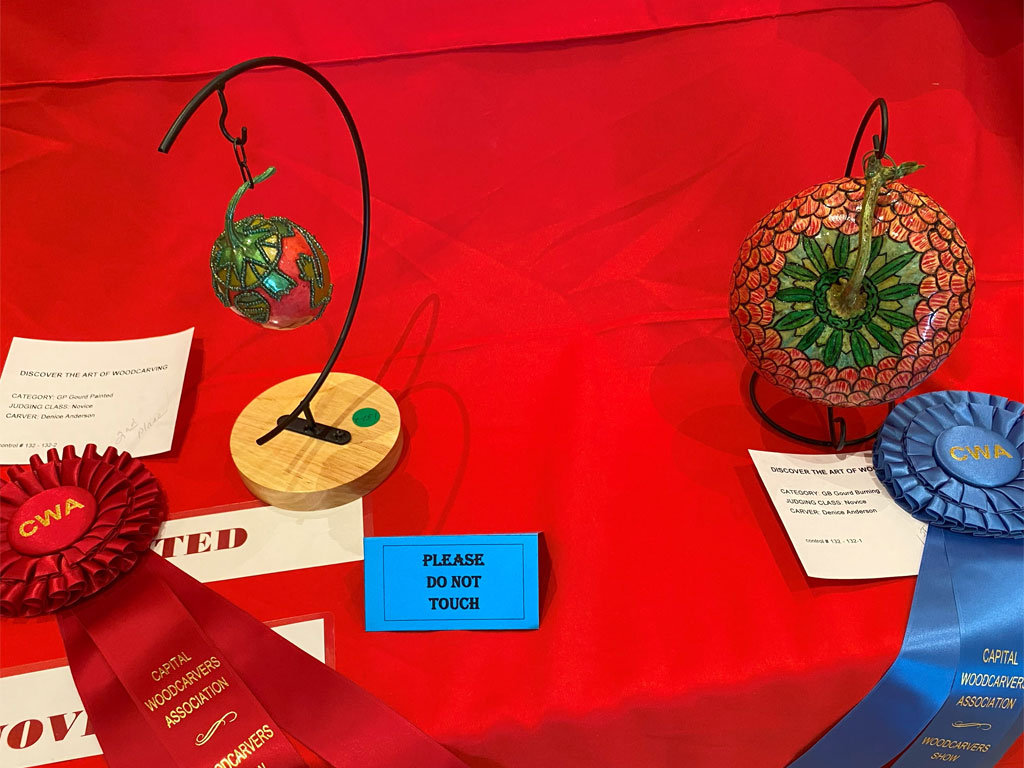
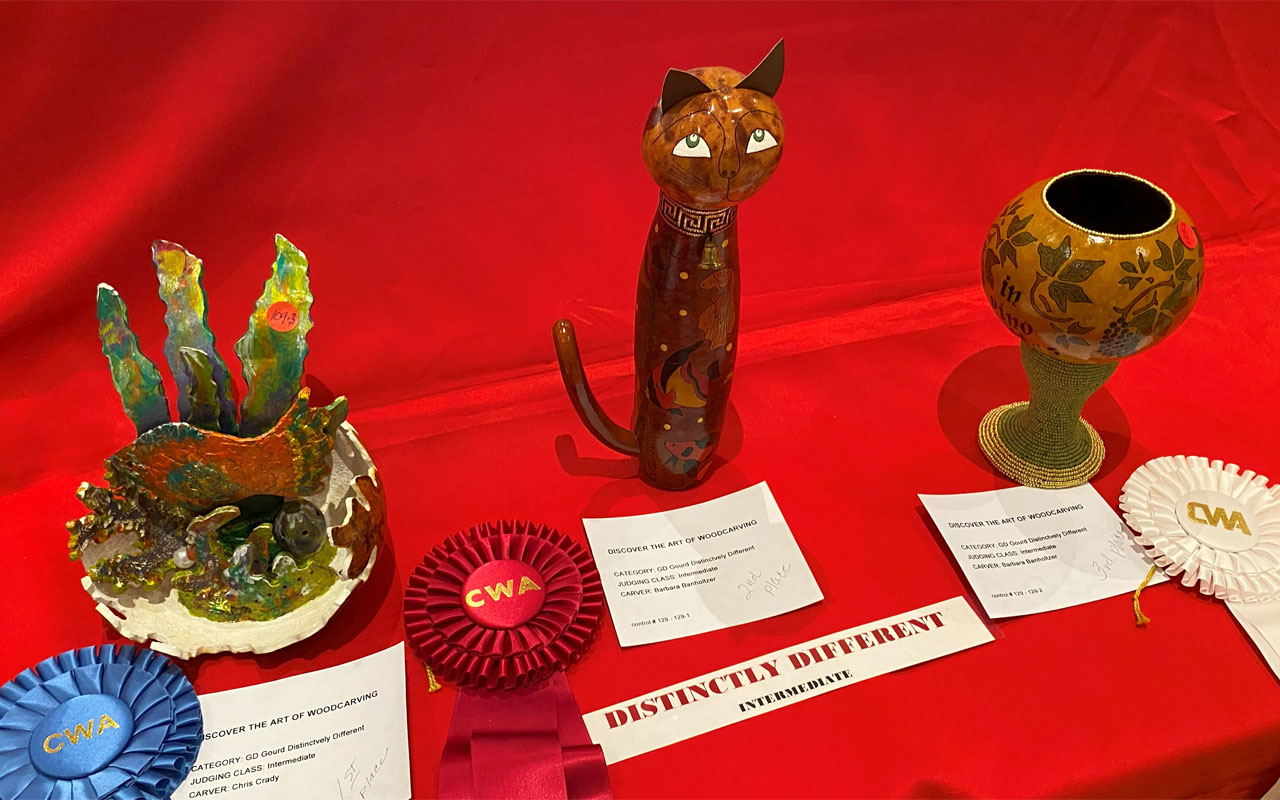

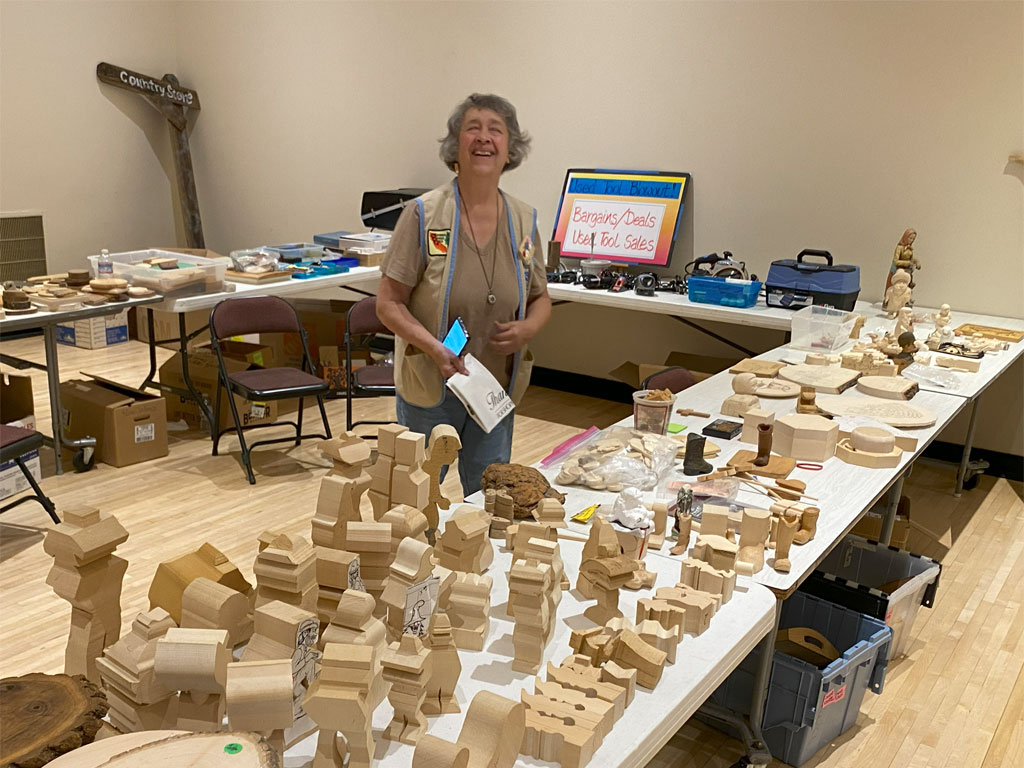
The Country Store and the Silent Auction were the beneficiaries of generous donations from Gerry Sanders via her son Michael. There were many roughouts, blanks, finished carvings and painted pieces that were made available to show attendees through the Country Store. Some more elaborate finished carvings were added to the Silent Auction table. Libby Schram, Alice Bowles, Shirley Coffelt and Jannel Darroch efficiently ran the Country Store, and Joe You manned the Silent Auction..
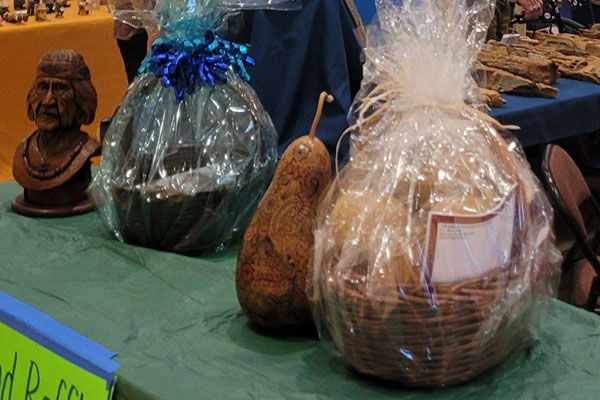
For the major Raffle there was a wood carving and a decorative gourd as well as two gift baskets, one from the gourd artists and one from the wood carvers. Each contained gift certificates, wood or gourds, books, and tools.
Raffle prizes from left Nelson Krouse’s carved bust of a native woman, CWA Gift Basket, Janice Horner’s gourd, Gourd society gift basket.
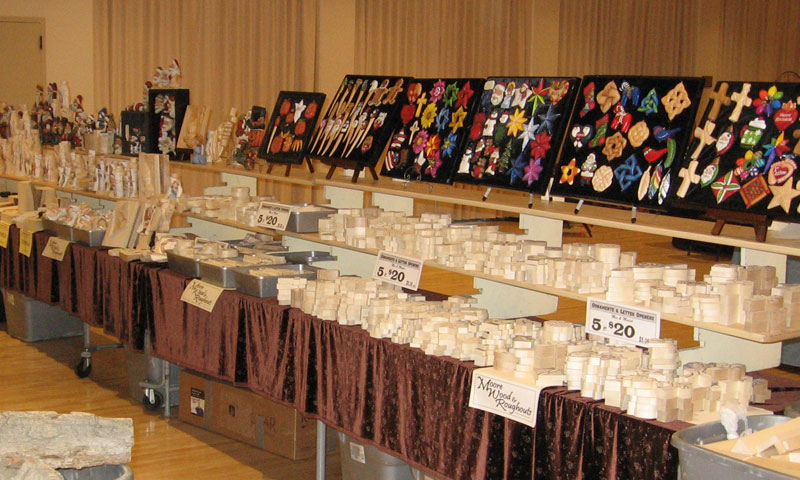
Randy Moore once again brought a large amount of raw basswood, and cottonwood bark as well as roughouts, blanks and finished carvings created by his wife (and our judge), Pat.
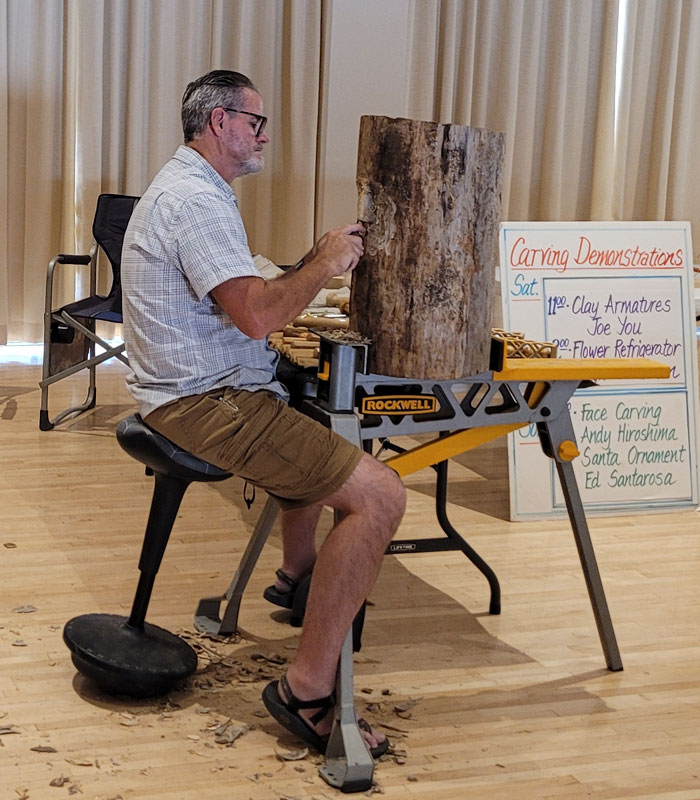
Jim Russell demonstrated carving a wood spirit in a log during the show.
Nancy Longino took responsibility for the front desk check-in and was assisted by several volunteers. Our treasurer, Irene Huey, handled the money from all the different venues. Jim Veach was a great MC, announcing hourly draw winners, demos, and everything else that needed attention.
For the second year, a great benefit to our show was the food concession organized and run by Brad Dano with great help by Marilyn Phelps. Participants got a hot dog, macaroni salad, chips, a cookie, and a can of soda—for $5!! What a deal.
Pictures supplied by Ed Santarosa, Andy Hiroshima and Roman Chernikov
Thanks to the show committee: Alison Cook, Andy Hiroshima, Joe You, Janice Horner, Alice Bowles, Jim Russell, and Leroy Stebner.
CWA maned a booth in the Fine Arts and Crafts Building (Building 4) on Wednesday and Thursday, July 24 and 25 during the 2019 California State Fair. Although our booth was tucked away in a corner we had a lot of visitors to our booth. Our booth staff was led by President Joe You with assistance from club members Patsy Jeffery, Debra Jaynes, Joann Sprougis, Tom Petersen, and Ed Santarosa plus nonmembers Dorian Hendrix and Carol Santarosa. Thank you to all who helped out.


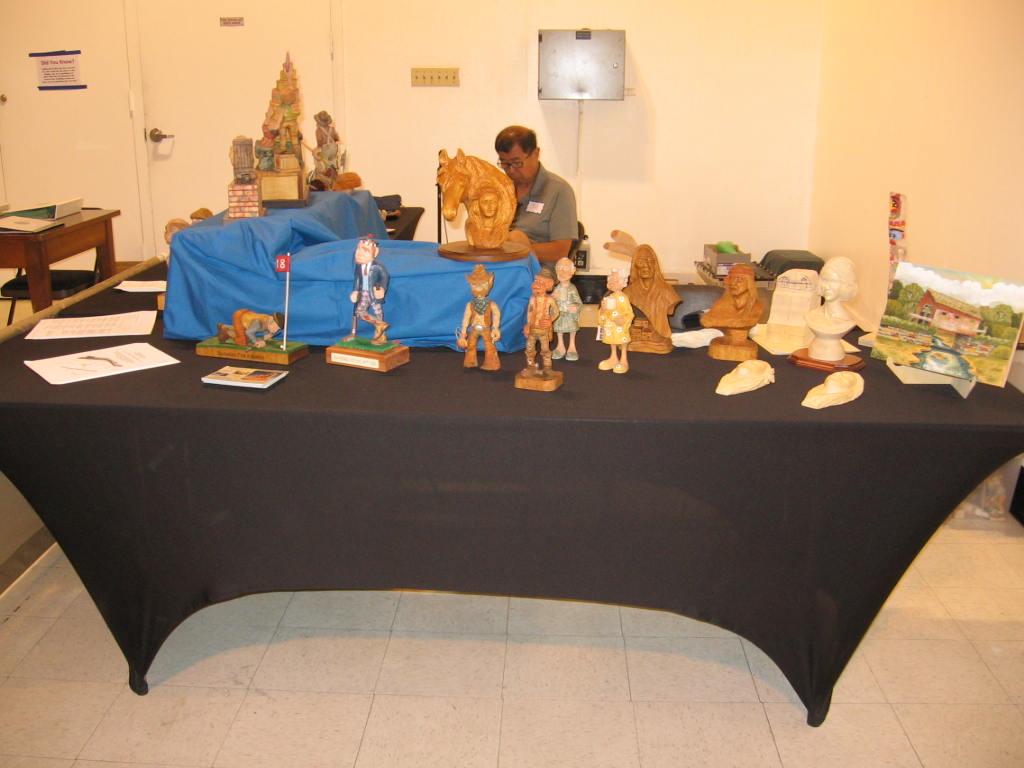


Three Capital Wood Carvers Receive Five Awards at the California State Fair
California Crafts 2019
Andrew Hiroshima, The Flautist :
Alison Cook, Three Eras
Crafts: Wood Art, Wood Carving – Second Place
California Fine Arts 2019
Ron Kremer, Cottonwood Houses
Fine Arts Special Award:
The club is bringing back the Friendship Canes starting with our 2023 Spring Show which will be held on May 20 and 21, 2023 at the Scottish Rite Temple. The purpose of the program is to encourage carving by the members and to build friendships between new and long term members and to build relationships between novice carvers and more experienced carvers.
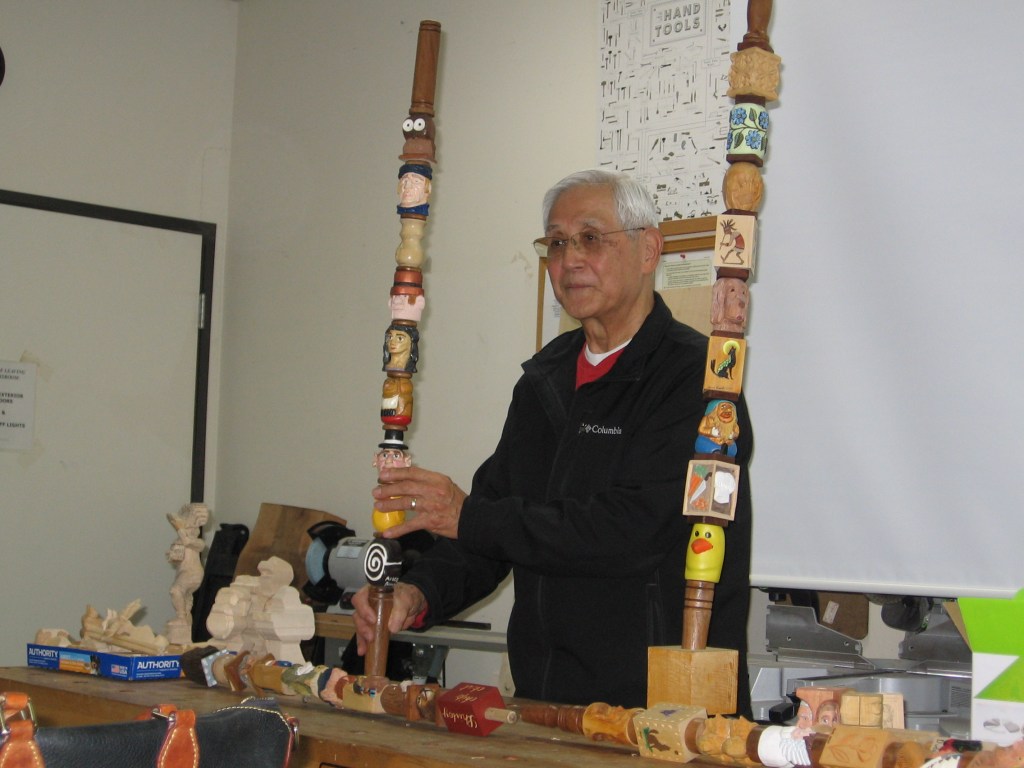
The rules for the program are to carve most anything you want as long as it fits on a 2”x2”x3” block with a 5/8” hole drilled through the middle in the long direction. The finished block may be unpainted and coated with a mineral oil finish or it could be painted with acrylic paints or other paints of choice and finished with a top protective top coat. The blocks will be stacked with a 5/8” dowel through the holes and held in place with a special bottom and top piece. A total of 9 blocks are needed to make one cane. If 18 finished blocks are received wo canes will be assembled, etc. The carvers name should be placed on the blocks at a location such that the name will be visible after the cane has been assembled.
The finished blocks must be turned in to Andy by 5:00 PM on Friday, May 19 in order to be incorporated into a cane. A drawing will be made on Sunday afternoon and the cane(s) and the cane(s) awarded to the lucky winner(s) after the drawing. Only carvers who turn in a block to Andy by the due date will be eligible to participate in the drawing.
Andy Hiroshima and Alison Cook, traveled back to Doane UIniversity in Crete, Nebraska in 2019 and participated in the Doane Experience. Here is their account of their trip.
Andy:
My Doane Experience began February 1st at12:00 PM. This is when I received the application for attending the Doane Nebraska Experience. I had heard that if you don’t get your application in early you may not have your first class of your choice or perhaps your second or third choices either. This information came from a reliable source, Bob Travis, CCA Founding Member and instructor at Doane.
I have been hearing that this was a carving experience that all wood carvers should try at least once. There are members of our club that have been there as many as 7 times perhaps more, and their experiences at Doane has been a real asset to their carving life. They told me that carving at Doane was like going back to college in their Freshman year as far as living in the dorm at night.
While I was there, I met many very nice people who told me when they first went to Doane, they stayed in the dorm and the bathroom was 75 steps from their room. This was important because when they woke up at night, they would count their steps so they knew they were in the right place. Of course, they had to count to 75 to get back to the right room.
There were people from 29 states and several from Canada. 4 people were from Calif. Two from Sacramento Alison Cook and myself. In total there were 136 students at this years’ experience.
I’m guessing that much has change because, although I stayed in the dorm, there were three bedrooms, each had two beds, one common area, very comfortable, one bathroom with two sinks, one toilet and two showers. It was very comfortable, I elected to have my own room and it was suggested that you submit your application quickly while you have a choice. In my case there was one other person who chose to have his own room. There were two people in the dorm room and one bathroom. Perfect.
The food was very good, not great, but tasty and lots of variety for the picky eater. Let me say, if you leave hungry, it’s your fault.
Carving: I chose to do was a Standing Moose, taught by Linda Curtis, excellent teacher. There are 10 people in the class, and we had a wonderful time. We worked hard, laughed hard and carved a lot. There were 14 different classes you could choose, there was something for everyone.
While we were at dinner, we heard many stories from the past. One particular story hit home for both Alison and me. There were 8 people sitting at our table, and we had a good laugh at the expense of our good friend who was not there to defend himself, but he is infamous. The story goes, he was carving and while he was talking, he was waving his hand around and accidently cut his ear. Well this was embarrassing enough but the next day, while he was carving, he was explaining what happened the day before he held the knife in his other hand. Yup, he cut his other ear. A special award was given to him at the end of the session, it was a set of large earmuffs. The story lives on in the annals of Doane.
In conclusion, I had a great time, enjoyed the class and students. I met a lot of very interesting people and made new friends, which carving is all about, yes, carving is a good conversation starter.
Think about attending. If you have never been there or if it is your 10th time, it will be an excellent experience.
Alison
Andy has summarized the general information well. L also requested a single room and made sure my application was post marked February 1 (the same day I got the package). My arrangement was like Andy’s but with more people. There were 5 rooms in our suite. They appear to be double rooms during the school year and one of ours did have two women who came together. The rest were singles. We also had two sinks and two shower stalls, and two toilets shared by six people surprisingly, there were few, if any conflicts around shower times or other bathroom time in the morning. Three of my suite mates were from Wisconsin, one from Iowa and two of us were from California. Most of the others were taking chip carving so we didn’t see much of each other except at meals.
I agree with Andy’s appraisal of the food.
Not surprisingly, I choose bark carving, called Bark-a-tecture, taught by Ken Armsberry and Norm Minske. We had six participants of pretty much the same level of experience and skill. I learned some new techniques and completed a carving over the course of the week. It was fun learning from both the instructors and the other participants. Of course, I ended up “needing” two new tools that they were happy to sell to me.
All-in-all it was a good experience. The campus is pretty, the people were very nice (and often funny) and the learning experience was good. I really didn’t realize just how much corn there is in Nebraska. I swear they plant the stalks an inch apart. Amazing view of” America’s Heartland” driving across Nebraska. All in all, it was a luxury to carve for 5 days straight in such pleasant surroundings with such nice people. However, my hand did complain bitterly the next week.
I second Andy’s suggestion to think about attending. They have been doing this for 43 years and have it down to a smooth operation. What a great way to spend a week in July—carving in the middle of cornfields (sort of).
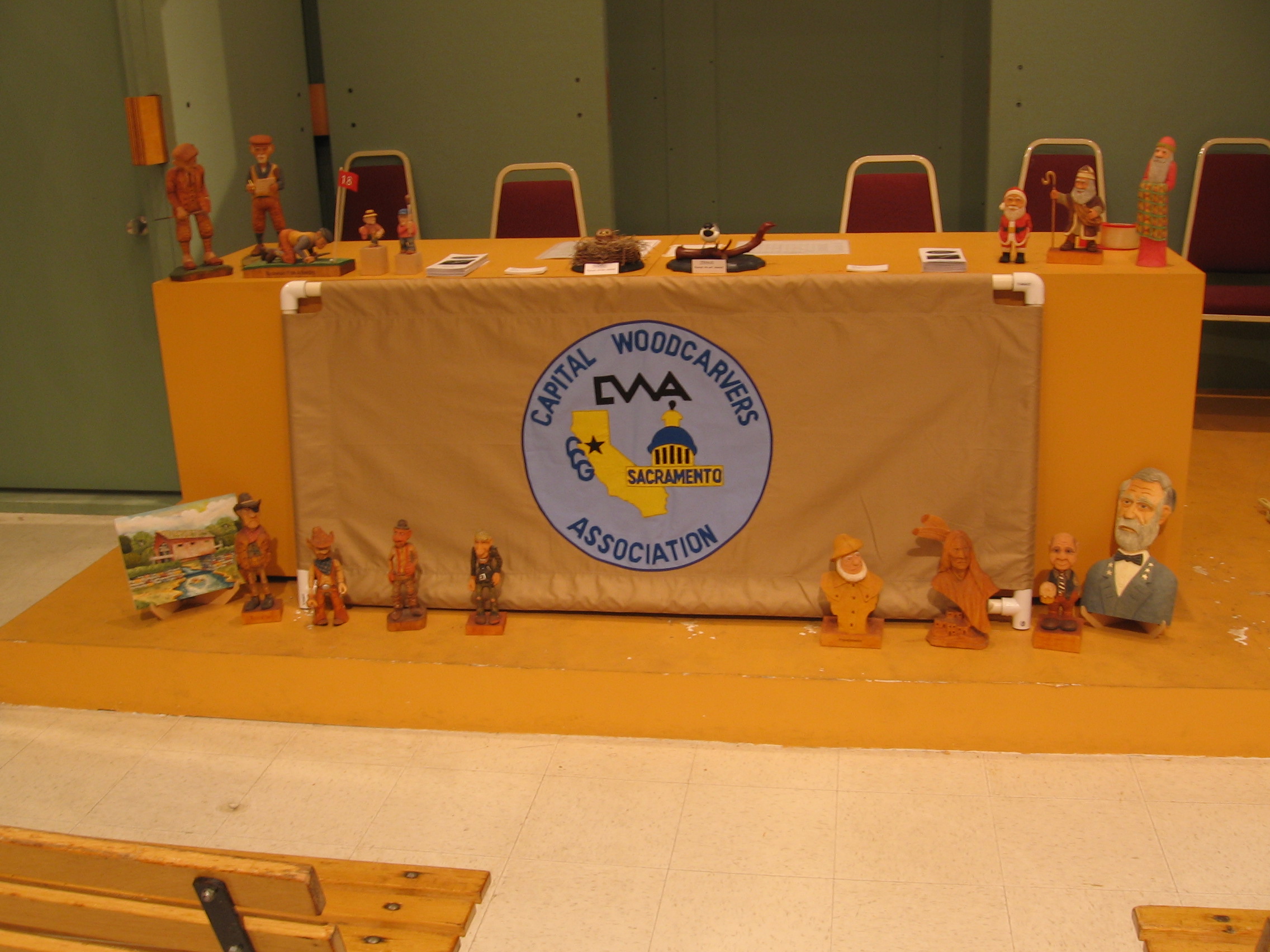
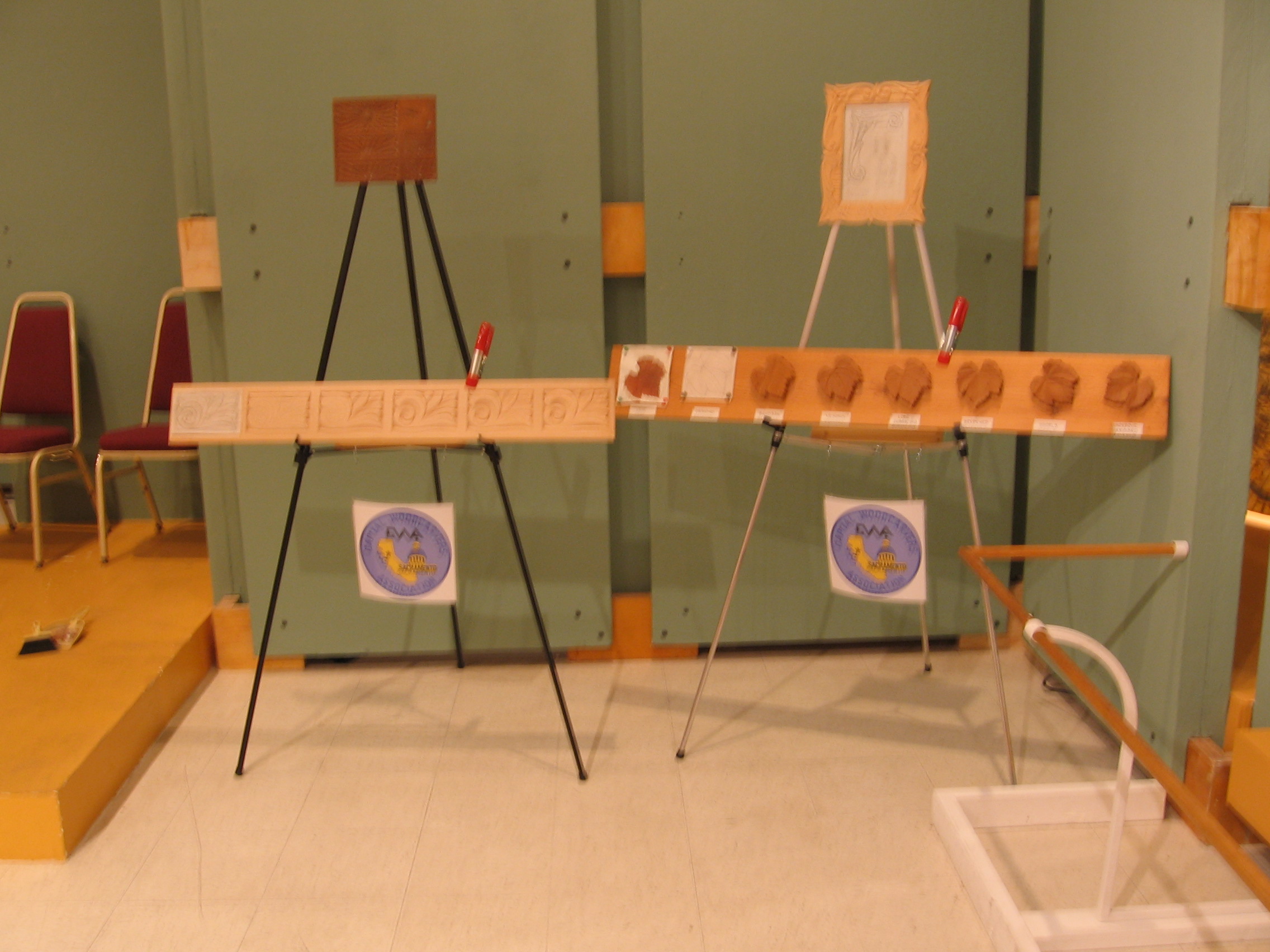
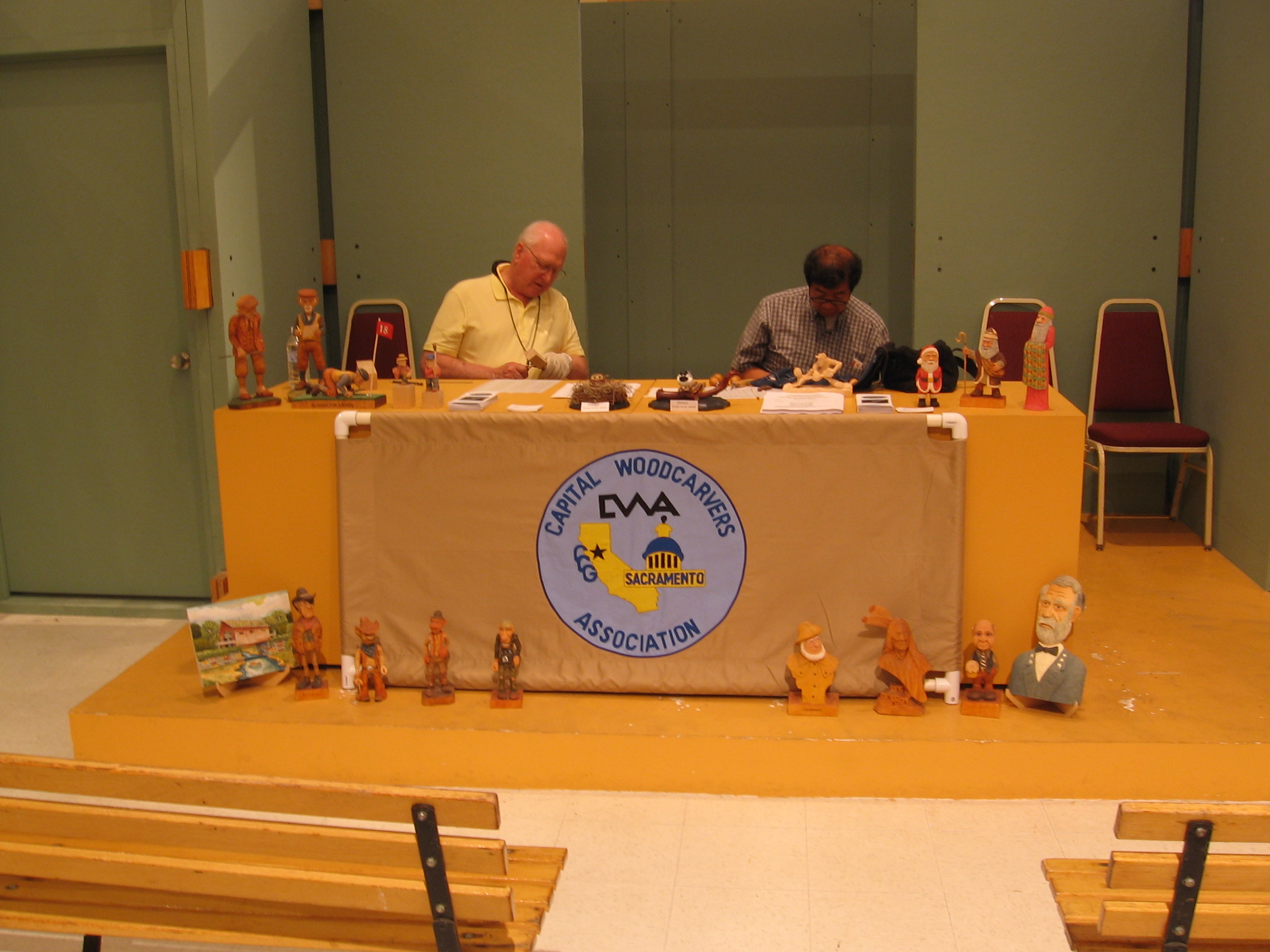
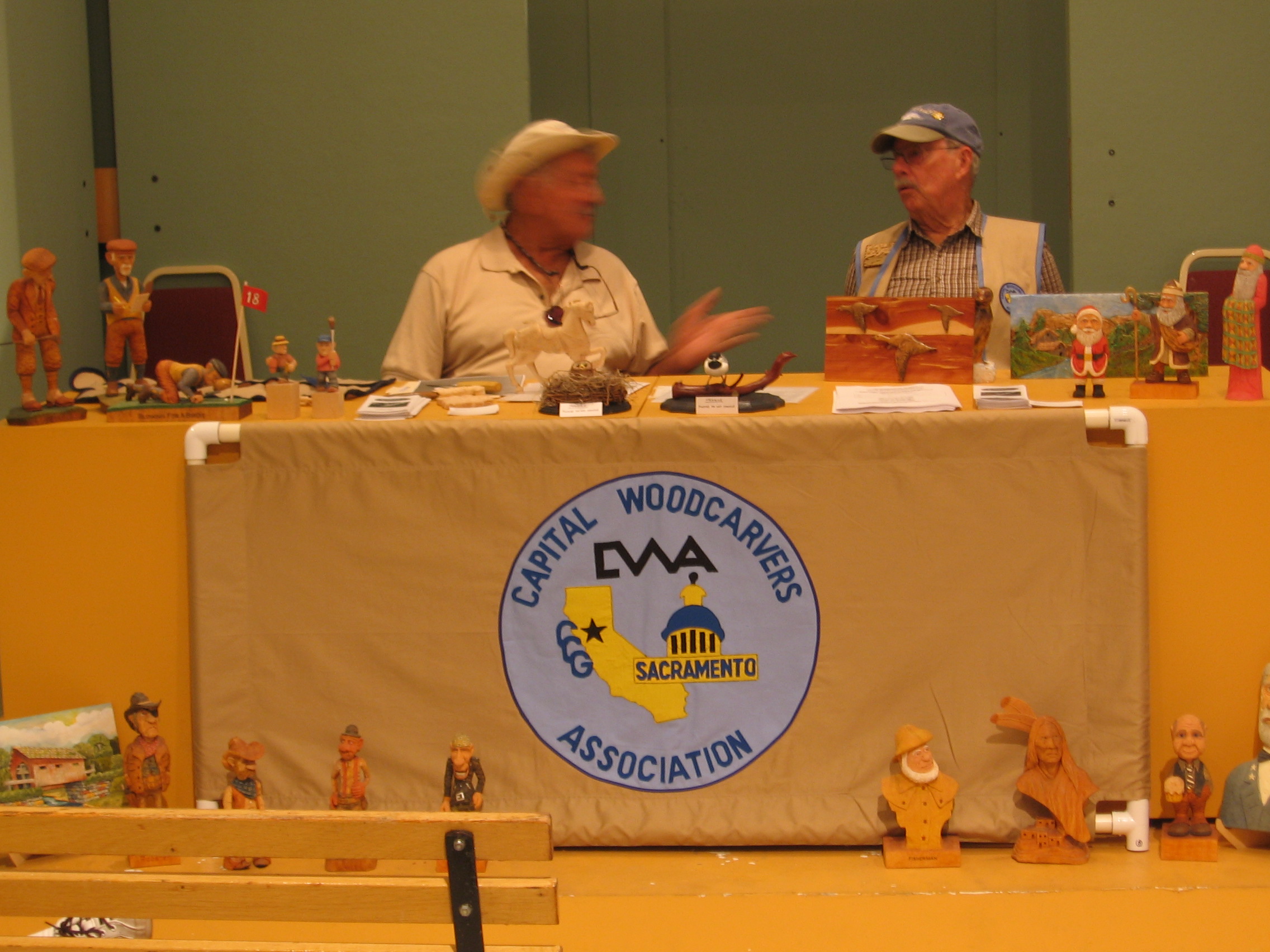
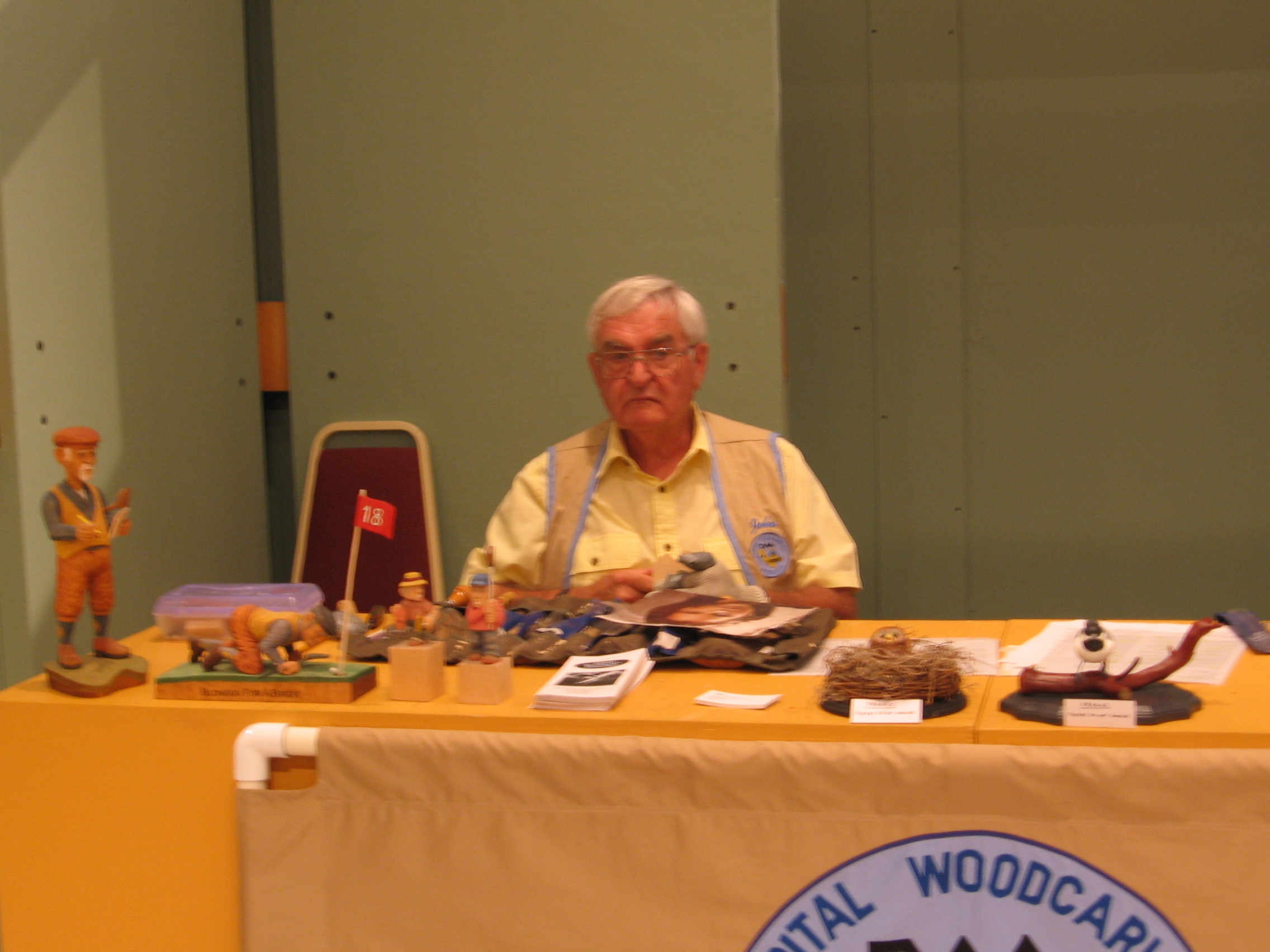
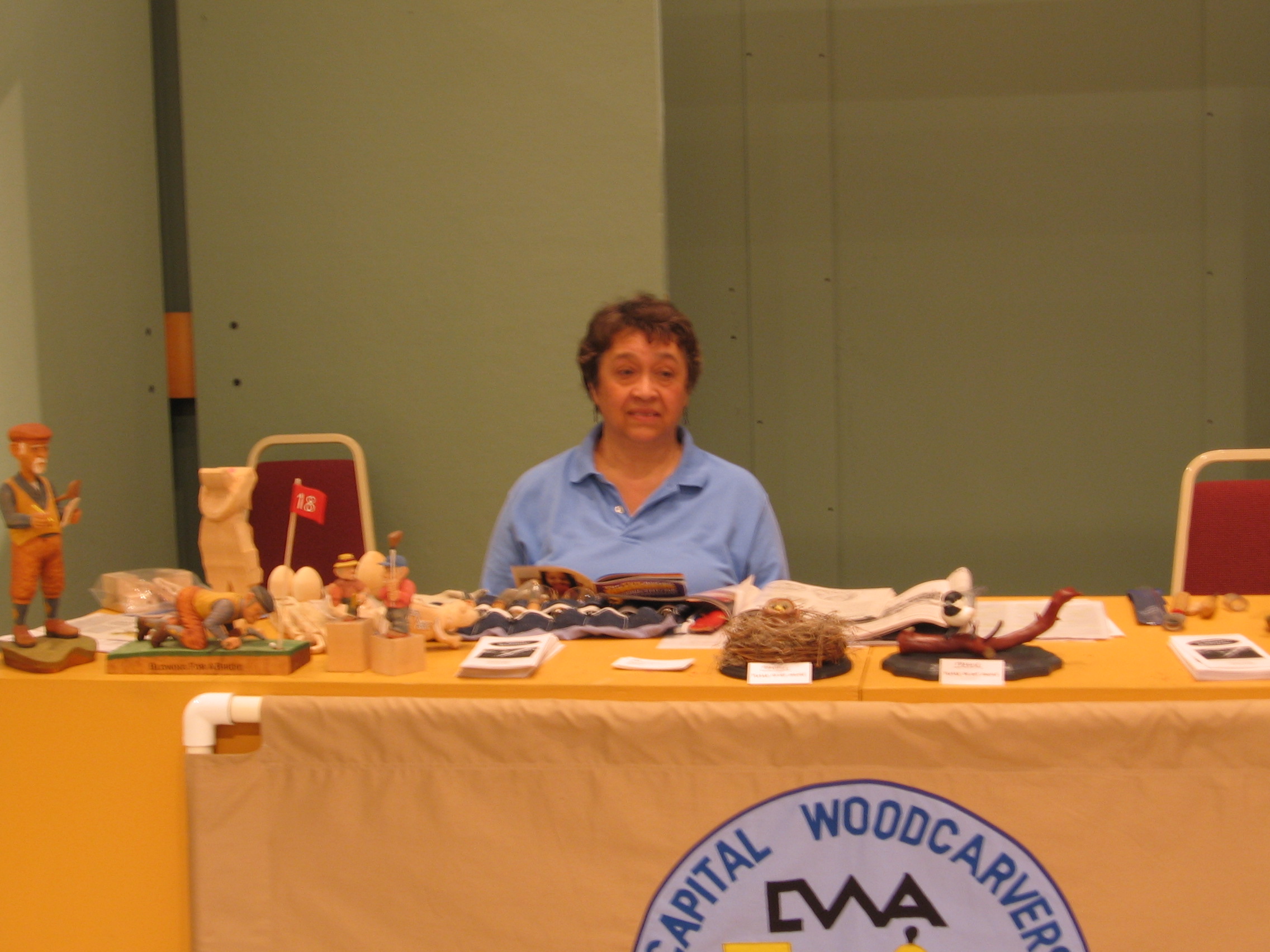
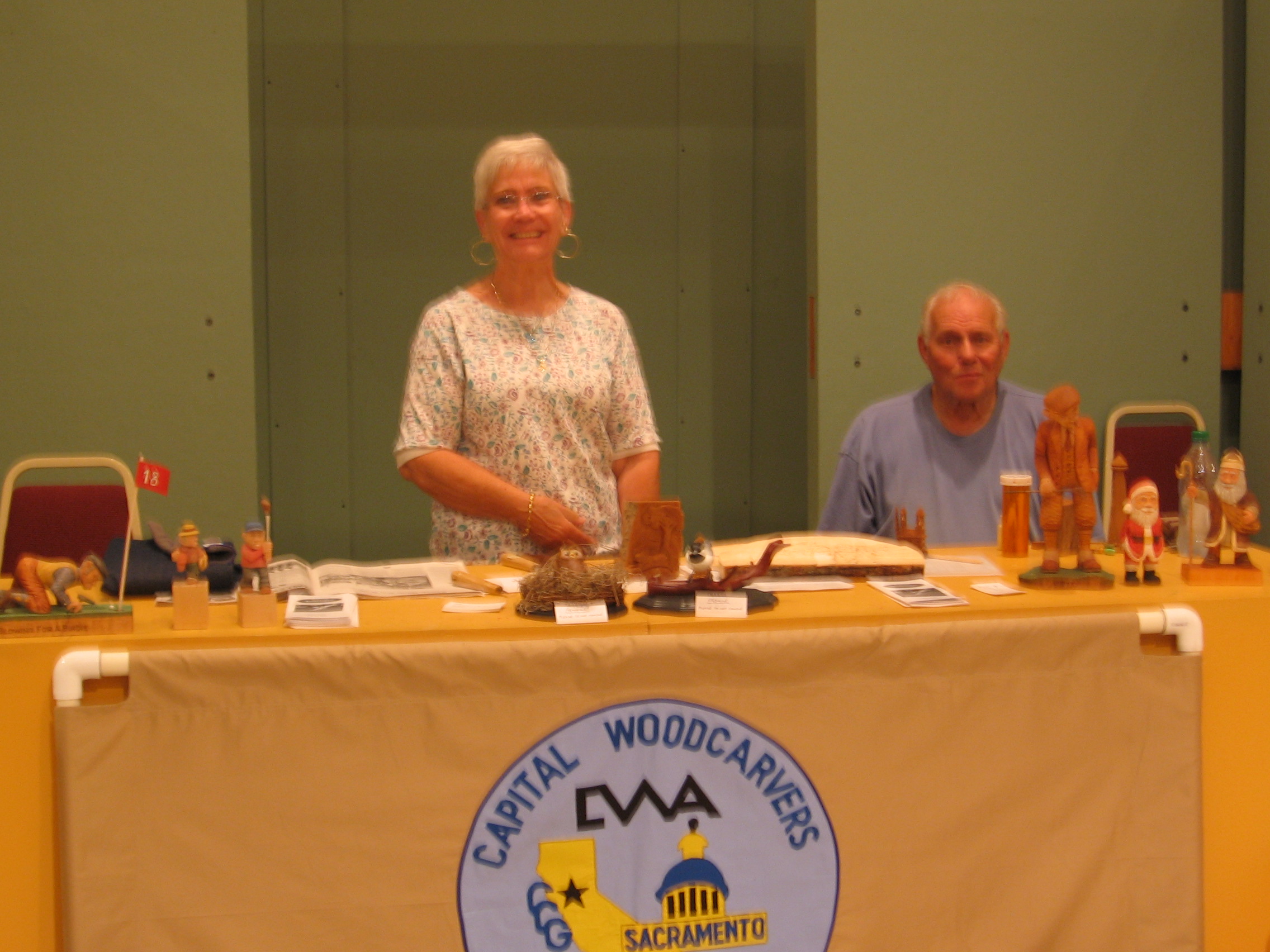
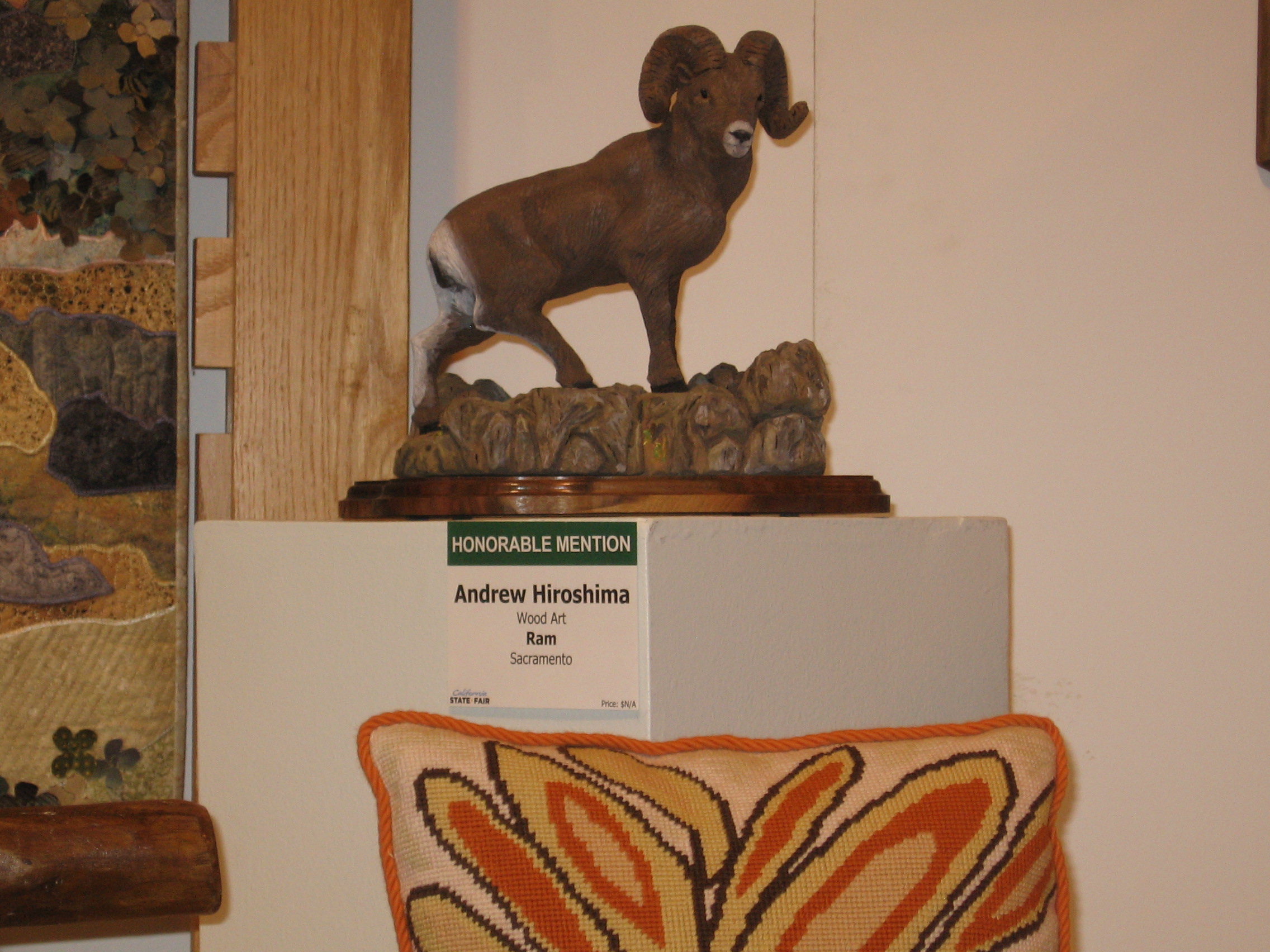
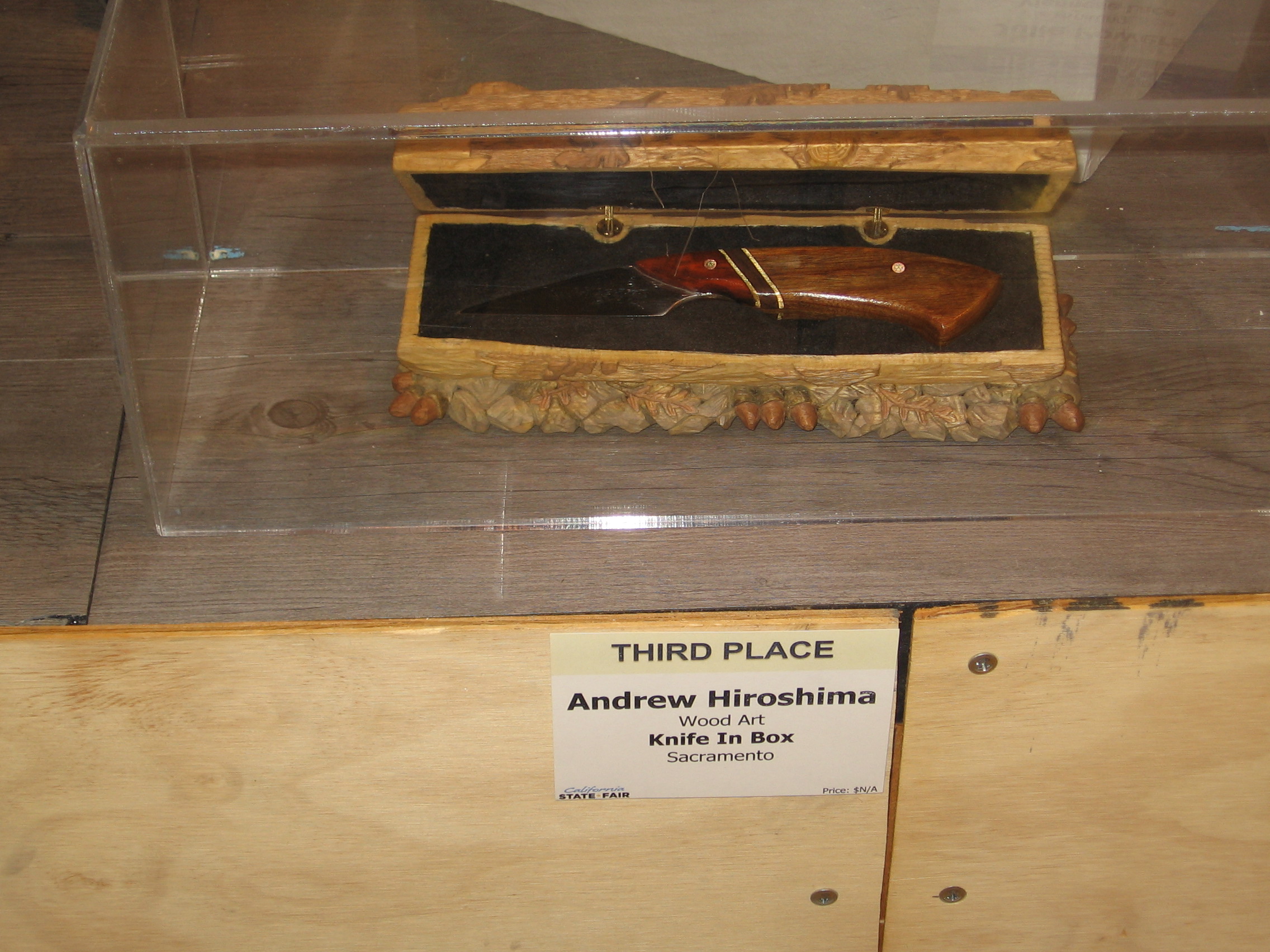
Another State Fair has come and gone. The weather was cooler and State Fair attendance was up. Only one of our members, Andy Hiroshima, entered a carving in the Creative Arts competition this year but the carving won three different awards including Best of Division. Congratulations Andy!
Eleven of our club members demonstrated wood carving and chatted with visitors to the demonstration area inside the Creative Arts Building on Wednesday July 27 and Thursday July 28. The visitors expressed a lot of interest in woodcarving and we were able to put in a lot of “plugs” for our annual club show in May. Altogether we passed out approximately 60 of Kath Gervais’ threefold brochure which provides information about our club and our show and also includes a membership application.
Of course we were asked the usual questions of “What kind of wood is that? How long did it take to carve that? How long have you been carving?” etc. This year I had an unusual visitor. It was a lady from Valley Springs who did linoleum carving among many other things. I stopped carving while I was talking to her and was unconsciously rubbing my fingers together. After a bit she announced that she was into body mechanics and thought something was wrong with my hands. She asked for permission to work on my hands which I gave. She pulled on my fingers which caused my knuckles to pop and crack. She did the same to my elbows. She said my bones were now back in place. At the time I dismissed the experience as a humorous incident but now wish that I had gotten her name and how to contact her. Prior to her tugs on my fingers my right hand would experience a slight soreness after carving a while which I assumed was the onset of a corporal tunnel problem. Since her manipulations I haven’t experienced the soreness. I’m not sure if it is because of what she did or if it is because I haven’t been carving as much. But it would be nice to be able to get in touch with her in case the soreness comes back.
Thanks to the carvers who assisted in the demonstrations and brought some of their carvings to display during their shifts. The demonstrators this year were Terry Hajek, Joe You, John and Peggy Lucero, Andy Hiroshima, Jim Wycoff, John Burke, Alice Bowles, and Lonnie and Nancy Buck. Thanks also to Jim Allen and Alice Bowles for generously loaning several of their carvings for display throughout the two days of demonstrations.
Ed Santarosa
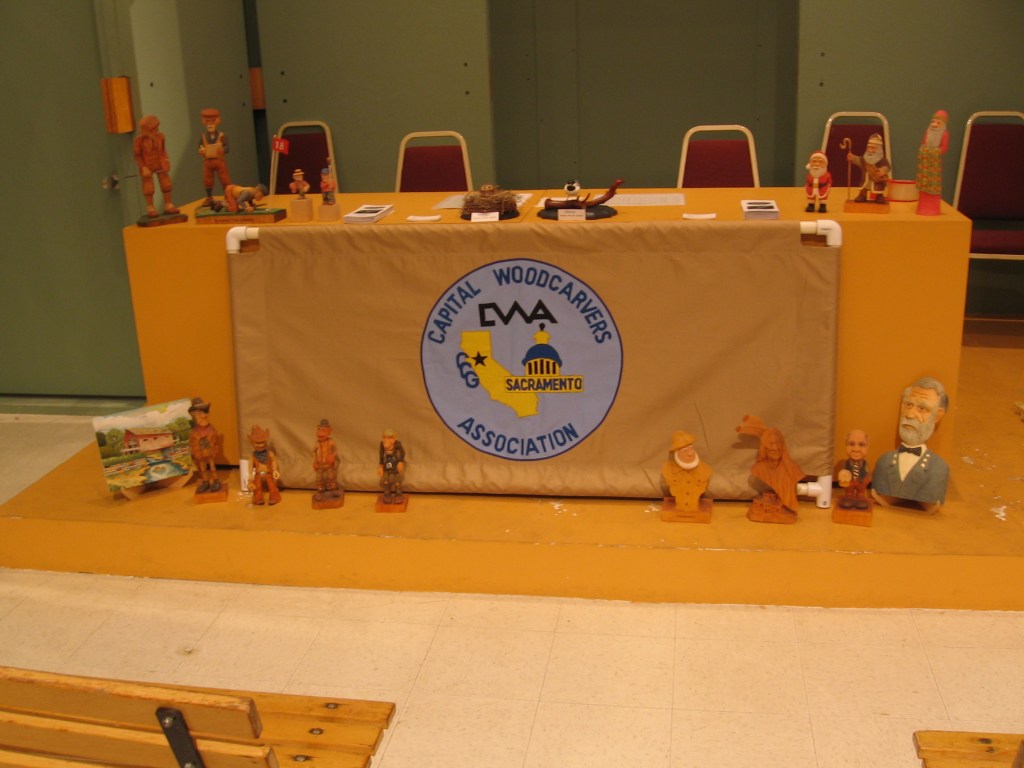
STATE FAIR REPORT
CWA maned a booth in the Fine Arts and Crafts Building (Building 4) on Wednesday and Thursday, July 24 and 25 during the 2019 California State Fair. Although our booth was tucked away in a corner we had a lot of visitors to our booth. Our booth staff was led by President Joe You with assistance from club members Patsy Jeffery, Debra Jaynes, Joann Sprougis, Tom Petersen, and Ed Santarosa plus nonmembers Dorian Hendrix and Carol Santarosa. Thank you to all who helped out.
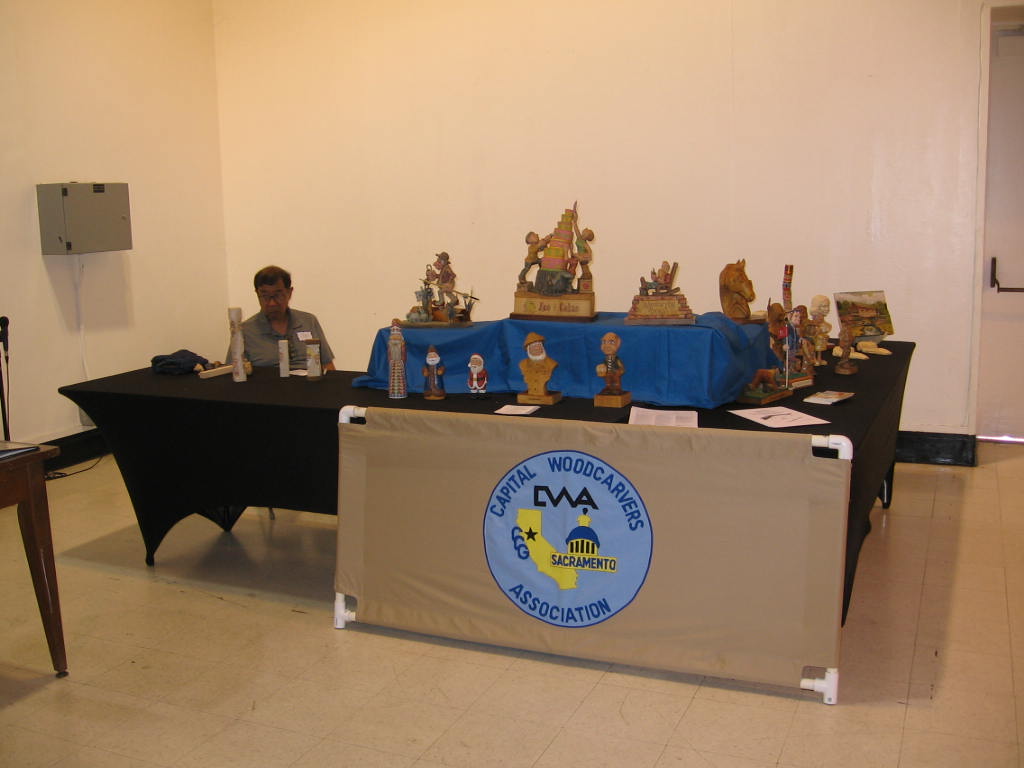
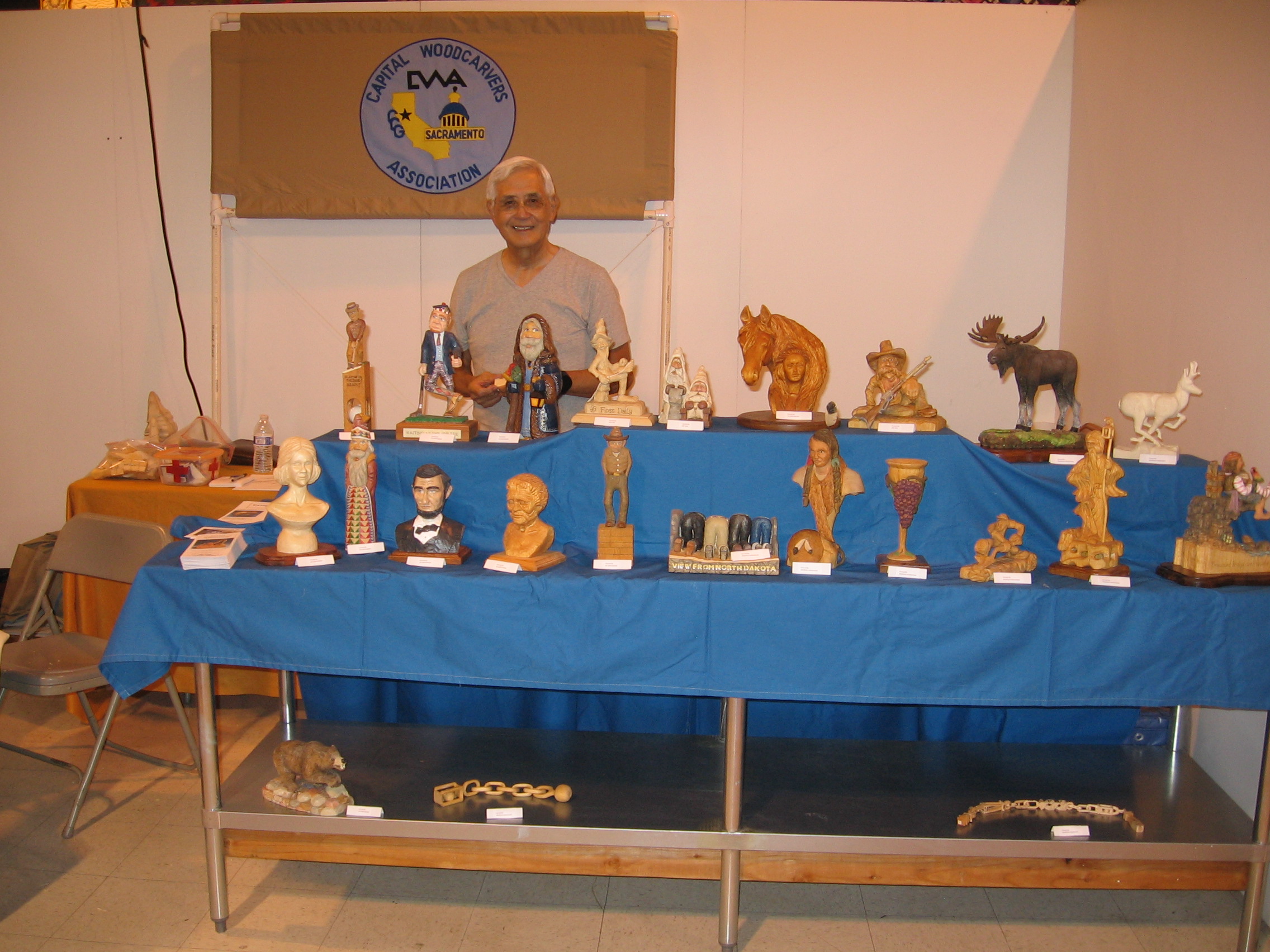
Three Capital Wood Carvers Receive Five Awards at the California State Fair
California Crafts 2019
Andrew Hiroshima, The Flautist 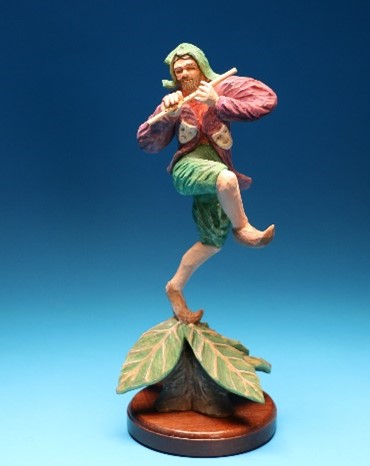 :
:
Crafts: Wood Art, Wood Carving – First Place
Alison Cook, Three Eras
Crafts: Wood Art, Wood Carving – Second Place 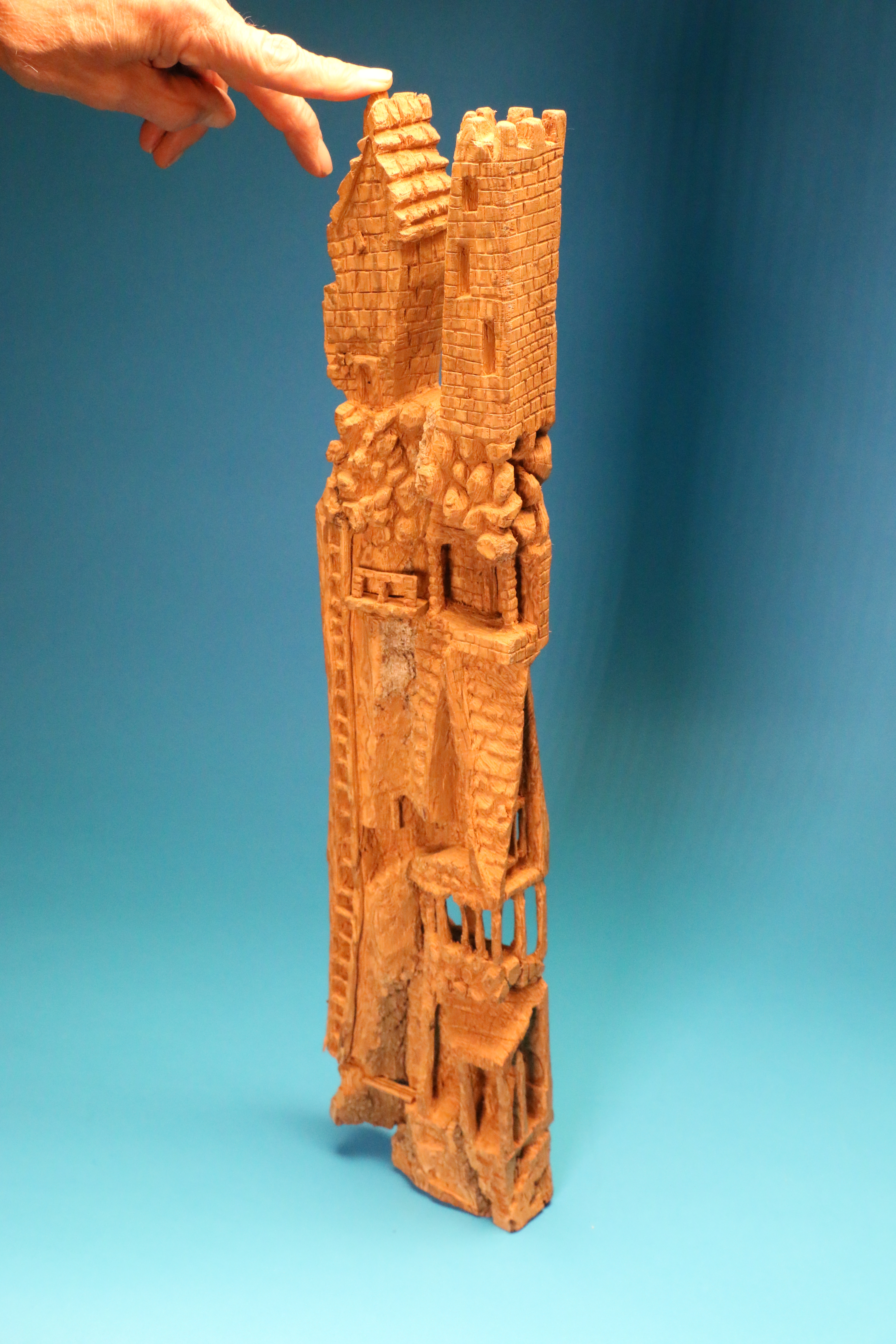
California Fine Arts 2019
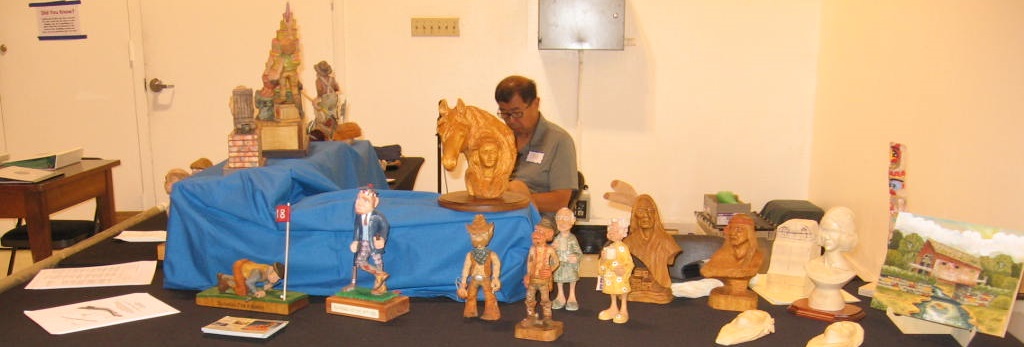
Ron Kremer, Cottonwood Houses
Fine Arts Special Award
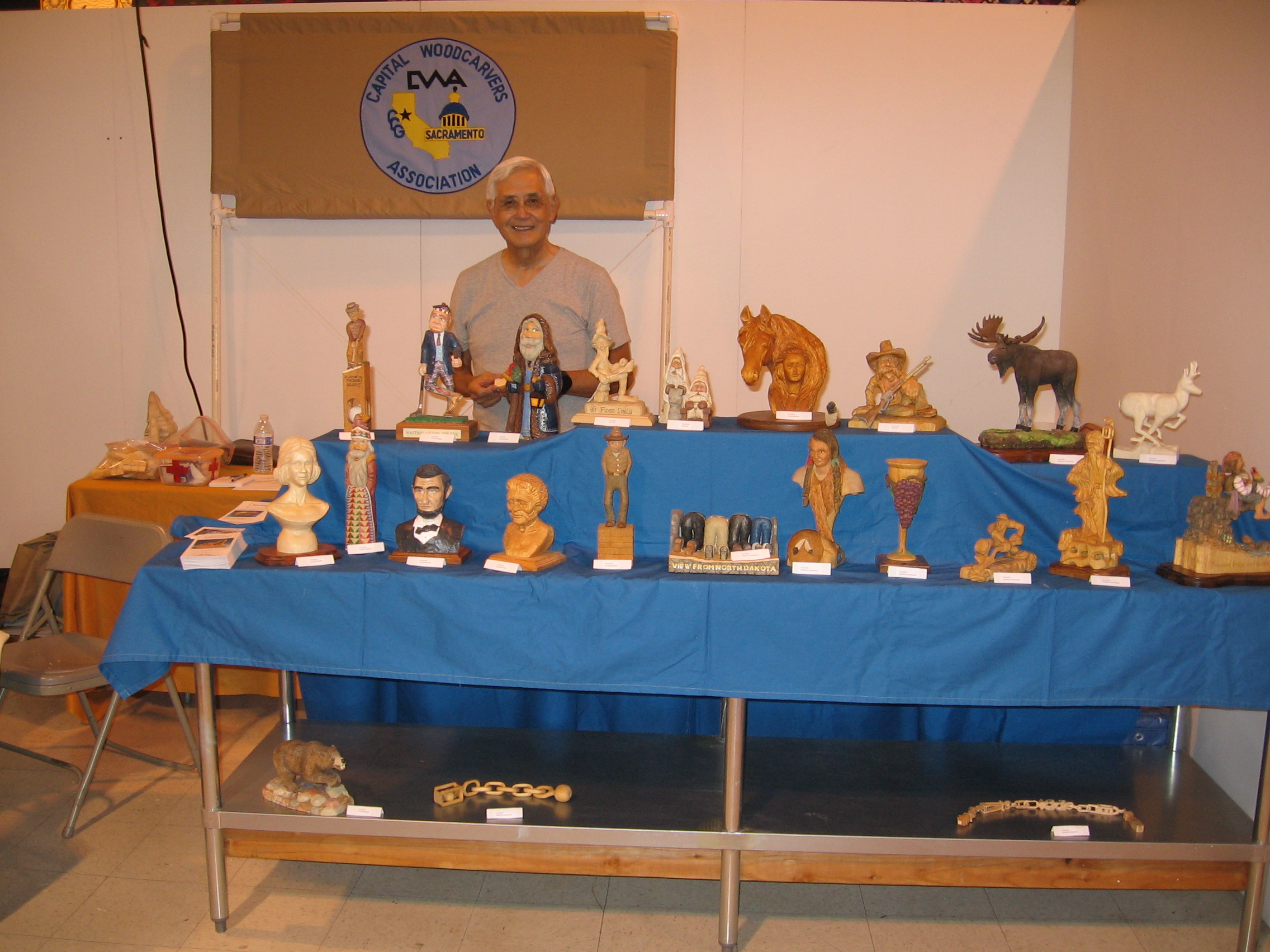
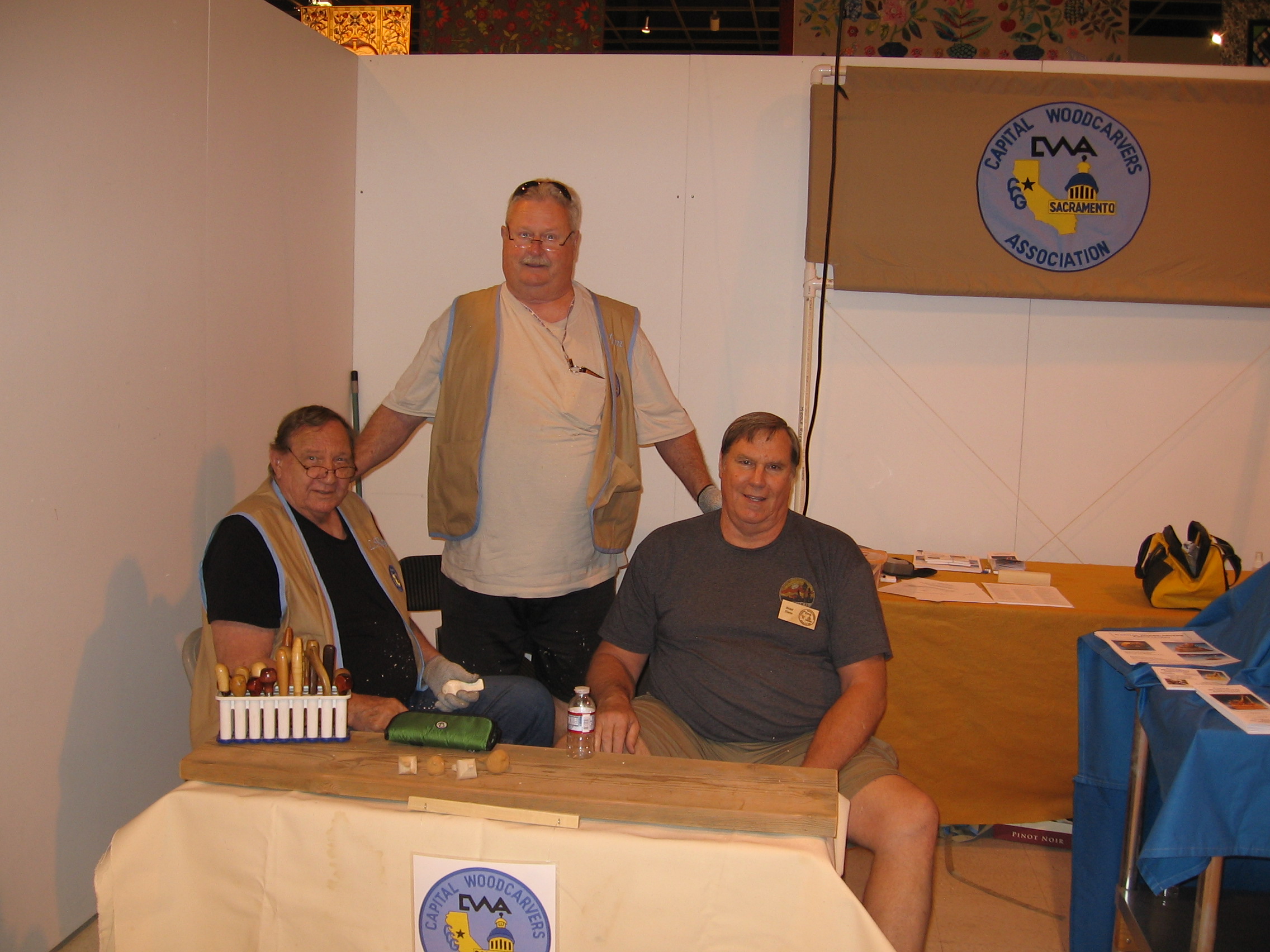
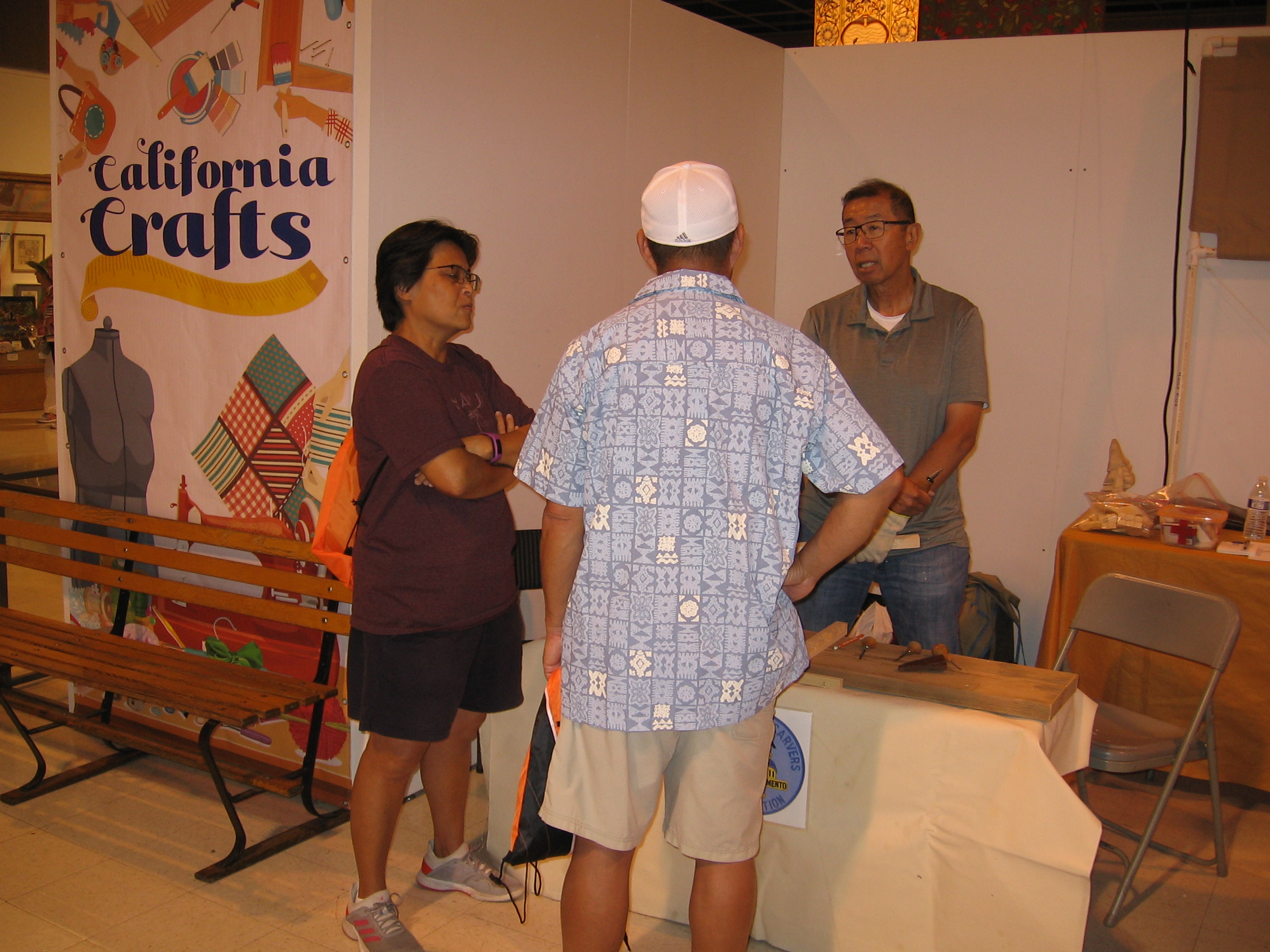
Shortly after it was decided to hold a State Fair in 2022, we were contacted to see if we wanted to demonstrate at the fair as we had in past years. We agreed to do so. Ed Santarosa served as the coordinator between the State Fair and the club. Andy Hiroshima, Joe You, Brad Dano, Leroy Stebner and Jim Veatch agreed to help with the demonstrations. Carol Santarosa was recruited to help with set up of the demonstration display and to man the booth as necessary. Demonstration days were Monday, July 25 and Tuesday, July 26 in Building 3, the California Crafts/Student Showcase building. We were assigned the demonstration area just inside the entry doors to the building so that anyone entering the building had to pass by our demonstration booth. As a result, we had many visitors to our booth, many questions about woodcarving in general and many questions about how to carve wood. We invited anyone interested in learning to carve to attend our meetings at Woodcraft. We distributed trifold brochures and quarter cards that had been updated by Alison Cook and formatted and printed by Judith Steinle. Photos for the documents were by Terry Hajek. Here are some photos from the fair. Thanks to all who volunteered to help! (reprinted from Sacramento Shavins’, CWA Newsletter, August, 2022

,

Featured CWA carver Andy Hiroshima. Andy was born to Dr. William and Ruth Hiroshima in a Japanese Relocation Camp in Hunt Idaho, near Twin Falls. He was the youngest of five, four brothers and one sister, and just six months old when the family was released from the camp. His parents were living in Sacramento. Andy’s father was a physician and chiropractor in when the internment began. Everything was taken from the family. When they were released from the camp, his father restarted his medical practice n LA. The family faced significant bias and discrimination as they tried to carry on a normal life. In order to buy a home in a nice neighborhood in LA his father had to have a non-Japanese friend purchase it for him. Andy met his future wife Lily while in high school. After dating for seven years, they were married and celebrated their 53rd anniversary this year. They have two sons and five grandchildren.
Andy has had some interesting jobs early in his career. His wood working roots were born in a job making wooden crates for shipping. He learned how to use tools and met some famous movie stars when helping them pack for moving. At Hanna Barbera Studios Andy had a crew of 13 operating a huge camera that put the drawn cartoon images on film. He was also a mail boy for the city of Los Angeles. All the time he was working at these part-time jobs he was attending night School.
In 1967 he was a student at Cerritos College. The Tet offensive was on in Viet Nam and he was drafter along with 32,000 others. He was trained as a medic and assigned to Ft. Sam Houston. Since, he was an accomplished swimmer and the base needed both a swimming coach and an instructor, Andy was assigned those duties and spent his military service time at that fort. He was the only one with competitive swimming experience, and he was exceptionally good at multiple events. So, the unit entered Andy as their swim team in competitive meets. He competed in all the individual events, but even Andy couldn’t figure out how to compete s a four-person relay!
Realizing he would need more education, he enrolled at Cal State LA on the GI Bill. Taking a large 22 units a term, he got his business degree in two years. After graduation in 1974, he went to work for PG&E, retiring 30 years later.
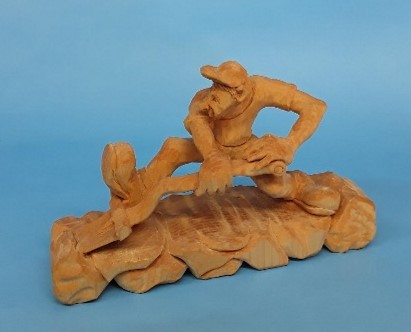
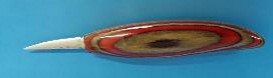
Andy’s woodcarving history began for real in 1975. While strolling through the shops in Mendocino he spotted a sculpture of a barn owl that he admired. He decided he would try some sculpturing in wood. His tools were a coping saw a hack saw and sandpaper. His first carving was a hammerhead shark in white oak (see picture). He also did a porpoise in pine and a great white shark red oak. Each carving took months to do. Andy’s first experience with bass wood was to carve a ball and chain. At Woodcraft he met Jim Hansen who introduced him to CWA and he joined in November 2005. Joe You invited him over to see his caricature carvings and Andy was hooked. He started carving caricatures and has not looked back. CWA member Judy Coffee taught him how to make knives using blades from straight razors. He especially likes making handles from a variety of woods, some more exotic than others. The resulting knife is a thing of beauty as well as a functional tool. He figures he has made over 150 knives. Many have been given to fellow carvers.
Andy doesn’t spend all his free time carving; he is also an avid cyclist. He has made 7 coast to coast trips with groups of 35 to 60. Each trip is about 3800-miles over 52 days, with 5 days rest along the way. Andy rides 4000 miles or so in training for each trip. On one trip in the Colorado Rockies some residents took exception the cyclists and threw nails and tacks in their path. Despite these events, Andy had a great time and traveled with people from Australia, Africa, New Zealand, China, Singapore Japan Africa, Russia, Germany, France, and Spain. They saw great natural sites and many wild animals. He has also made 2 North South trips of 37 days.
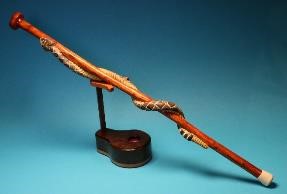
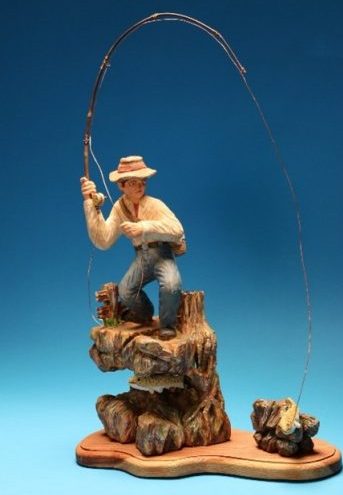
Back home, Andy built a stand-alone shop that is packed with hand tools and a few power tools. Most of his power tools (lots) are in his spacious garage. He keeps most of his completed carvings, giving some to family and close friends. He also enters them in various shows including CWA, the Dessert Wood Carving Show in Mesa Arizona. and the annual California State Fair competition, where he has won ribbons. Andy seems to especially like carving dragons—he has done fourteen of them. Like most accomplished carvers Andy has taken courses from some of the most recognized carvers in the country. One of the carvings Andy is known for is walking sticks with very realistic painted snakes carved into the handle so the mouth is inches from the person using the cane. While in Placerville looking for straight razors to use for knife blades Andy walked into a gem store with one of his snake canes. The owner asked if the snake was real, a great compliment since the guy was a taxidermist. He ended up buying the cane and mounting a gem in the handle. Andy made several others that the gem store owner bought for $1200 to $1500. During the renovation of the state capital the contractor came to Woodcraft for help in replacing the rosettes on the doors. They approached CWA and Andy took on the job. The result was attractive qrosettes that matched the original ones very well. They are on the South entrance to the Capitol.
While all of Andy’s accomplishments are significant, the most notable is his willingness to help others. He is always available to help a fellow member sharpen a tool, learn how to hold a knife or carve a face or a myriad of other similar tasks. The Club benefits as well. The registration of all entries to the show falls to Andy. This includes record keeping and handling late arriving entries. If there is a task that needs to be done during the show Andy is there. I have never seen him refuse to help, no matter how busy he was at the time. A remarkable thing about Andy is that he seeks no credit or praise for any of this activity. In fact, he avoids such praise, pushing it aside. Andy Hiroshima is truly a gem in the CWA. We are lucky to have a man with such kindness and broad expertise as member of our club.
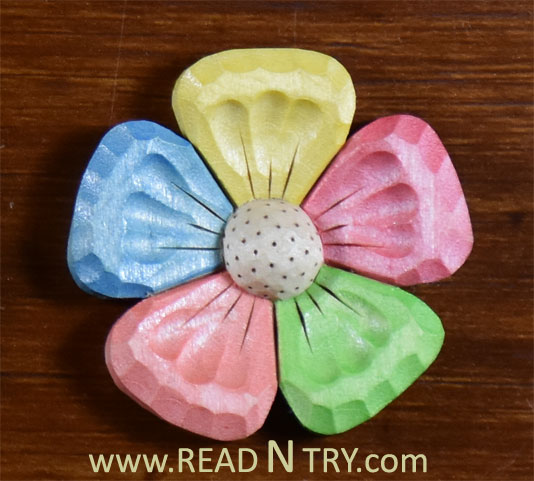
I enjoy carving wooden flowers. They are 1.5 inch (4 cm) in diameter. I usually attach a small magnet to the back. These colorful flower magnets can be used on a fridge or a white board.
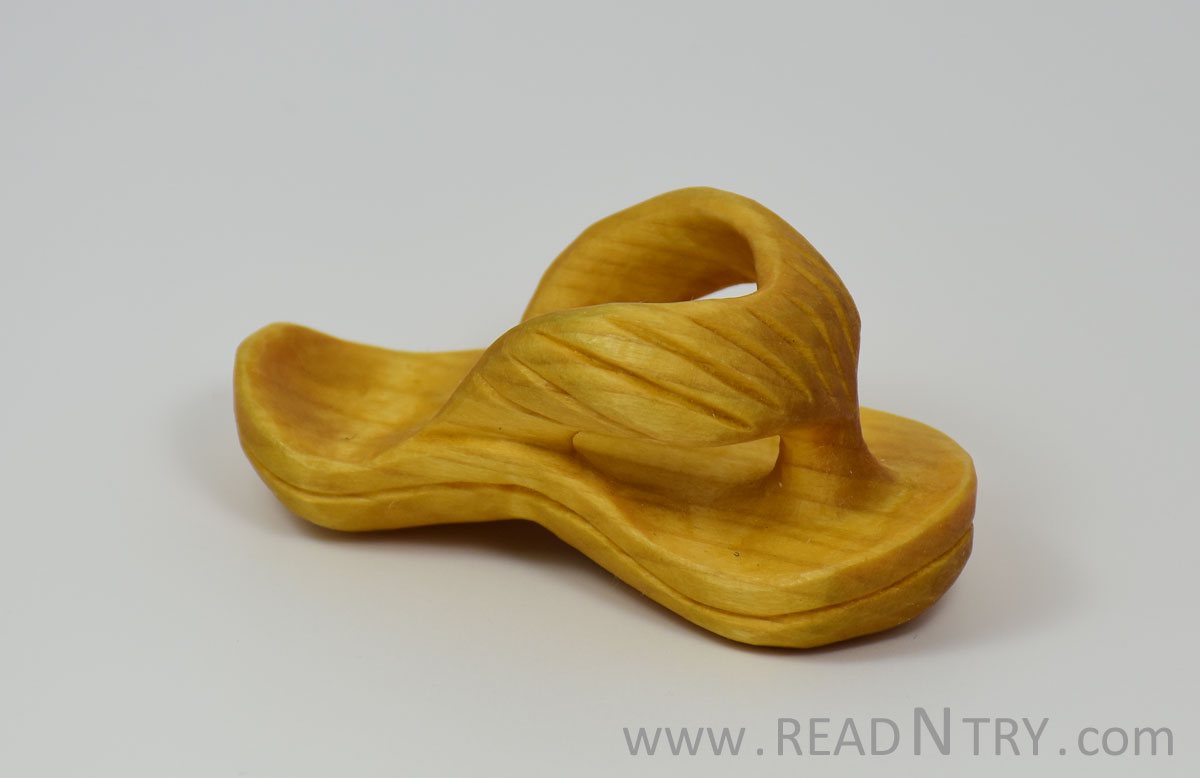
The flip-flop is about 3″ (7 cm) long. It attracts a lot of attention from the public during wood carving shows.
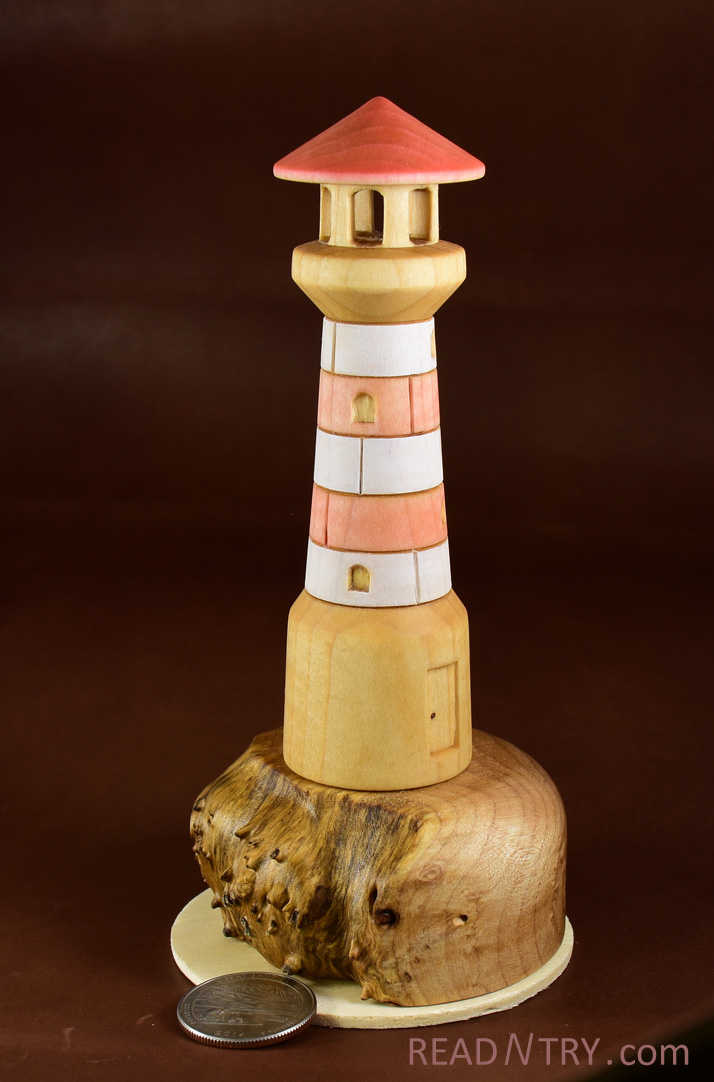
“Lighthouse on a cliff” — is turned and carved from basswood. Height with the base is 6″ (15 cm). Base diameter is 3 inches (7 cm).
The base is turned from a maple burl while still exposing its natural surface. Lighthouses were often built on the rocks so, I think, the burl original look fits the project well — it reminds a rocky cliff.
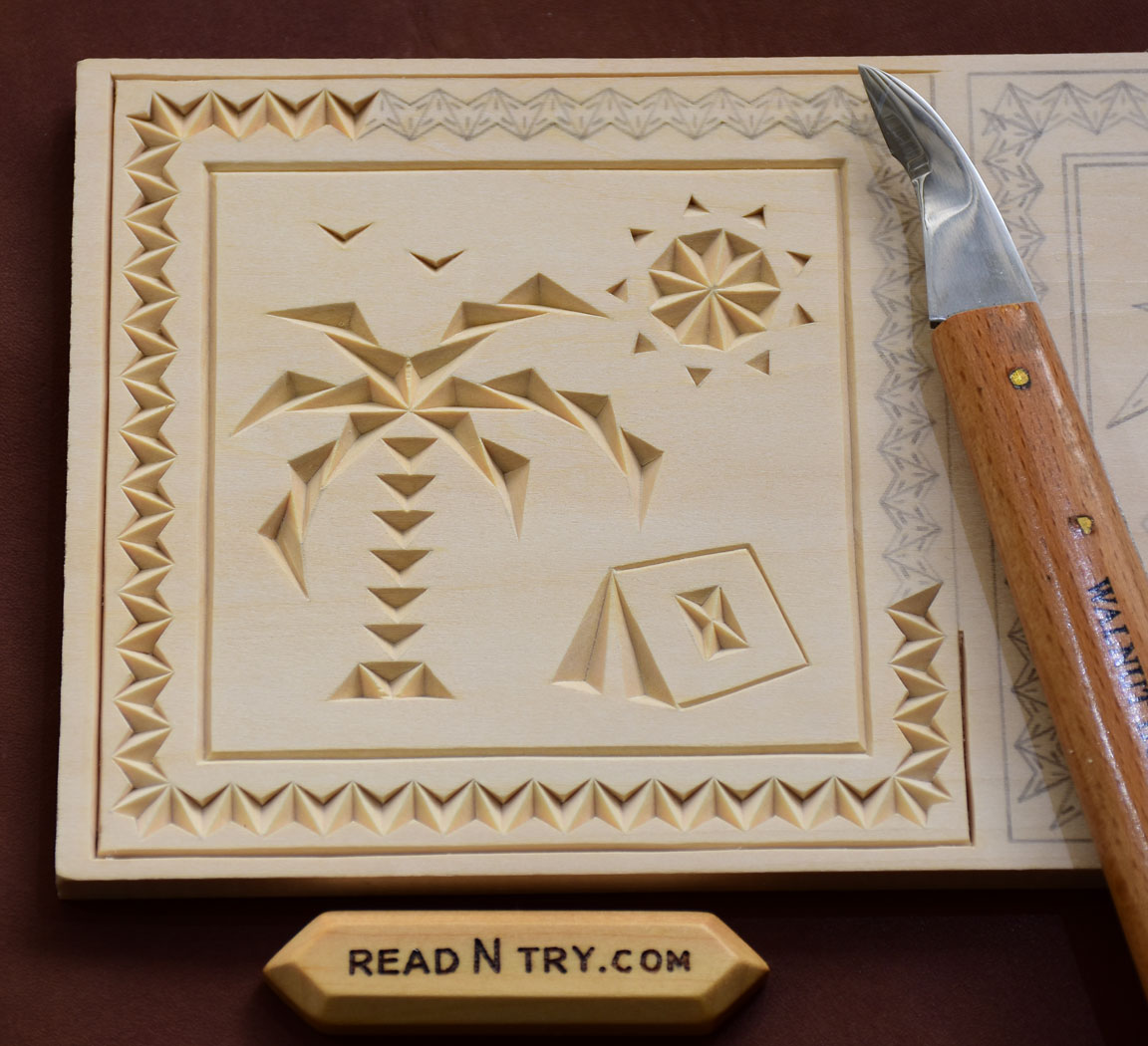
The “Camping” chip carving coaster design consists of 153 chips including 104 four-corner chips for the border. Work is still in progress.
It was a challenge to combine a recognizable palm using only 3 corner straight chips. The palm trunk is straight; I am thinking about making it curved a little next time.
I am glad that the “Camping” chipcarving pattern was selected for publishing by the Woodcarving Illustrated magazine; issue Summer 2018.
A chip carving practice board is a great first ever project that every chip carving enthusiast should complete and keep it as a reminder of becoming a chip-carver. Find available chip carving practice boards or draw one for yourself.
I think it is important to learn drawing the patterns manually and not always relying on the pattern transferring techniques. Acquiring the skill will help to experiment and to design unique one-of-a-kind master pieces. Here are some tips: draw a grid using a pencil and a ruler. Every cell in the grid should be a square with the side from 3/16” to 1/4” (4 – 6 mm). Connect some cell corners with other cell corners as you wish generally trying to get triangle shapes no bigger than 2-3 cells. Each triangle can be carved as a three corner chip. In general, smaller grid leads to smaller triangles/chips that are easier to carve.
If you would like to see more Roman’s carvings please visit his personal website:
READ N TRY https://readNtry.com

/
It doesn’t take long for a new member to hear about Shirley’s Shop.
The shop is the site for CWA minor and major seminars, weekly get togethers for
carving and food and much more. Here we learn more about the woman behind
the shop—Shirley Coffelt. Shirley grew up on Orcas Island about 80 miles north
of Seattle. Her love of wood started young. The island was a bit calm and
boring for kids, but when the tugboats came in towing barges of limestone five
or six guys on the tug would come ashore and pass the time whittling. Shirley
borrowed her dad’s pocketknife, picked up a piece of driftwood and started
carving with the tugboat crew.
The knife was always dull, and the results were disappointing. She didn’t lose her interest in carving, however, and years later when she joined CWA, she discovered bass wood and learned how to sharpen her tools.
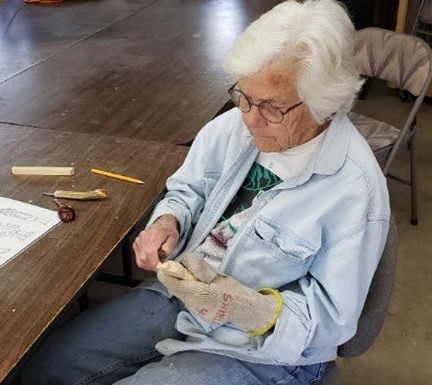
Shirley studied photography in college and that led to a long-term job at UC
Davis as a research photographer for projects studying the effects of radiation
on animals. When the funding ran out for that project, Shirley retired and she and a neighbor boy built her shop in Shirley’s backyard. She shared the cost with her neighbors who were also wood workers- making dulcimer guitars.
The shop was perfect for fostering carving and groups of 10 or more
were often found taking a class
Another feature of Shirley’s Shop is an extensive woodcarving library
purchased by CWA that covers almost every kind of common wood carving. Books can be checked out (if you promise to return them on time!). These books contain techniques, design ideas and topics such as wood selection and sharpening.
The latter topic is one that is a challenge for most beginning, and some experienced, carvers. Shirley says that she struggled with sharpening until she joined CWA and got
expert help from more experienced members. Shirley is committed to continuing
to learn. She said she has taken virtually every course offered through CWA.
Instructors included some of the country’s most well-known carvers who the club
brought to Sacramento to teach classes.
One place where she sold a lot of Christmas ornaments and other small carvings was the Elder Craftsman Store in Old Sacramento. The store was run by retired women, and much of the merchandise was knitted or sewn objects. Shirley’s carvings were unique and very popular.
Shirley says that her carvings were so popular that she carved eight hours a day just to provide enough stock for the center during the Christmas season
She carved on the sidewalk in front of the center and had lots of people stop and chat as she worked.
At the club meetings Shirley would be at one table and all the women aggregated around her. Bob Travis was at another table with the men. This was more than just gender separation. Many of the women were beginners and Shirley helped them get started. She had mentored some of them at her shop. Most of the men were more experienced carvers, and they worked on more advanced techniques. But, it didn’t take long for the women to catch up, and they became some of the club’s best carvers.
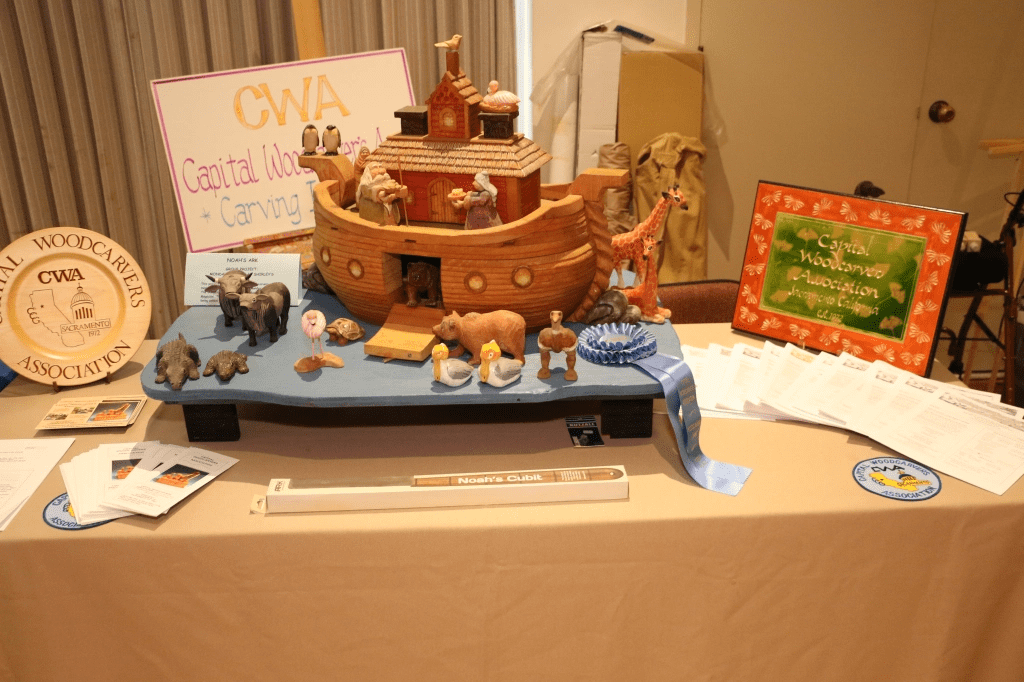
Shirley has led several group projects for the club including this Noah’s Ark regularly shown at our show.
Shirley’s role in CWA is significant and she has played a major part in the
development of carving in Sacramento. We owe her a debt of gratitude for her
generosity in sharing her shop for potluck sessions where her fresh-baked bread
is a highlight. She is truly a CWA treasure.
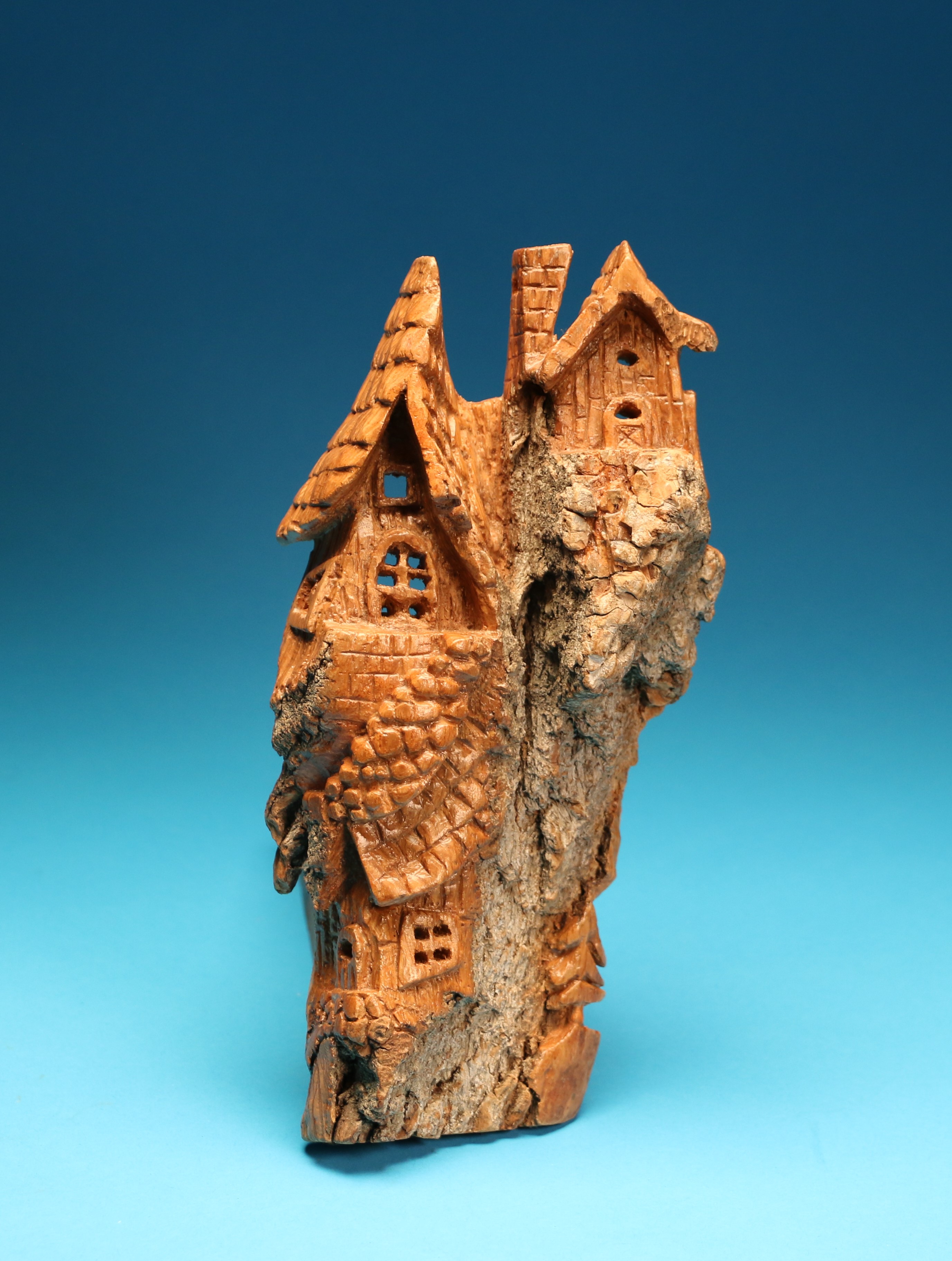
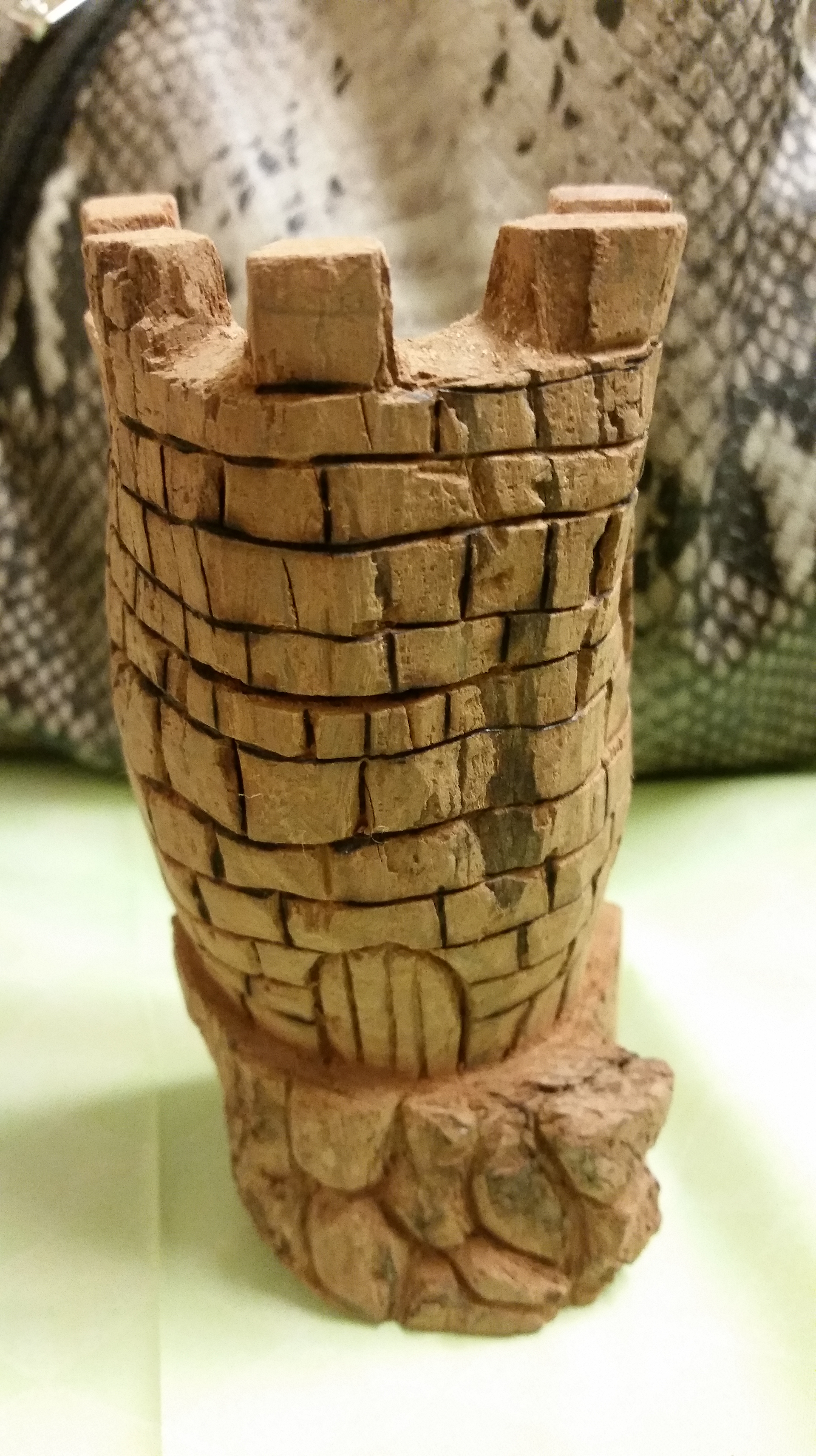
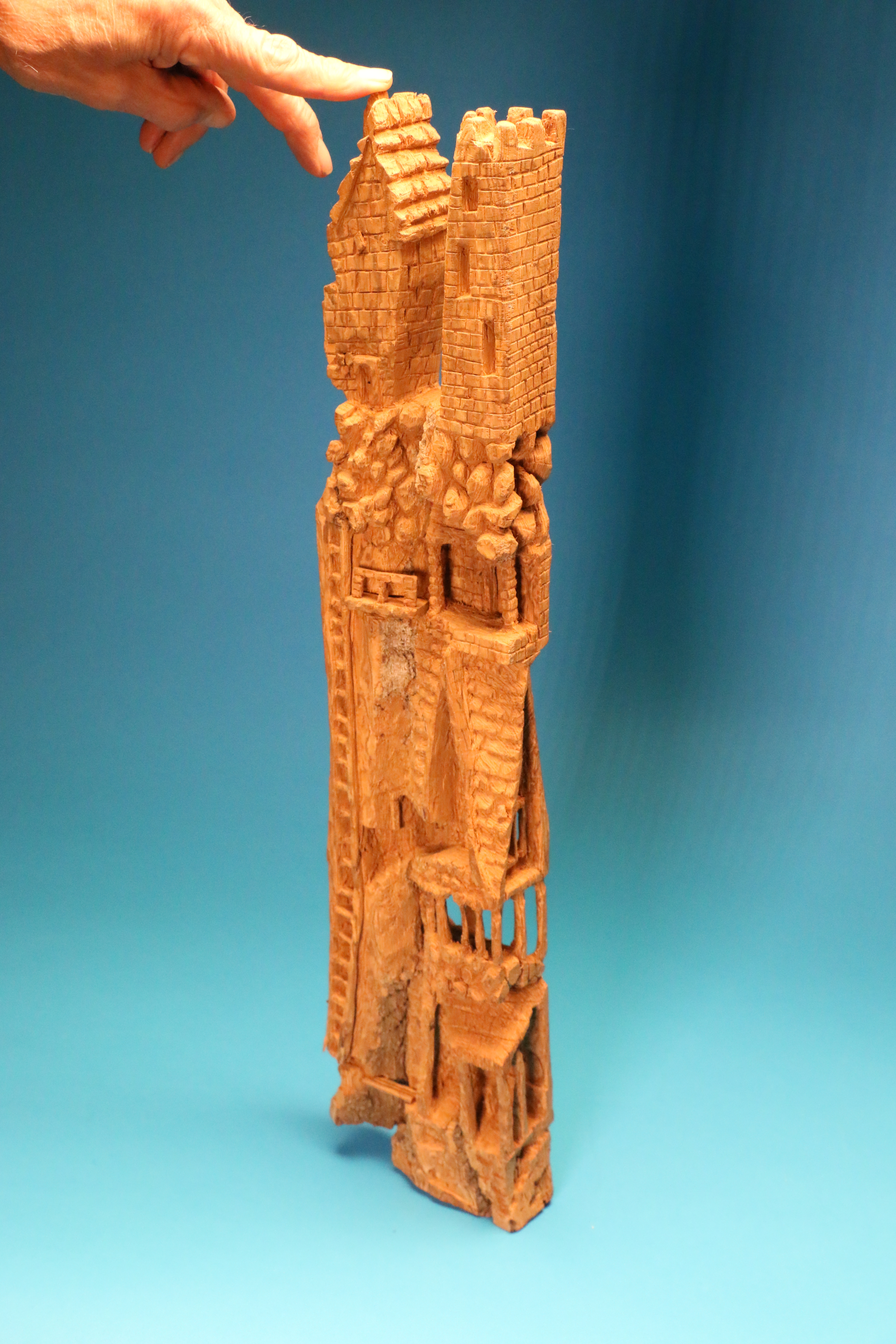
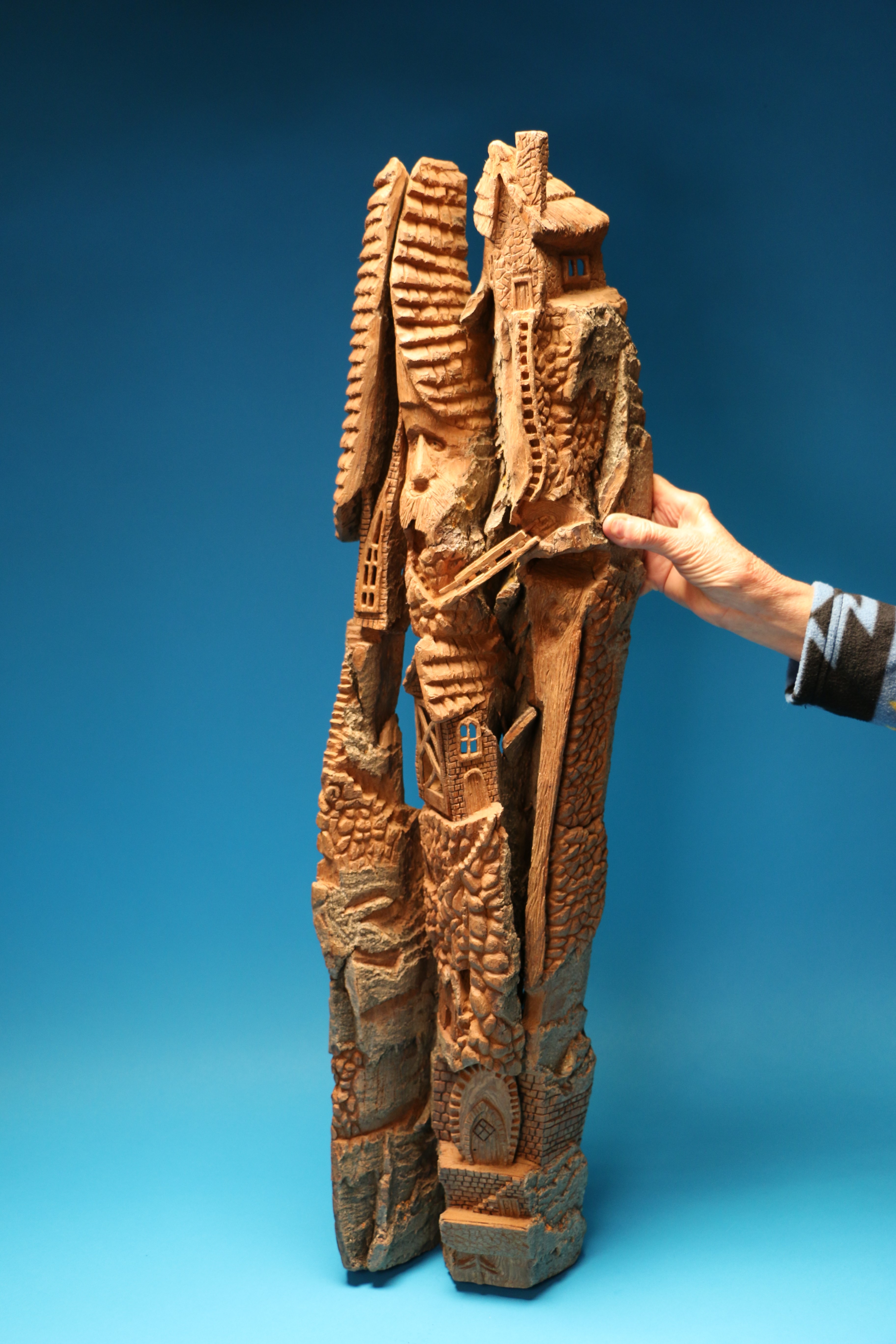
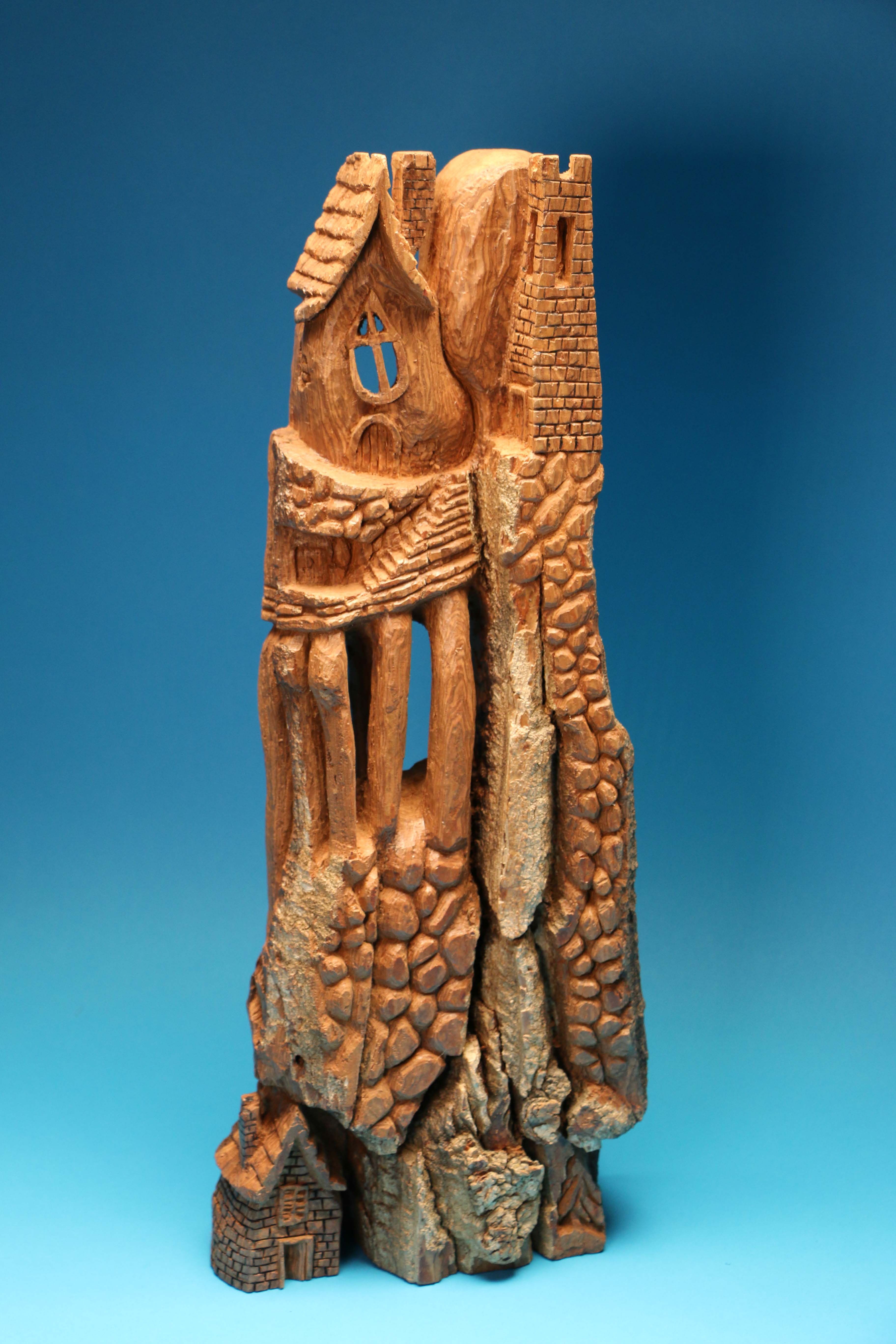
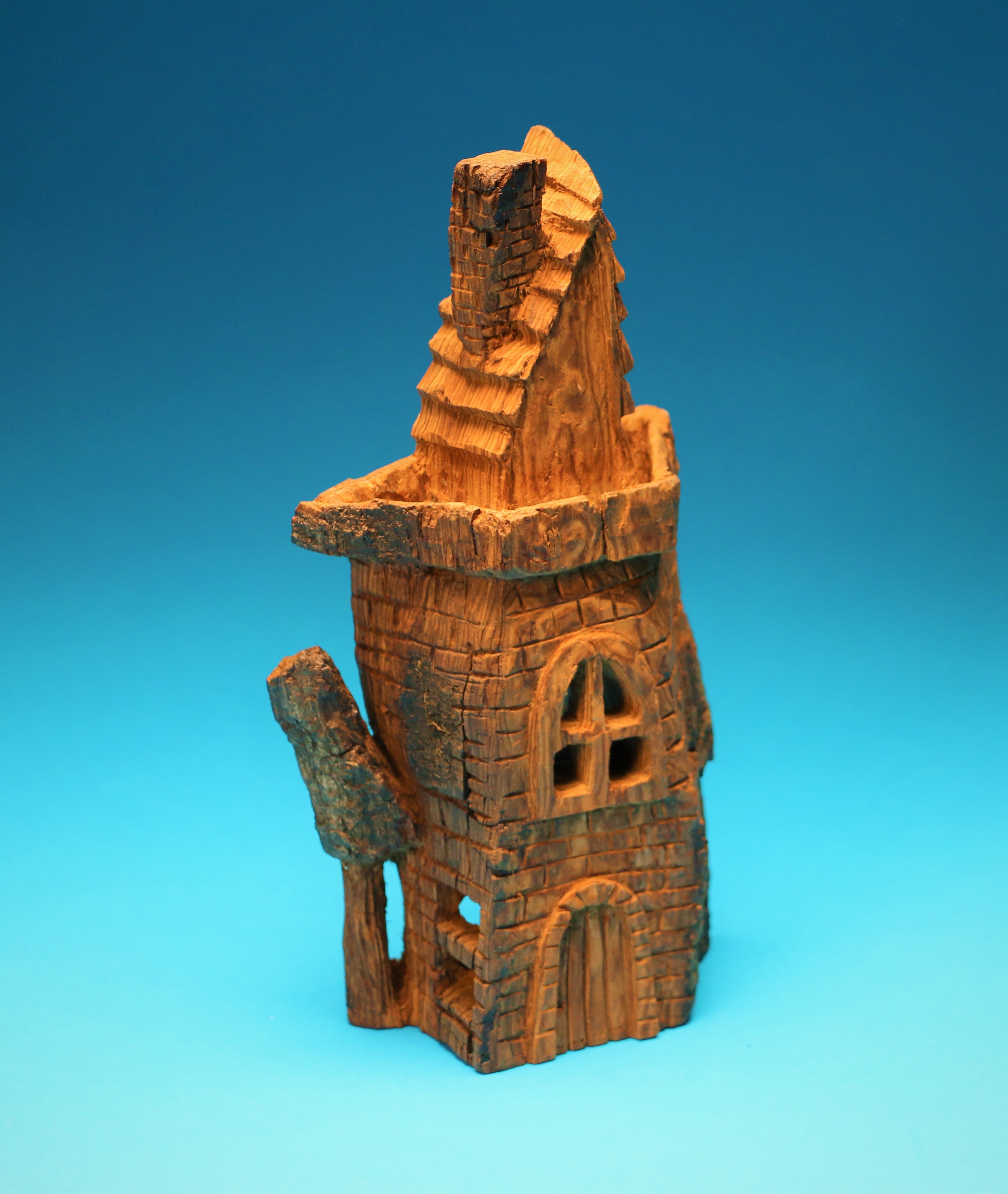
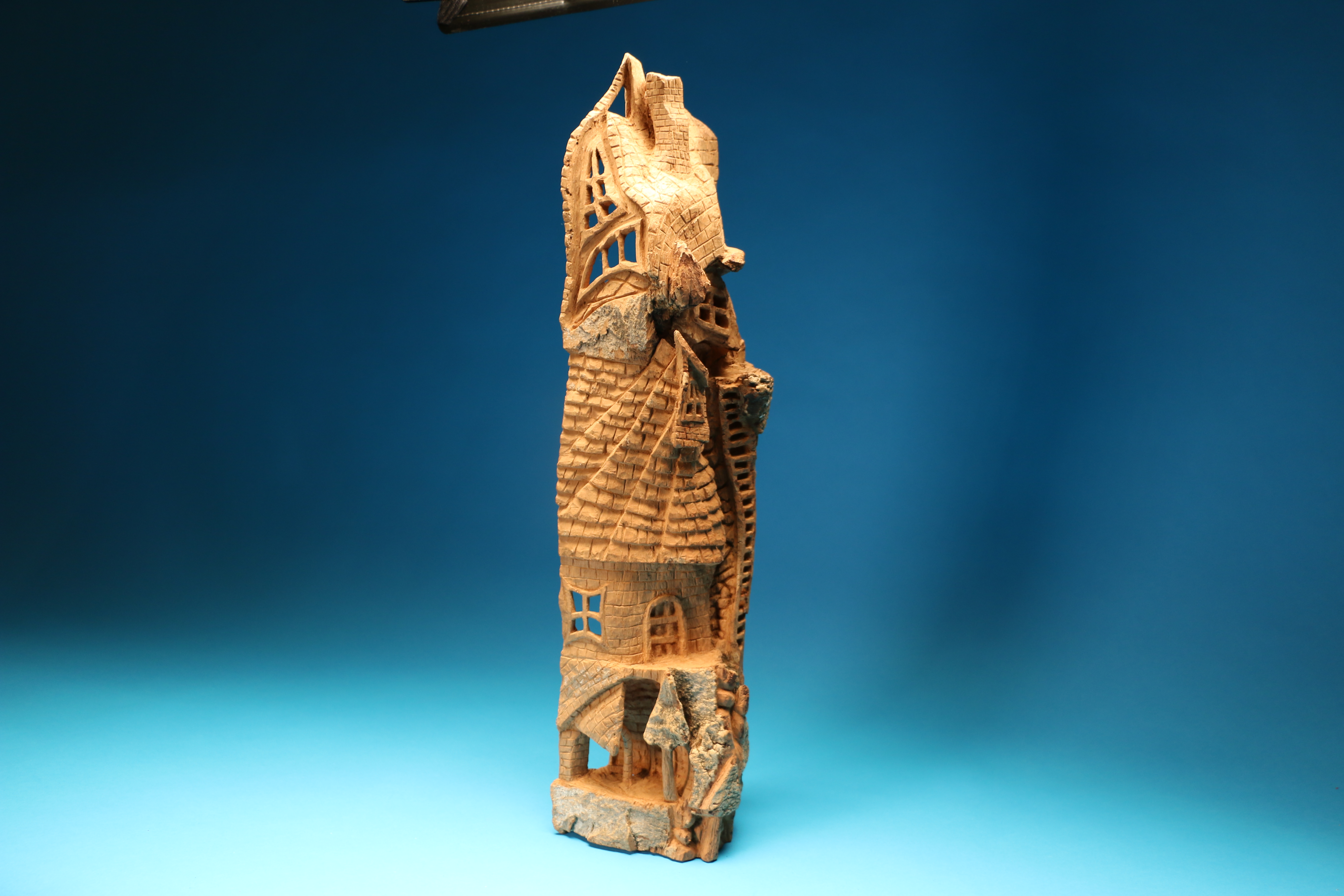
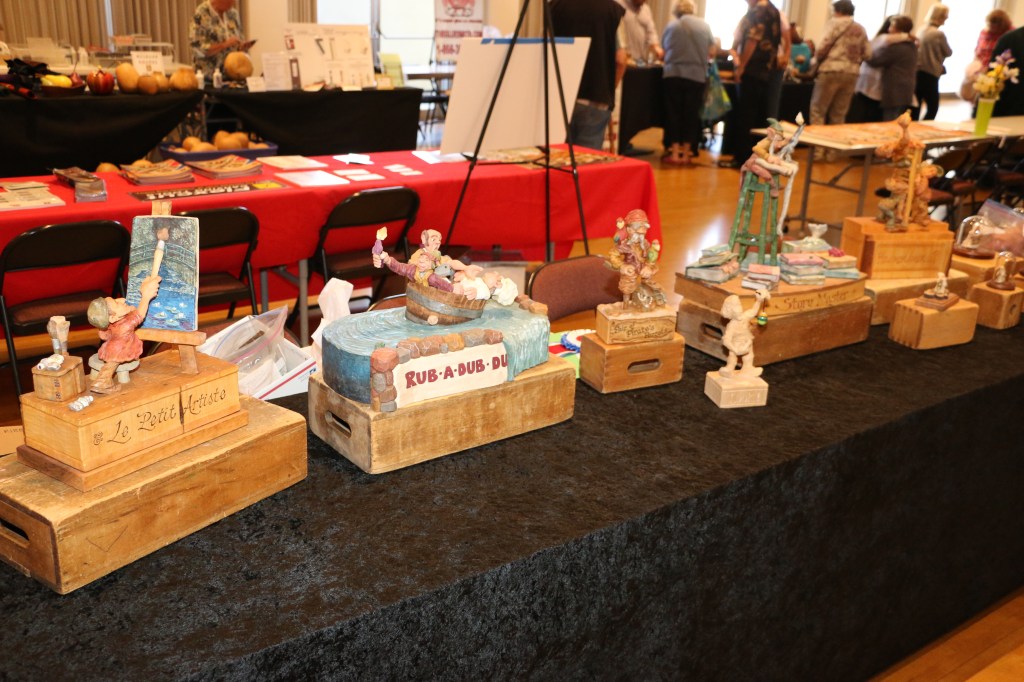
All carved house images by Terry Hajek
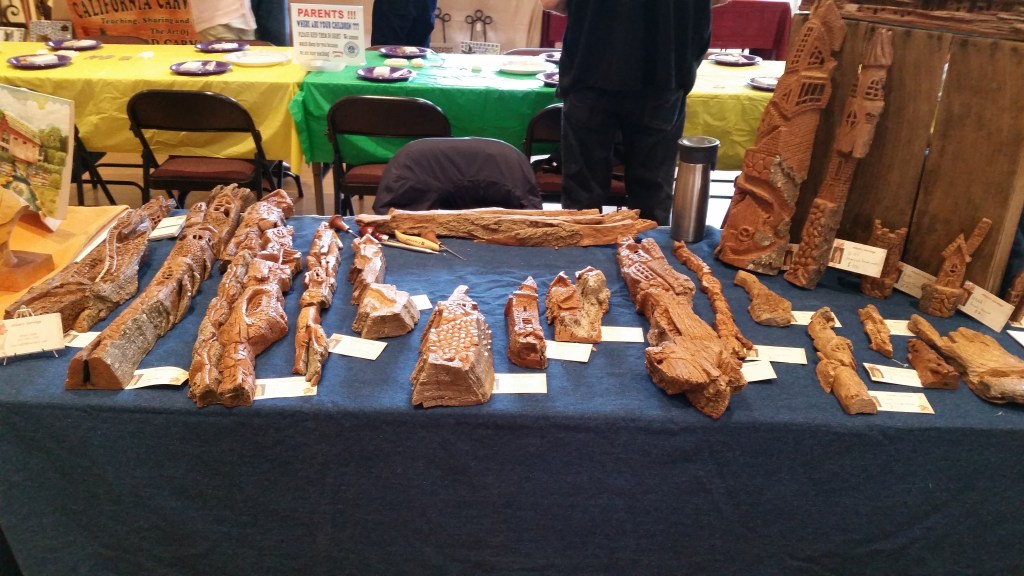
Any carver or gourd artist who wishes may enter one or more pieces in the show competition for judging.
There are three wood carving levels: Novice, Advanced, and Expert, The gourd judging levels are Novice, Intermediate, Advanced and Master. The entrant chooses the level they feel they best fit into and then choose the category for the piece. Each piece is examined by show judges and may be awarded a blue, red, or white ribbon, based on the merit of the piece. All entries are on display during the show regardless of whether an award was given or not. All entries must remain on display until the end of the show at 4:00 p.m. on Sunday. The following special awards for both wood carving and gourds are also presented, some with cash awards: 1st Best of Show, 2nd Best of Show, 3rd Best of Show, People’s Choice,
Other Activities
Free woodcarving and gourd art classes and demonstrations are given during the show
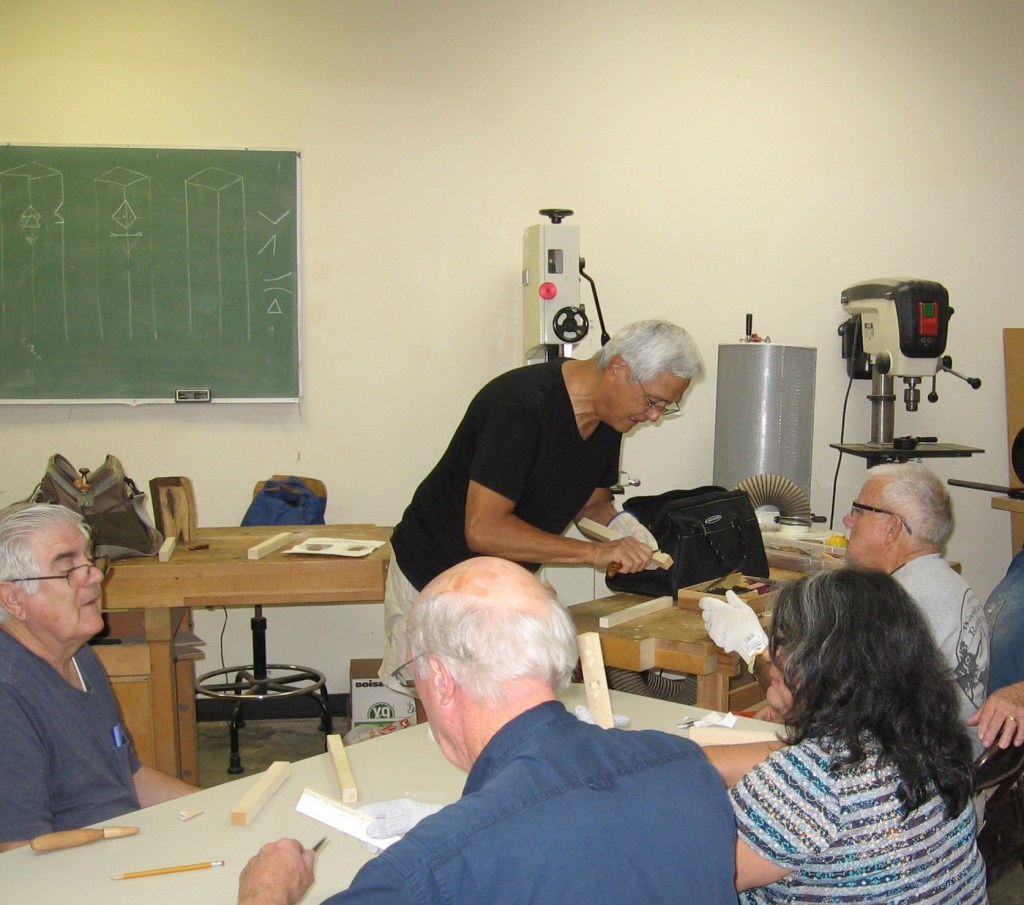
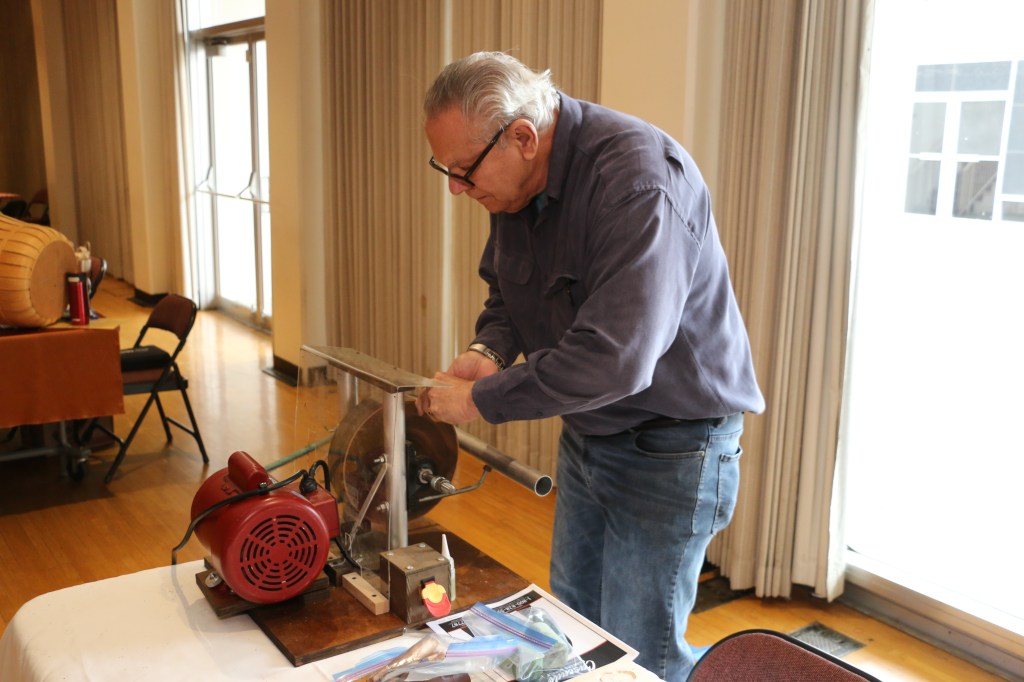
Free tool sharpening is also available.
There is also a Silent Auction of donated items, many of them hand-carved.
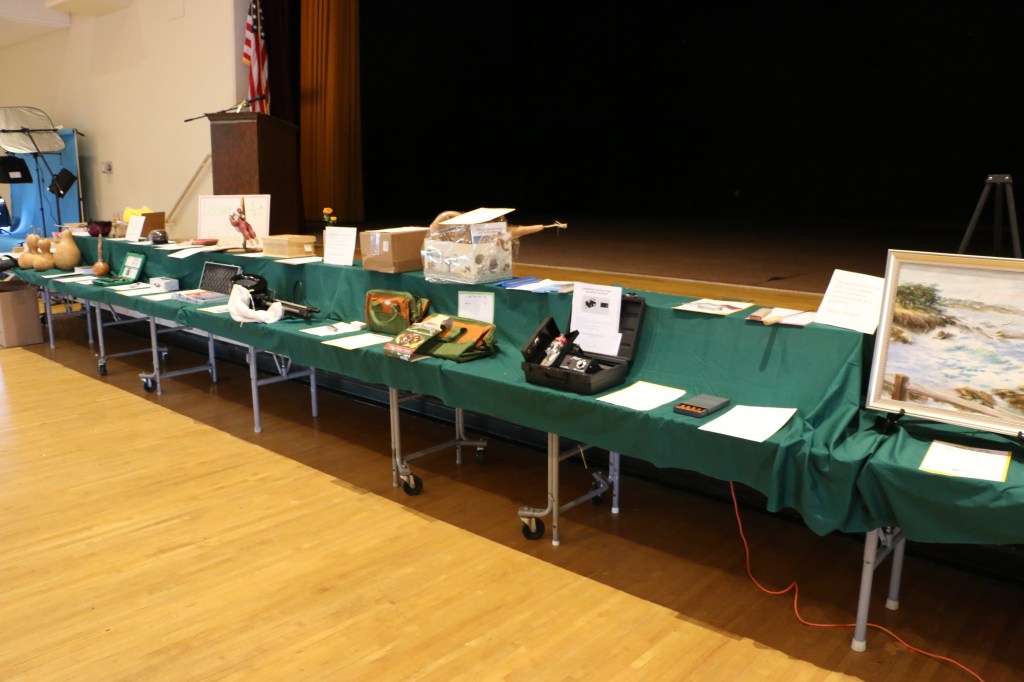
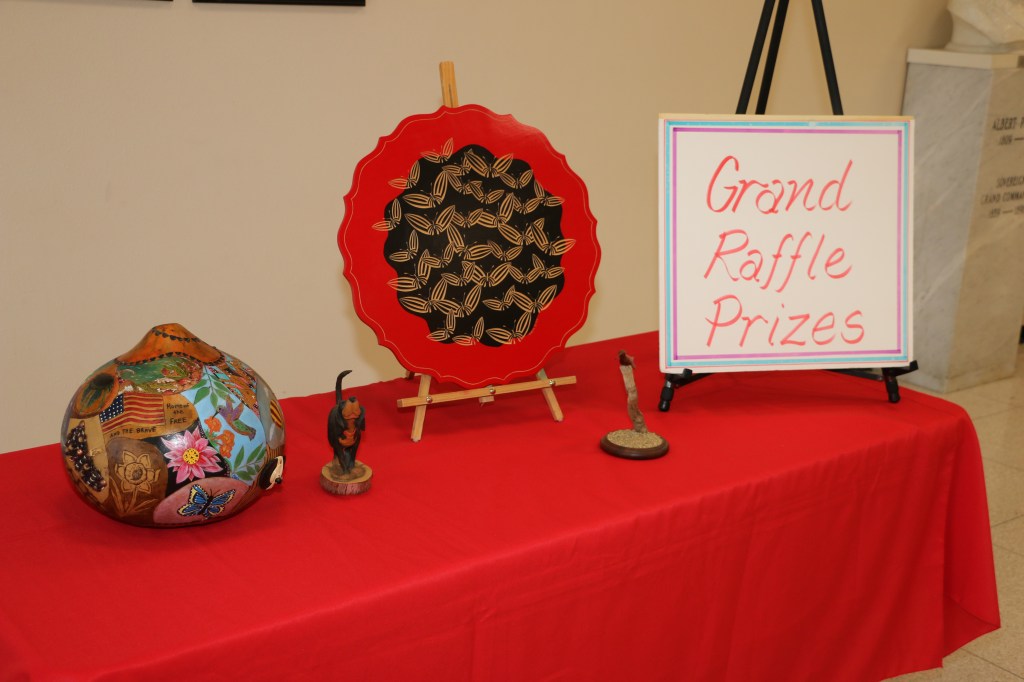
There are also free hourly door prize drawings throughout the weekend. Our Grand Raffle Prize drawing at the end of the day on Sunday features wonderful wood hand-carvings and artistically decorated gourds. Tickets are on sale throughout the show hours and before the show.
Individual carvers have items on display throughout the weekend. Some items are for sale, and many are only for display.
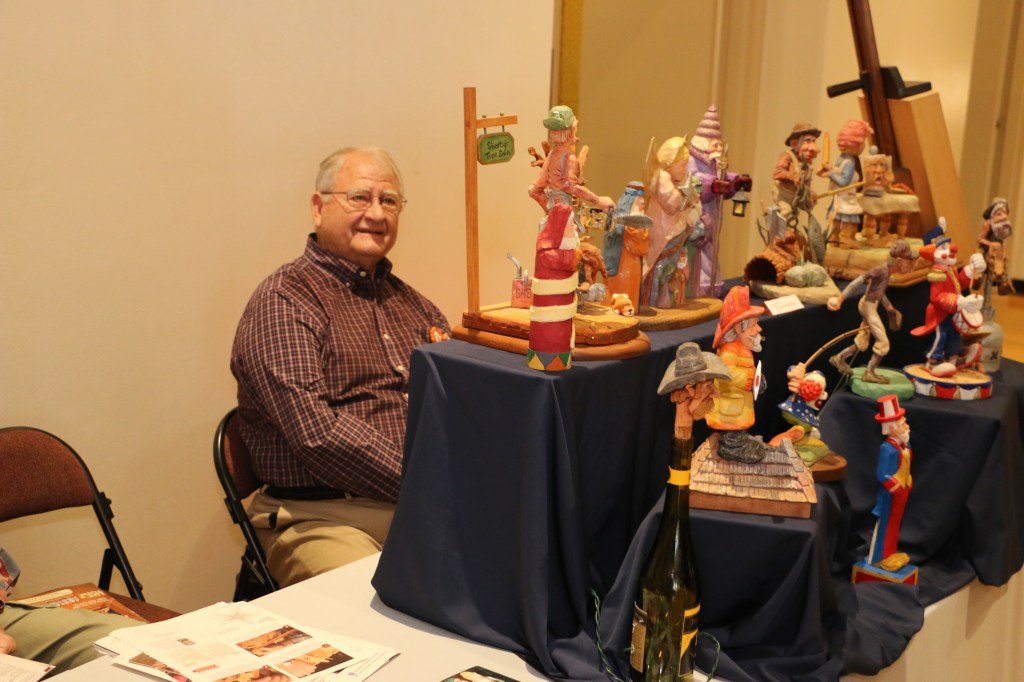
We also have excellent and well-known vendors from around the country. These vendors supply high quality tools, books, and supplies to our woodcarvers.
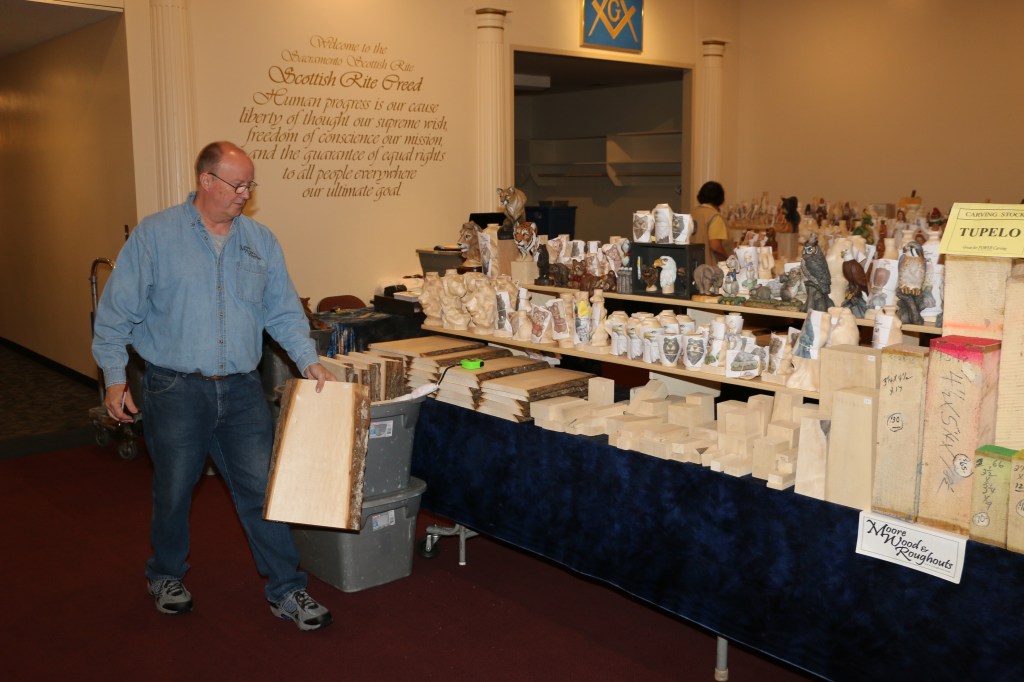
Randy Moore of Moore Roughouts and Wood travels from North Dakota to our show every year.
CWA is a tax-exempt woodcarving club organized to promote the art of woodcarving and improve the skill of its members.
Contact us at:
cwasecretary01@gmail.com
2024 Show
There is no show currently planned for 2024. For more information contact Leroy Stebner, President,(707) 363-4446 , or Andy Hiroshima, Vice-President (16) 206-2028
 Capital Woodcarvers Association